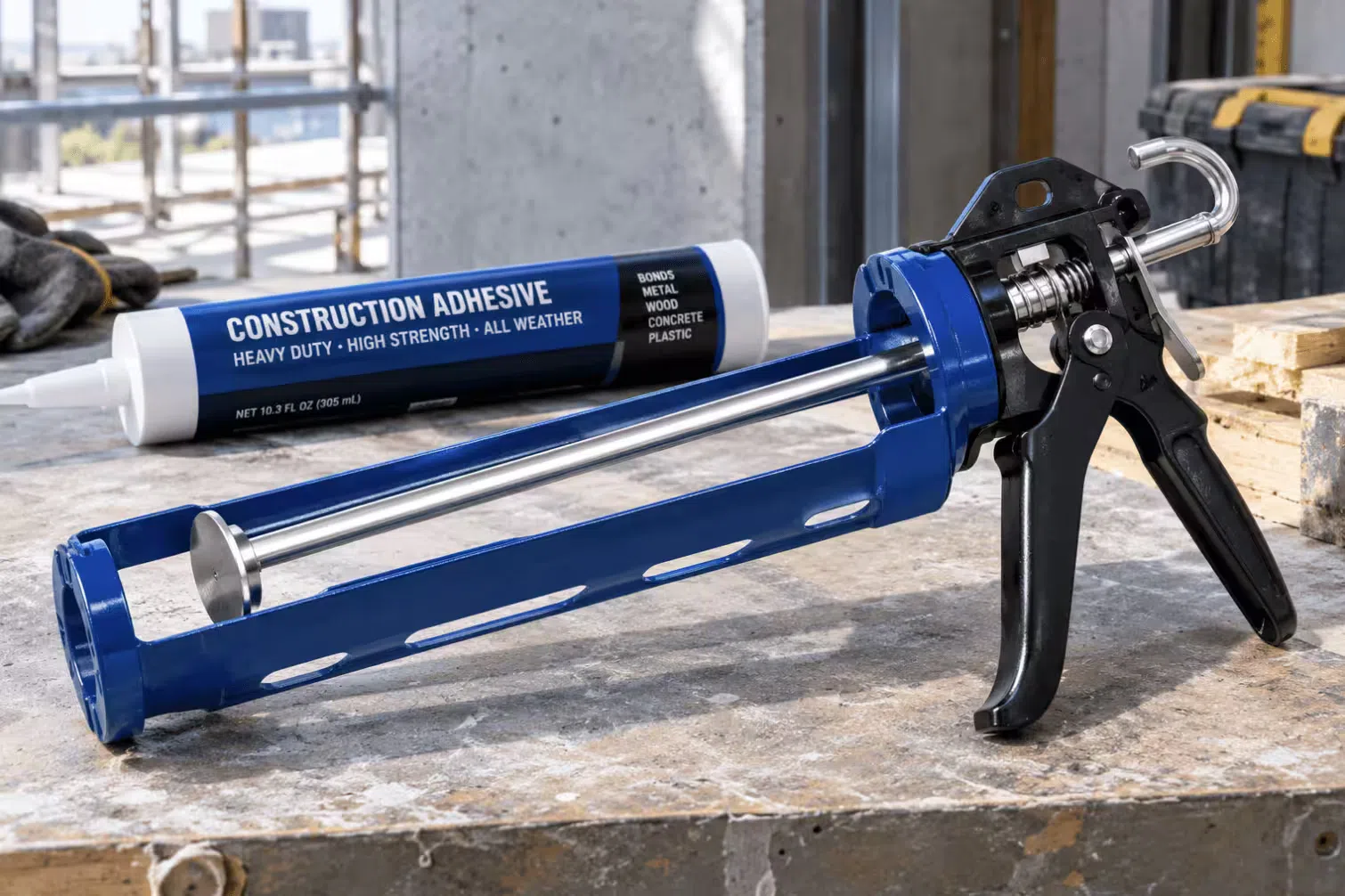
Why Construction Adhesive Needs a Different Caulk Gun
Construction adhesives — subfloor glue, panel adhesive, polyurethane construction adhesive, and liquid nail type products — are not the same as silicone sealant or acrylic latex caulk. They have much higher viscosity and need significantly more mechanical force to extrude through the nozzle. A dedicated construction adhesive caulk gun is designed to handle this demand.
A standard 7:1 or 12:1 thrust ratio caulk gun works well for general sealant work but struggles with these heavy materials. The trigger becomes hard to pull, the bead comes out unevenly, and the operator tires quickly. On a jobsite running 50 or 100 tubes per day, that fatigue slows work and reduces seal quality. The right construction adhesive caulk gun solves this problem by applying more mechanical advantage per squeeze.
For distributors and wholesalers stocking caulking guns for construction supply customers, this means one gun model does not cover every use case. If your buyers include general contractors, subfloor installers, window fitters, or commercial sealing crews, they need a gun designed for thick adhesive, not a standard silicone gun. Stocking the best caulk gun for construction adhesive dispensing typically means carrying 18:1 or higher thrust ratio models.
Minimum Thrust Ratio for Construction Adhesive
The most important specification for construction adhesive work is the thrust ratio. This number tells you how many pounds of force the gun applies to the cartridge for every pound you squeeze on the trigger. A higher ratio means more push with less hand effort.
Tradespeople on construction forums report that low-ratio guns (3:1 to 10:1) quickly wear out the wrist on subfloor adhesive jobs. The consensus recommendation is an 18:1 minimum for general construction adhesives and 24:1 to 26:1 for heavy subfloor adhesives and cold-weather conditions.
Cold temperatures thicken construction adhesives noticeably. A gun that works smoothly at room temperature can become very difficult to squeeze near freezing. Higher thrust ratios compensate for this viscosity increase without requiring the operator to switch tools or warm cartridges.
CaulkMFG supplies cartridge caulking guns with thrust ratios from 7:1 up to 26:1. The table below shows which models fit construction adhesive work:
| Specification | Unit | What It Affects | B2B Buying Note |
|---|---|---|---|
| Thrust ratio | 18:1 to 26:1 | How easily the gun pushes thick adhesive through the nozzle | Higher ratios reduce operator fatigue; stock 18:1 as baseline and 24:1–26:1 for heavy-duty buyers |
| Frame material | Metal or aluminum alloy | Gun weight and long-session durability | Aluminum alloy reduces weight for daily use; steel is more durable for high-thrust models |
| Rod type | Smooth or ratchet | Bead control with viscous material | Smooth rod preferred for construction adhesive; ratchet rod can feel jerky with thick material |
Frame and Rod Features That Matter for Adhesive Dispensing
Thrust ratio is not the only factor. Frame design and rod type affect how well a gun handles construction adhesive through a full workday.
Smooth rod vs ratchet rod. A smooth rod gun lets the operator pull the trigger partway and release without losing plunger position. This makes bead control easier with thick adhesive because you do not have to maintain constant trigger pressure. Ratchet rod guns advance in fixed clicks, which can feel uneven with high-viscosity material. For distribution buyers, offering smooth rod models alongside ratchet models covers both contractor segments.
Frame material and weight. Steel frames are more durable but heavier. Aluminum alloy frames reduce weight, which helps on long jobs. Very high thrust ratios (26:1) typically use steel frames for structural strength. Distributors stocking for different duty cycles should match frame material to the expected workload.
Dripless release mechanism. A quick-release lever lets the operator relieve residual cartridge pressure between squeezes. With thick construction adhesive, this is important because residual pressure can push material out of the nozzle after the trigger is released, wasting sealant and creating mess.
Cartridge Compatibility and Procurement Notes for Distributors
Most construction adhesives use standard 300 ml or 310 ml rigid cartridges that fit all CaulkMFG cartridge caulking guns. Some heavy-duty adhesives come in sausage packs or larger cartridges, which require a different gun format.
Distributors should confirm the adhesive packaging before ordering guns for their inventory. A buyer who stocks subfloor adhesive in 300 ml cartridges needs a standard cartridge gun. A buyer who stocks bulk sausage pack adhesive needs a sausage caulk gun.
Two-component epoxy and polyurea adhesives require a dual-cartridge dispensing gun with a fixed mixing ratio. Standard single-component cartridge caulk guns do not work with two-part systems.
For OEM buyers, CaulkMFG supports custom colors, packaging, and branding on cartridge caulking guns across all thrust ratio tiers. This allows hardware chains and tool brands to offer a consistent product line across silicone, PU, and construction adhesive dispensing categories.
Application Matching Table
| Application | Recommended Gun Type | Key Specs to Check |
|---|---|---|
| General PU construction adhesive | 18:1 thrust manual cartridge gun | Thrust ratio, smooth rod mechanism |
| Hybrid and polymer adhesive | 24:1 thrust manual cartridge gun | Dripless release, aluminum frame for balanced weight |
| Subfloor and heavy-duty adhesive | 26:1 thrust manual cartridge gun | Steel frame durability, rod quality for sustained use |
| Panel and trim adhesive | 18:1 thrust with smooth rod | Rod type, trigger comfort for repetitive work |
| Cold-weather adhesive application | 24:1 or 26:1 thrust | High thrust to compensate for increased viscosity |
Distributor Stocking Strategy
For buyers sourcing caulking guns through hardware or construction supply channels, consider stocking two or three thrust ratio tiers:
- 18:1 model as the baseline for general construction adhesive buyers. This covers most PU and hybrid adhesive work.
- 24:1 or 26:1 model for contractors who regularly do subfloor work, window installation, or cold-weather sealing.
- 12:1 dual-thrust model as a versatile option for customers who stock both silicone sealants and construction adhesives.
Pricing and quality in manual caulking guns are directly correlated. Low-cost guns use low thrust ratios and thin frame materials. Distributors who prioritize a single low-cost model often face returns or complaints when the gun cannot handle the buyer's adhesive. Checking frame material, rod quality, and thrust ratio before ordering prevents these stock issues.
Spare parts availability matters for wholesale buyers. Replacement plunger rods, release levers, and nozzle cutters are commonly requested after-sales items. Confirming spare parts support with the manufacturer before placing a bulk order helps distributors support their end customers better.
FAQ
Can you use a regular caulk gun for construction adhesive?
A standard caulk gun with a 7:1 or 12:1 thrust ratio can dispense thin construction adhesives, but it will make the work much harder than needed. For typical PU, hybrid, and subfloor adhesives, an 18:1 minimum thrust ratio is recommended.
What thrust ratio do I need for construction adhesive?
General construction adhesives need at least 18:1. Heavy subfloor adhesives and cold-weather applications typically require 24:1 or 26:1. The right ratio depends on the specific adhesive viscosity and the ambient temperature during application.
Is a manual caulk gun strong enough for construction adhesive?
Yes. A manual caulk gun with an 18:1 or higher thrust ratio is strong enough for most construction adhesives. Pneumatic and cordless guns are faster, but a well-chosen manual high-thrust gun handles the material with lower cost, fewer maintenance points, and simpler operation.
Can CaulkMFG supply caulking guns for construction adhesive in wholesale quantities?
Yes. CaulkMFG supports wholesale supply, OEM branding, custom colors, and packaging options for cartridge caulking guns across all thrust ratio tiers. For bulk orders, buyers should specify the target adhesive types, cartridge format, and expected duty cycles so the correct models can be recommended.
What spare parts should distributors stock for cartridge caulking guns used with construction adhesive?
Plunger rods, release levers, and replacement barrels are the most frequently requested spare parts. High-thrust guns used with thick adhesive experience more rod wear over time. Distributors should confirm spare parts compatibility with the specific gun model before stocking.
What is the difference between a cartridge caulk gun for construction adhesive and a dual cartridge epoxy gun?
A single-component cartridge caulk gun works with standard rigid cartridges of adhesive or sealant. A dual cartridge epoxy gun is designed for two-part epoxy and polyurea adhesives that must be mixed at a fixed ratio as they are dispensed. Buyers should confirm their adhesive packaging before selecting the gun type.
Get the Right Caulk Gun for Your Construction Adhesive Stock
If you are sourcing caulking guns for construction adhesive dispensing, send CaulkMFG the following details to get a model recommendation: the sealant or adhesive types you need to dispense, the cartridge size or pack format used in your market, your target market and customer profile, your expected order quantity, and any OEM or private-label requirements. This information helps us match the right thrust ratio, frame material, and packaging options to your distribution needs.