A double barrel caulk gun uses paired push rods to dispense two adhesive components from a single cartridge at the same time. For distributors, adhesive brands, and procurement teams sourcing cordless dual cartridge guns, understanding this mechanism is the first step to matching the right tool to the right adhesive system.
Unlike a standard single-component caulking gun, a double barrel caulking gun must push both the A and B materials at matched pressure. If one side moves faster than the other, the mixing ratio shifts, and the adhesive may not cure correctly. This article explains how the mechanism works, what separates it from a regular caulk gun, and what B2B buyers should check before ordering.
How the Double-Barrel Mechanism Works
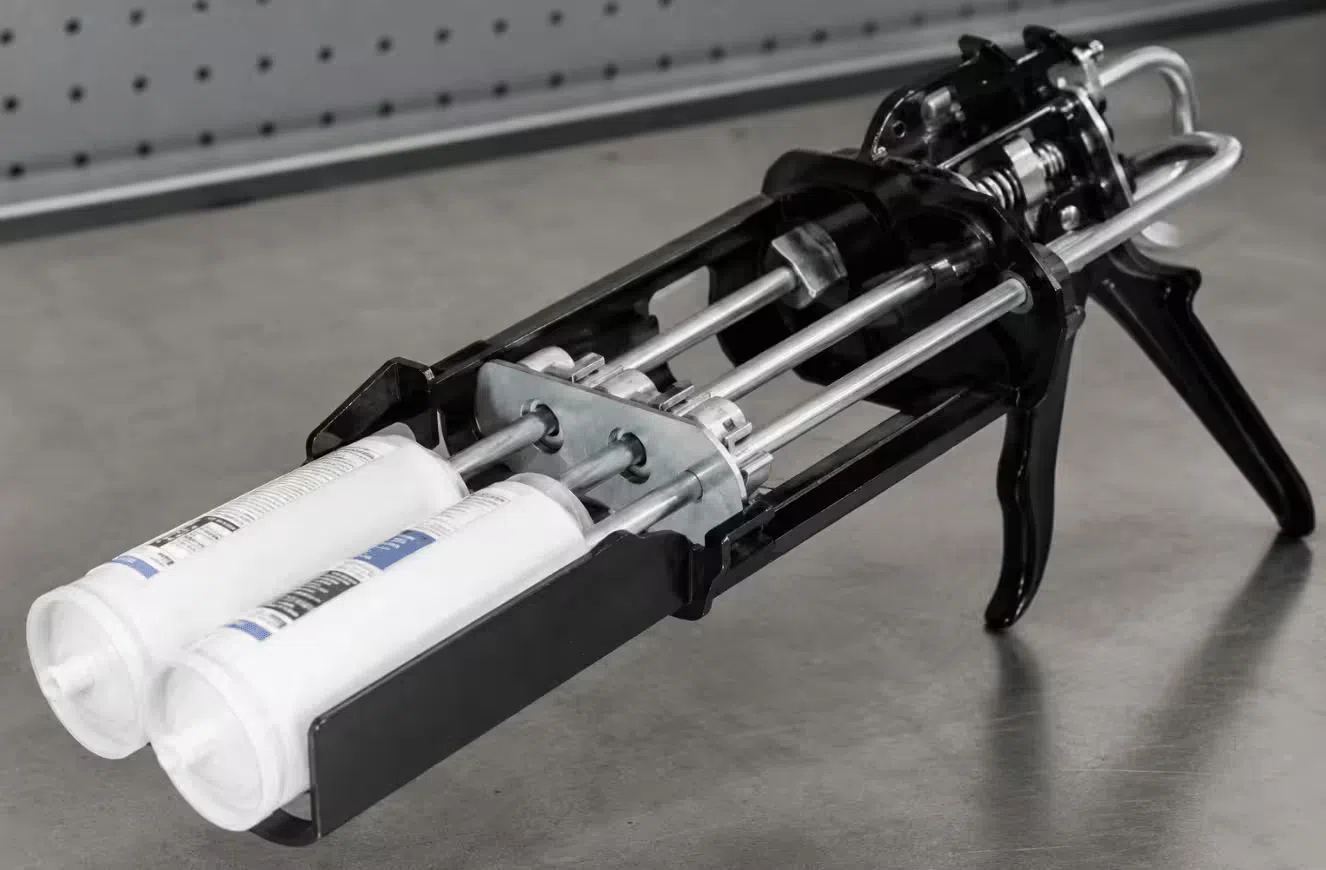
Inside a double barrel gun, two push rods sit side by side, each aligned with one chamber of the dual cartridge. When the operator pulls the trigger, a gear or lever system drives both rods forward at the same rate. This paired push rod design is what keeps the A and B components moving at equal speed.
The key engineering detail is the catch plate — the metal disc at the end of each push rod that contacts the cartridge pistons. In a well-made dual cartridge gun, the catch plates are matched in size and alignment so that neither piston leads or lags during dispensing. If the plates are misaligned or the rods flex under load, one cartridge empties faster than the other, and the adhesive mix ratio drifts.
For high-viscosity materials like structural epoxy or polyurethane adhesive, the thrust ratio of the gun determines how much force the mechanism can deliver. A 26:1 thrust ratio means the trigger multiplies the operator's hand force by 26 times. Professional-grade cordless dual cartridge guns typically use motor-driven push rod systems that maintain consistent thrust without relying on hand pressure.
Double Barrel vs Single Barrel: Why the Mechanism Matters
A standard single-barrel caulking gun has one push rod designed for one cartridge or sausage pack. The operator squeezes the trigger, the rod advances, and sealant flows from a single chamber. This works for single-component materials like silicone, polyurethane sealant, or acrylic caulk.
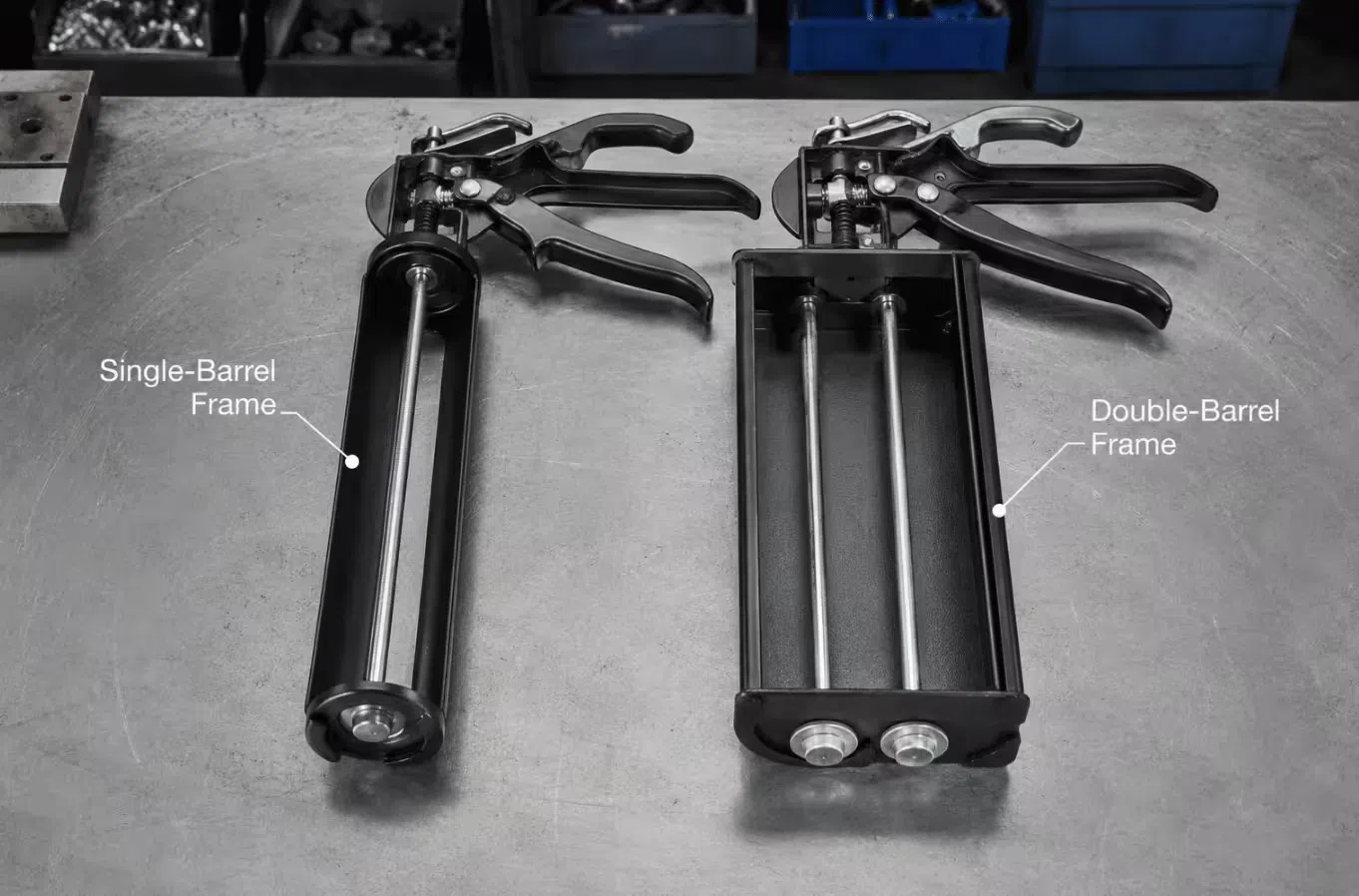
A double barrel caulk gun cannot use a single push rod because two-component adhesives are packed in paired cartridges. The dual cartridge gun mechanism requires two synchronized rods to push both pistons at the same time. The trigger system, gear train, and catch plate assembly are all designed around this dual-piston requirement.
The structural differences go beyond the push rods. The frame of a double barrel gun is wider to hold the dual cartridge, and the nozzle end accepts a static mixing tube rather than a standard caulk tip. The mixing tube contains internal spiral elements that blend the A and B components as they exit the cartridge. Without this tube, the two materials would come out unmixed and would not bond or cure properly.
For procurement teams, the practical point is this: a single-component gun and a two component dispensing gun are not interchangeable. Ordering the wrong type means the tool cannot hold the cartridge at all.
Mixing Ratios and Cartridge Compatibility
Double barrel guns support different mixing ratios depending on the cartridge system. The most common ratios are 1:1, 2:1, 4:1, and 10:1. A 1:1 ratio means both cartridges hold equal volumes of A and B material. A 2:1 ratio means the A-side cartridge holds twice the volume of the B-side.
The ratio affects the cartridge dimensions. A 1:1 cartridge pair uses two chambers of equal diameter. A 2:1 cartridge pair uses one wider chamber and one narrower chamber. The gun's catch plate and push rod spacing must match the cartridge profile — a 1:1 gun will not properly seat a 2:1 cartridge because the pistons are different sizes.
Common cartridge sizes for dual component cartridge guns include:
- 200ml (typically 1:1 ratio) — suited for small repair jobs, automotive panel bonding, and spot applications
- 400ml (1:1, 2:1, or 3:1 ratios) — the most common size for construction and industrial assembly
- 600ml (1:1 or 2:1 ratios) — used for higher-volume structural bonding and large-area adhesive work
When stocking cordless dual cartridge guns for resale, match the gun models to the cartridge sizes your adhesive suppliers offer. A mismatch between gun and cartridge leads to returns and end-user frustration.
Cordless Battery Power for Double-Barrel Dispensing
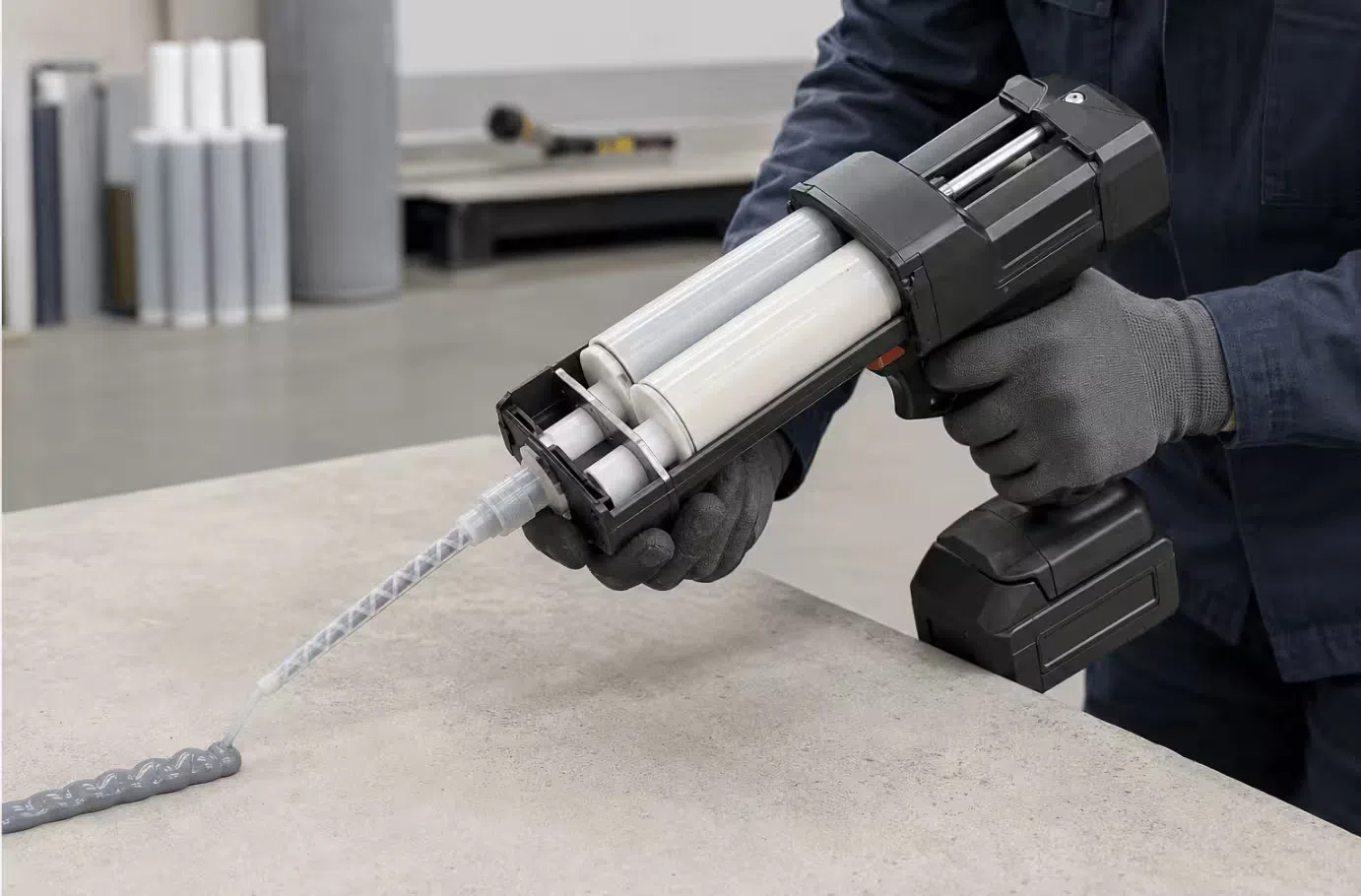
Cordless models use a rechargeable battery to drive the push rod motor instead of relying on hand pressure. For a double barrel caulk gun, this matters more than for a single-component gun because two-component adhesives are often thicker and require more consistent force to dispense evenly.
A cordless dual cartridge gun with a motor-driven system maintains steady thrust across the full stroke, regardless of the operator's hand strength. This is especially important for high-viscosity structural adhesives where manual trigger fatigue can cause uneven dispensing partway through a cartridge.
Battery runtime depends on the motor power, cartridge size, and adhesive viscosity. For a typical 400ml cartridge at moderate viscosity, a full charge should dispense multiple cartridges before needing a recharge. Distributors should check the rated cartridge-per-charge count when comparing models for their customers.
What B2B Buyers Should Check Before Ordering
For procurement teams, distributors, and adhesive brand managers, the following specs determine whether a double barrel epoxy gun model will work for your market:
Push rod material and construction. Steel push rods resist flex under high thrust loads. Plastic or thin-metal rods may bend when dispensing thick adhesives, causing uneven output.
Thrust ratio. For structural epoxies and high-viscosity polyurethanes, look for a thrust ratio of 26:1 or higher. Lower ratios work for silicone and acrylic sealants but may struggle with industrial adhesives.
Anti-drip mechanism. An auto-reverse feature that retracts the push rods when the operator releases the trigger prevents material from continuing to flow. This reduces waste and keeps the work area clean.
Cartridge compatibility. Confirm the gun model supports the specific cartridge sizes and mixing ratios your customers use. Some models handle both 200ml and 400ml; others are fixed to one size.
Mixing nozzle fit. The gun should accept standard static mixing nozzles for the cartridge system. Proprietary nozzle fittings limit the end user's sourcing options.
OEM and branding options. If you supply adhesive kits or sell under your own brand, check whether the gun manufacturer offers custom color, logo printing, or packaging.
FAQ
What is a double barrel caulk gun used for?
A double barrel caulk gun dispenses two-component adhesives and sealants from paired cartridges. It is used with epoxy, polyurethane, silicone, structural adhesives, and other A/B materials that must be mixed at the point of application through a static mixing nozzle. Construction, automotive, marine, and industrial assembly applications all use this type of dispensing tool.
Can a double barrel caulk gun dispense epoxy?
Yes. Double barrel guns are specifically designed for two-part epoxy adhesives packed in dual cartridges. The paired push rods push both resin and hardener at the correct ratio through a static mixing tube. For thick structural epoxies, choose a model with a thrust ratio of 26:1 or higher to ensure smooth dispensing without push rod flex.
What is the difference between a double barrel and a dual cartridge gun?
These terms describe the same type of tool. "Double barrel" is a common trade term referring to the two side-by-side chambers in the cartridge. "Dual cartridge" is the more formal product description. Both use paired push rods to dispense two-component materials simultaneously. Some product listings also use "dual component cartridge gun" or the brand-specific term "SEM dual mix gun" for the same mechanism design.
What mixing ratios do double barrel guns support?
Most double barrel guns support 1:1 and 2:1 mixing ratios by default. Some models also handle 4:1 and 10:1 ratios with different cartridge inserts or adjustable catch plates. The ratio is determined by the cartridge, not the gun — the gun must be matched to the cartridge dimensions. A 1:1 gun uses equal-diameter chambers; a 2:1 gun uses one wider and one narrower chamber.
Are cordless double barrel guns suitable for high-viscosity adhesives?
Yes, when the model has a motor-driven system with sufficient thrust. Cordless double barrel guns with rechargeable battery power maintain consistent force across the full stroke, which is important for thick materials like structural epoxy or polyurethane adhesive. Check the rated thrust ratio and motor specifications before ordering for high-viscosity applications.
Looking for cordless dual cartridge guns for your product line? Request a quote for OEM and wholesale cordless caulking gun models.