A dual cartridge epoxy gun dispenses two-component adhesives from paired A/B cartridge systems. For procurement managers, adhesive brand buyers, tool distributors, and production teams, the main concern is not whether the gun works — it is whether it works consistently. Uneven output, incomplete mixing, cartridge leaks, and clogging are recurring problems that affect bond quality, increase waste, and create end-user complaints.
These problems usually trace back to gun design, cartridge compatibility, and specification mismatch — not the adhesive itself. Understanding these failure modes helps with model selection, supplier evaluation, and end-user support when sourcing cordless dual cartridge guns for wholesale, OEM, or project supply.
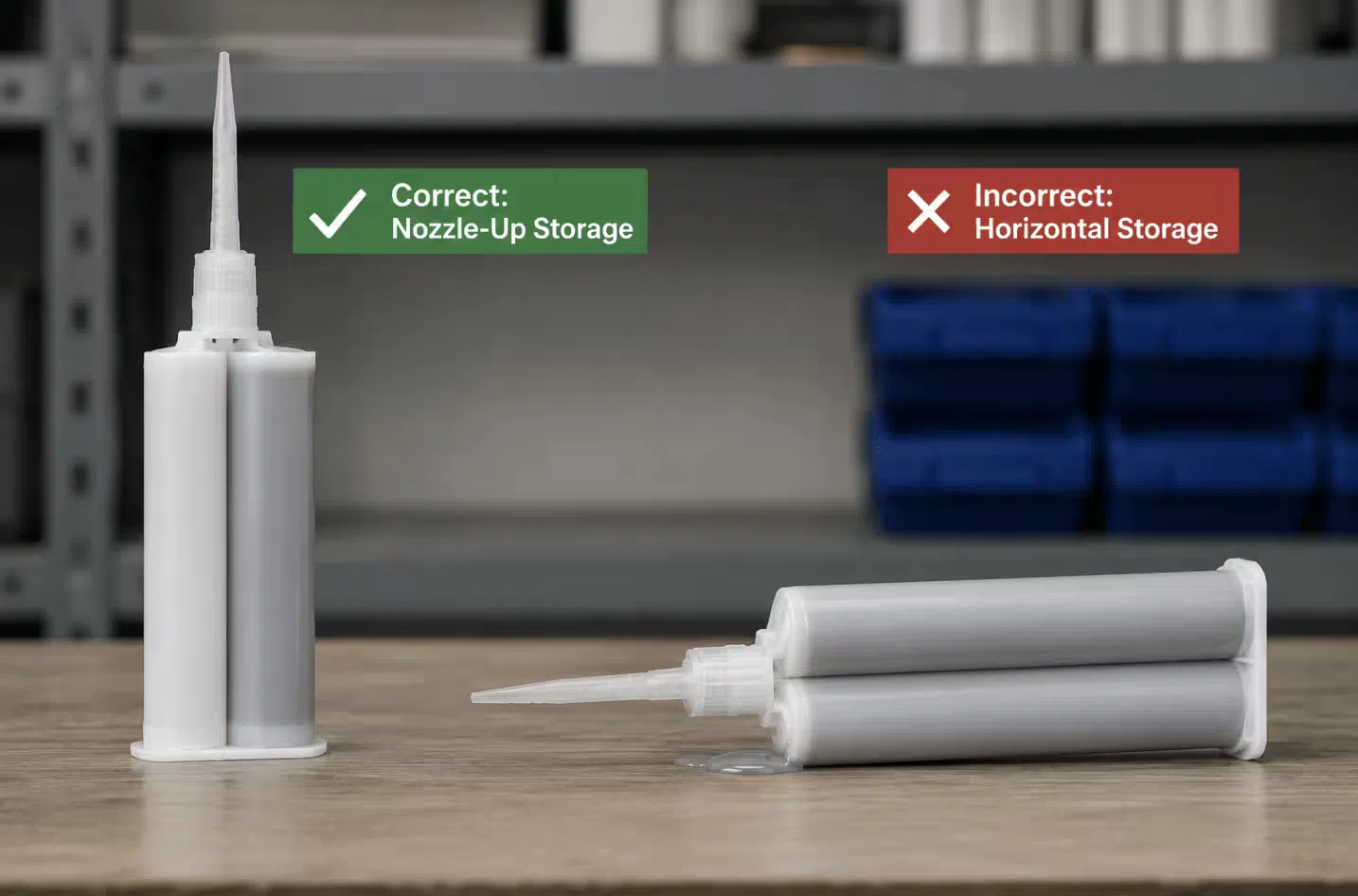
Uneven A/B Material Output
The most common dispensing problem with dual cartridge systems is uneven output. When the A and B components have different viscosities — a thick resin paired with a thinner hardener, for example — the thinner side dispenses faster while the thicker side lags behind. This changes the mixing ratio at the nozzle, which leads to soft cures, tacky surfaces, or incomplete bonding.
Standard dual plungers apply equal forward force to both sides. If the materials resist differently, the ratio shifts. Some users try to work around this by pushing each side manually in sequence, but that approach is imprecise and slow for production work.
A dual-piston drive solves this by maintaining synchronized forward pressure on both cartridges regardless of viscosity differences. For structural adhesives and high-viscosity two-component epoxies, even a small ratio deviation can compromise bond strength. When evaluating a dual cartridge gun, verify that the model supports the specific mixing ratio required for the adhesive system — common options include 1:1, 2:1, 4:1, and 10:1. Loading a 2:1 cartridge into a 1:1 gun will push unequal volumes and waste material.
Incomplete Mixing from the Nozzle
Even when the gun dispenses the correct ratio, the adhesive may not cure properly if the static mixing nozzle does not blend the components thoroughly. A short nozzle with too few mixing elements can leave streaks of unmixed resin or hardener in the bead. This is more common with thicker materials that need more mixing passes before the two components combine fully.
For anyone sourcing on behalf of end-users, it is worth specifying the correct nozzle alongside the gun. Some suppliers offer compatible mixing nozzles bundled with the dual cartridge gun, which simplifies ordering and ensures fit. Static mixing nozzles are consumable — they need regular replacement — so nozzle availability and replacement cost should be part of the sourcing decision.
Cartridge Seal Failure and Leaking
When the cartridge seal fails, adhesive leaks from the back or sides during dispensing. This wastes material, creates a mess on the jobsite, and can shift the A/B ratio mid-dispense.
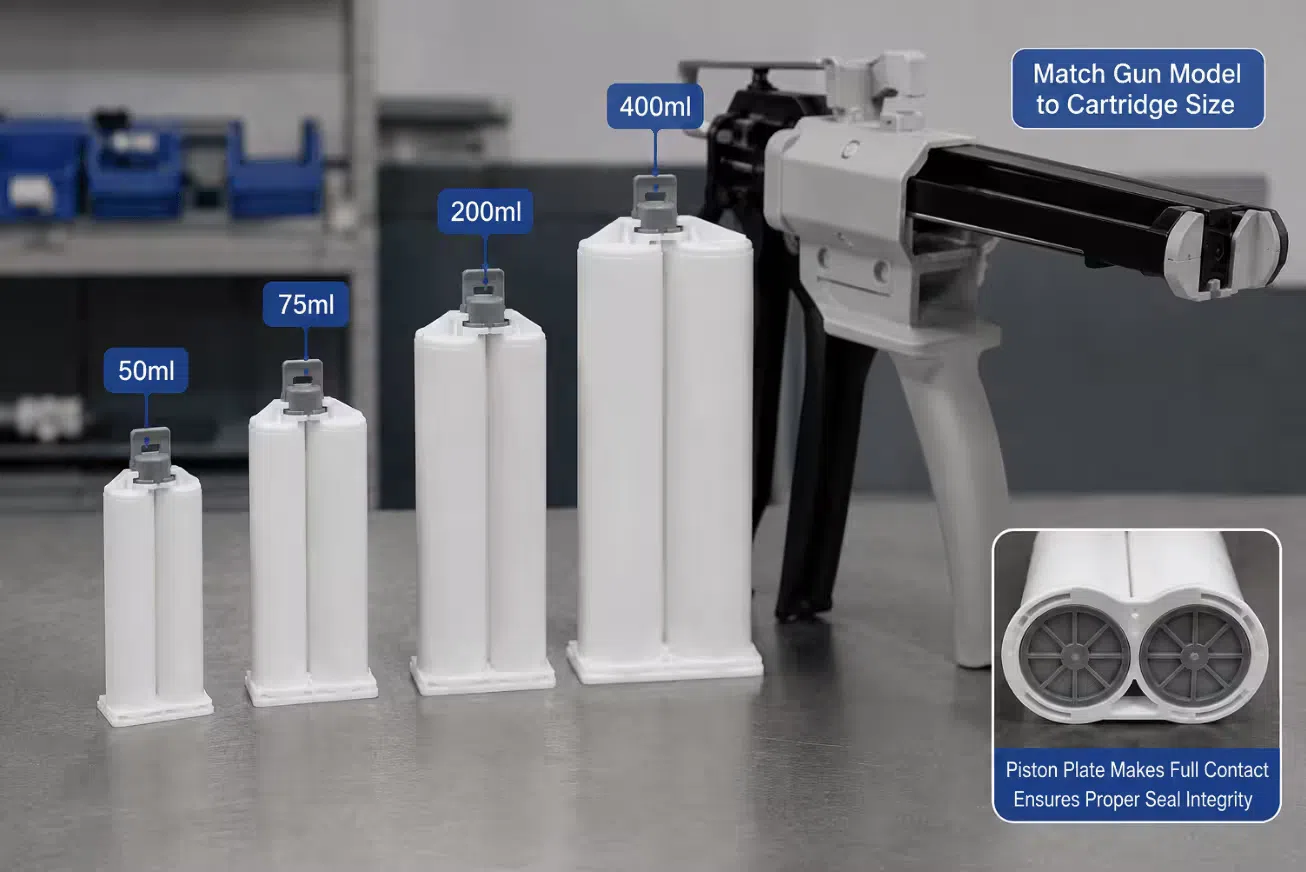
Seal failure often results from cartridge size mismatch. Using a 200ml cartridge in a gun designed for 400ml means the pistons do not seat correctly against the cartridge back, which reduces seal pressure and allows bypass. Manufacturing tolerances in the cartridge itself also matter — poorly molded cartridge walls or uneven piston fit can cause leaks even in a correctly sized gun.
Quality-focused buyers should request dispensing ratio test data from suppliers and run sample tests with their specific adhesive before committing to bulk orders. Cordless dual cartridge gun models are available in sizes from 50ml to 600ml, so matching the gun to the cartridge system is a basic sourcing requirement.
High-Viscosity Adhesive Clogging
Thick structural adhesives — including high-viscosity epoxy, polyurethane, and silicone — require more dispensing force than standard sealants. If the gun motor or battery platform does not provide enough force, the result is slow dispensing, motor strain, or nozzle clogging.
For cordless models, battery output matters. A dual epoxy gun that handles low-viscosity sealant easily may stall or overheat when pushing a thick two-component structural adhesive. When sourcing, look for:
- Higher motor output rated for thick adhesive dispensing
- Brushless motor design for consistent power under load
- Battery platforms rated for sustained heavy-duty work
- Speed control settings that allow slower, steadier dispensing for viscous materials
The cordless dual cartridge guns are designed for high-viscosity adhesive dispensing with rechargeable power, making them suitable for structural bonding applications on jobsites and in workshops.
What to Check Before Sourcing
Anyone sourcing a dual cartridge epoxy gun for wholesale, OEM projects, or bulk supply should verify these specifications before placing orders:
| Specification | What to Check |
|---|---|
| Cartridge size compatibility | 50ml, 200ml, 400ml, 585ml, 600ml — match to adhesive packaging |
| Mixing ratio support | 1:1, 2:1, 4:1, 10:1 — must match the cartridge system |
| Dispensing force | Sufficient for the adhesive viscosity being dispensed |
| Static mixing nozzle fit | Compatible nozzle type and availability as replacement |
| Battery platform | Runtime, charge time, and power output for heavy-duty use |
| Piston seal quality | Tight tolerances to prevent leaking and ratio drift |
| OEM customization | Color, logo, label, packaging for private-label projects |
Requesting sample units for testing with specific adhesive formulations before placing a bulk order is standard practice. It is also worth confirming that the supplier provides replacement parts, spare nozzles, and technical support for the models being ordered. Request a quote with your target market, cartridge system, and application details to receive suitable model options and pricing.
FAQ
What is a dual cartridge epoxy gun?
A dual cartridge epoxy gun is a dispensing tool designed for two-component adhesives and sealants. It uses paired cartridges with separate A and B chambers and a dual-piston drive that pushes both components forward simultaneously through a static mixing nozzle. These tools are commonly used with epoxy, polyurethane, silicone, and structural adhesives in construction, automotive, and manufacturing applications.
What cartridge sizes do dual cartridge guns support?
Common dual cartridge sizes include 50ml, 200ml, 400ml, 585ml, and 600ml. The available sizes depend on the gun model. Since adhesive suppliers package in different cartridge formats, buyers should confirm the gun model matches their target cartridge system before ordering. Using the wrong size cartridge can cause seal failure and incorrect dispensing ratios.
Can a cordless dual cartridge gun handle high-viscosity epoxy?
Yes, but the correct dispensing force and drive structure must be selected for the material. Thicker adhesives require stronger motor output and battery capacity than standard sealants. Before ordering, confirm that the gun model is rated for the specific adhesive viscosity your end-users will dispense.
Why does balanced A/B output matter for two-component adhesives?
Two-component adhesives require a precise mixing ratio to cure properly. If one side of the cartridge dispenses faster than the other, the ratio becomes incorrect. This can cause soft cures, weak bonds, or complete bond failure. A dual-piston drive maintains synchronized pressure on both cartridges to keep the ratio accurate from the first stroke to the last.
Is a cordless dual cartridge gun suitable for structural bonding?
Yes. Cordless dual cartridge guns are designed for two-component structural adhesive dispensing. They provide the portability needed for jobsite use while maintaining the dispensing consistency required for structural bonding. Buyers should verify the model's dispensing force and cartridge compatibility for their specific adhesive system before placing orders.