When your customers need to move beyond manual caulking guns, the next decision is which powered dispensing type to stock. An electric caulking gun and a pneumatic caulking gun solve the same basic problem — pushing sealant or adhesive out of a cartridge or sausage pack with less hand effort — but they create very different working conditions on the jobsite. For distributors, construction suppliers, and wholesale buyers, choosing between these two types affects customer satisfaction, product returns, and how well your tool line fits the real work your customers do.
This comparison covers mobility, dispensing control, weight, material handling, cost, and maintenance. It also looks at which powered type fits which kind of buyer, so you can match your product line to actual demand instead of guessing.
Why Powered Dispensing Matters for Professional Sealing Work
Manual caulking guns work fine for small repair jobs and occasional use. For high-volume sealing — wide expansion joints, long window perimeters, repeated cartridge after cartridge — a manual gun fatigues the operator and produces inconsistent beads. The squeeze-and-release motion creates stop-start patterns that leave blobs and gaps, which means more tooling time and more wasted sealant.
Powered dispensing solves this by providing continuous, even material flow. There are two main paths: battery-powered cordless models and air-powered pneumatic models. Each has clear strengths and clear limits.
Mobility and Jobsite Freedom
The biggest practical difference between a cordless caulking gun and a pneumatic caulking gun is how much freedom the operator has to move.
A cordless electric caulking gun is fully self-contained. There is no compressor to roll into position, no air hose to manage, and no search for an electrical outlet. The operator picks it up, loads the cartridge or sausage pack, and walks to the work area. This matters most on interior jobs — bathrooms, kitchens, office fit-outs, and multi-room renovation — where dragging a hose through finished spaces creates problems. Hoses catch on door frames, pull through wet sealant, and limit how far the operator can work from the compressor.
A pneumatic caulking gun needs a compressor and air hose connected at all times. If the compressor is already running on the jobsite for nailers or other air tools, this is not an extra burden — the infrastructure is already there. But for a job where the caulking gun is the only powered tool needed, setting up a compressor just to run a sealant gun adds time, noise, and equipment to manage.
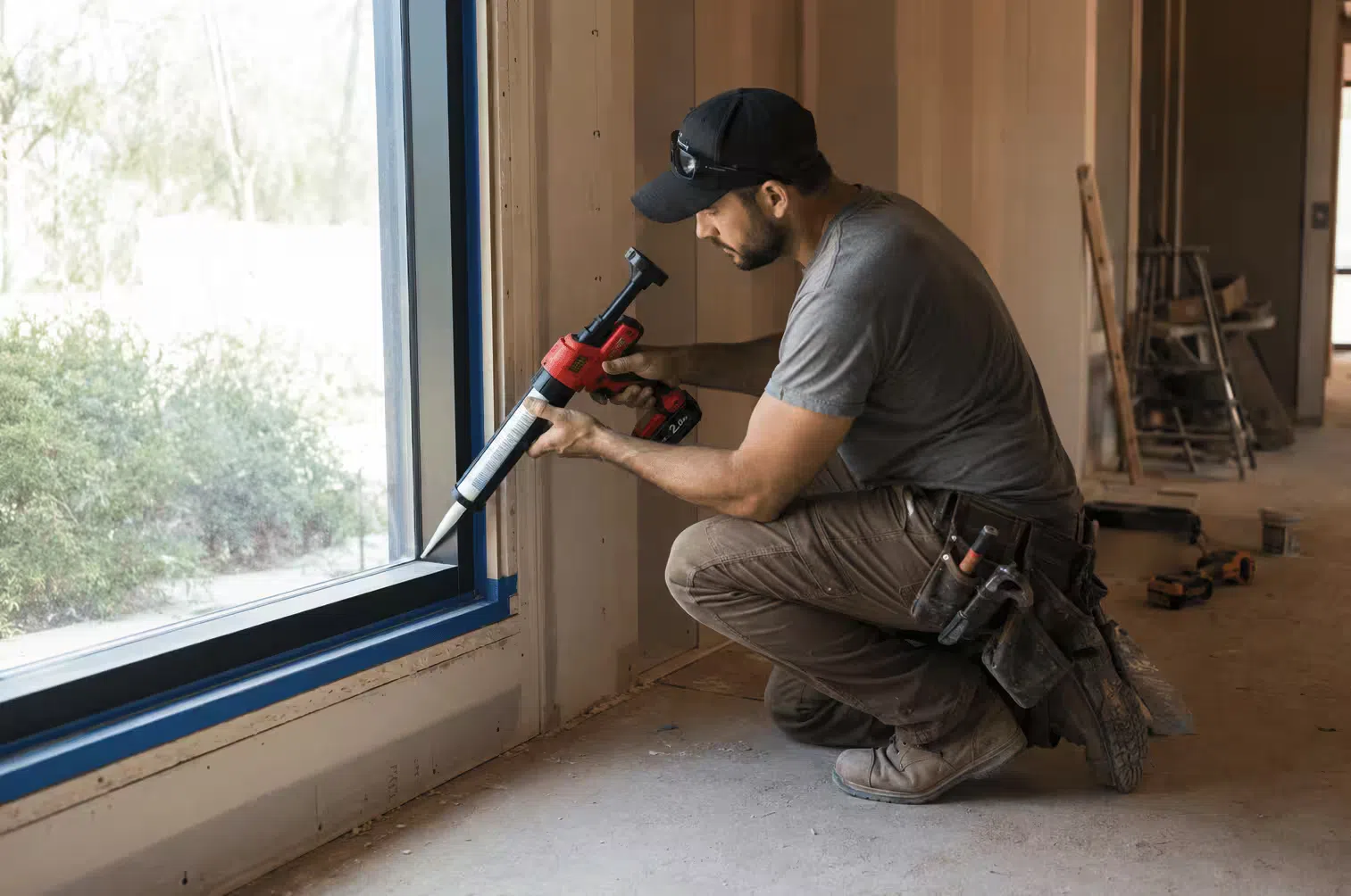
Forum feedback from trade professionals consistently shows that cordless is the preferred format for interior and renovation work. One contractor who tried both types reported that the air hose was the main source of frustration — not the gun itself. For wholesale buyers serving renovation contractors and interior fit-out crews, cordless models address a real jobsite condition that pneumatic tools struggle with.
Dispensing Control and Bead Quality
Bead quality depends on how precisely the operator can control material flow. This is where the two types differ in a way that directly affects finishing time and sealant waste.
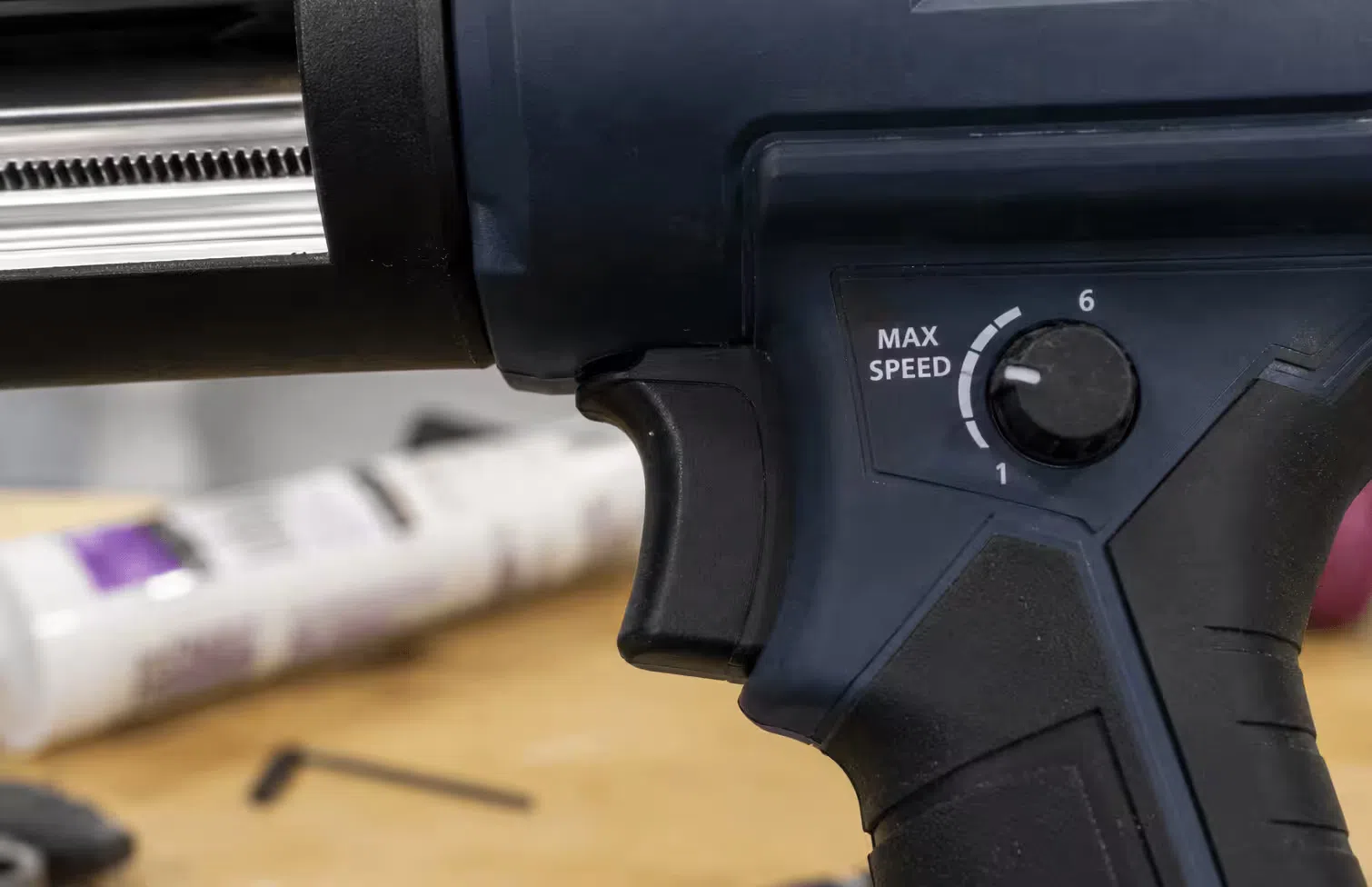
A cordless electric caulking gun typically has a variable-speed trigger. The operator controls flow speed by how far they pull the trigger, and many models include a maximum speed dial to set an upper limit. This gives precise control for slow, careful bead placement on visible joints — window frames, interior trim, facade panels — where an uneven bead is noticeable and costly to fix.
A pneumatic caulking gun works more like an on/off switch. Air pressure pushes material when the trigger is open, and stops when it closes. Getting fine control is possible with a pressure regulator mounted near the handle, but it takes more setup and adjustment. When the operator stops and restarts, each pause can create a small blob or thin spot in the bead.
One trade professional who switched from a cheap pneumatic gun to a cordless model reported that the ability to lay down long, clean seams improved immediately — even without doing caulking regularly. That kind of control difference matters when your customers include general contractors whose crews are not dedicated sealant applicators.
Weight, Fatigue, and All-Day Use
Weight is a factor where the comparison is less straightforward than it first appears.
A pneumatic caulking gun body is usually lighter than a cordless model because it has no motor or battery. For a single gun, the pneumatic version feels lighter in the hand. But the total system includes the compressor and hose. When a contractor carries or moves the compressor, manages the hose, and drags it along the work path, the total weight and physical effort can exceed what a cordless gun requires.
For extended caulking sessions — sealing an entire floor of baseboards, a long curtain wall, or hundreds of linear feet of expansion joint — the hose drag from a pneumatic system adds arm and wrist fatigue. The operator is not just holding the gun; they are also managing the hose weight and avoiding snag points.
A cordless gun has no hose, so the only weight is the tool itself and the battery. Modern 18V and 20V models balance the battery at the base of the handle, which keeps the center of gravity close to the grip. This reduces wrist strain during overhead or extended-angle work.
Power and Material Viscosity
Not all sealants and adhesives flow the same way. This is where material viscosity becomes a real selection factor for B2B buyers.
Common professional sealants — silicone, acrylic, MS polymer, and low-to-medium viscosity polyurethane — dispense well through both cordless and pneumatic guns. For these materials, the choice between electric and pneumatic comes down to mobility and control, not power.
Thicker materials — heavy polyurethane sealants, high-viscosity construction adhesives, and some specialty compounds — require more consistent pushing force. One experienced user cautioned that smaller cordless guns may not handle the heaviest materials well. This is a practical concern for distributors whose customers work with thick adhesives regularly. In those cases, a higher-voltage cordless model (18V or 20V) or a pneumatic gun with steady air pressure may be necessary.
For buyers sourcing cordless caulking guns for wholesale, the question to ask is: what sealant types do your customers use most? If the answer is standard silicone and acrylic sealant in 10 oz or 29 oz cartridges, a mid-range cordless gun covers the job. If customers regularly dispense heavy construction adhesive, you may need to recommend higher-voltage models or discuss pneumatic options for those specific applications. Cordless sausage caulking guns are also available for bulk dispensing applications where cartridge format is not the standard.
Cost, Maintenance, and Supply Chain Considerations
Upfront cost per unit is usually lower for pneumatic guns. But the total cost picture includes the compressor, air hose, fittings, and maintenance that pneumatic systems require.
A cordless electric caulking gun has a higher per-unit price, but the operator does not need a compressor. If the buyer's customers already own a battery platform — Makita, DeWalt, Milwaukee, or similar — a cordless gun that fits that battery ecosystem reduces the entry cost. The battery and charger are already on hand.
For pneumatic systems, the compressor is a separate purchase and an ongoing maintenance item. Compressors need oil changes, moisture draining, and occasional repair. The air hose is a wear item that kinks, cracks, and needs replacement. These hidden costs add up for end users who did not plan for full pneumatic system maintenance.
For wholesale buyers and distributors, this affects post-sale support. Cordless gun complaints tend to focus on battery life and charging — straightforward to resolve with replacement batteries. Pneumatic gun complaints can involve compressor compatibility, pressure settings, and air moisture problems — issues that are harder to troubleshoot remotely and may require the customer to invest in additional equipment.
Quick Comparison: Electric (Cordless) vs Pneumatic Caulking Gun
| Factor | Electric (Cordless) Caulking Gun | Pneumatic Caulking Gun |
|---|---|---|
| Mobility | Full — no hose, no compressor | Limited — needs compressor and hose |
| Dispensing Control | Variable-speed trigger, precise flow | On/off trigger, pressure-regulated |
| Gun Body Weight | Heavier (motor + battery) | Lighter (no motor or battery) |
| Total System Weight | Lower (self-contained) | Higher (compressor + hose) |
| Viscous Materials | Good with 18V/20V models | Consistent air pressure output |
| Upfront Cost | Higher per unit | Lower per unit, plus compressor |
| Maintenance | Battery replacement | Compressor, hose, fittings |
| Best For | Interior work, renovation, solo operators | Workshop setups, crew workflow, heavy adhesives |
How to Decide for Your Market
The right powered dispensing type for your product line depends on your customers' jobsite conditions and tool inventory. Here are the key questions to consider before ordering:
What kind of work do your customers do most? Interior finishing, renovation, window installation, and multi-room sealing strongly favor cordless. Shop-based production, industrial maintenance with existing compressor lines, and two-person caulking crews may work well with pneumatic.
Do your customers already run a battery platform? If most of your buyers use Makita 18V, DeWalt 20V, or Milwaukee M18 tools, a cordless caulking gun that fits that platform lowers the barrier to purchase. Battery compatibility drives repeat orders.
What sealant types are standard in your market? If most customers use silicone, acrylic, or MS polymer sealant in cartridges, cordless models handle the job. If heavy polyurethane or thick construction adhesives are common, make sure the cordless model you stock has enough voltage and thrust for those materials.
Are you serving solo contractors or crew-based operations? Solo operators benefit most from the self-contained nature of cordless. Crews that already have a compressor on-site may prefer pneumatic, especially with a two-person caulking-and-tooling workflow.
For most construction suppliers and distributors, the trend in powered dispensing is moving toward cordless. The combination of mobility, control, and battery ecosystem compatibility makes a cordless electric caulking gun a practical fit for the widest range of customers. If you want to explore cordless caulking gun options for your product line, you can request a quote for wholesale and OEM supply.
FAQ
Is a cordless caulk gun worth it?
For most professional sealing jobs — interior finishing, window installation, renovation, and general construction — a cordless caulk gun is worth the investment. It removes the need for a compressor, eliminates hose management, and gives the operator better control over dispensing speed. The higher upfront cost compared to a manual gun is offset by faster bead placement, less sealant waste, and reduced hand fatigue during repeated use. If your customers already own a compatible battery platform, the entry cost drops further.
Cordless vs pneumatic caulking gun: which is more reliable?
Both types are reliable when matched to the right jobsite conditions. Cordless guns have fewer external dependencies — no compressor, no hose, no air fittings — so there are fewer system components that can fail. Battery life and charger availability are the main concerns. Pneumatic guns are mechanically simple, but system reliability depends on the compressor, hose condition, and air moisture management. For field conditions and mobile jobsites, cordless tends to have fewer interruption points.
Can a battery powered caulking gun handle thick sealants?
Most modern 18V and 20V battery powered caulking guns handle common professional sealants — silicone, acrylic, polyurethane, and MS polymer — without issues. For very thick or high-viscosity construction adhesives, check the gun's thrust force and motor specifications before ordering. Smaller or lower-voltage models may struggle with the heaviest materials. If your customers regularly dispense heavy adhesives, look for higher-voltage cordless models or discuss pneumatic options for those specific use cases.
What is the difference between an electric caulking gun and a manual caulking gun?
An electric caulking gun uses a motor — powered by a battery or plugged into an outlet — to push sealant through the cartridge at a controlled speed. A manual caulking gun uses a trigger and rod mechanism that the operator squeezes by hand. Electric models reduce hand effort, produce smoother beads, and are better suited for high-volume or all-day sealing work. Manual guns are lower in cost and require no power source, making them suitable for small repair jobs and occasional use.
When should I stock pneumatic caulking guns instead of cordless?
Pneumatic caulking guns make sense when your customers already operate a compressor on the jobsite for other air tools, when they run a two-person caulking-and-tooling crew, or when they regularly dispense high-viscosity adhesives that benefit from steady air pressure. They also have a lower per-unit cost, which can matter for price-sensitive markets. If your customer base is mostly interior contractors, renovation crews, or solo operators, cordless is usually the better stock choice.