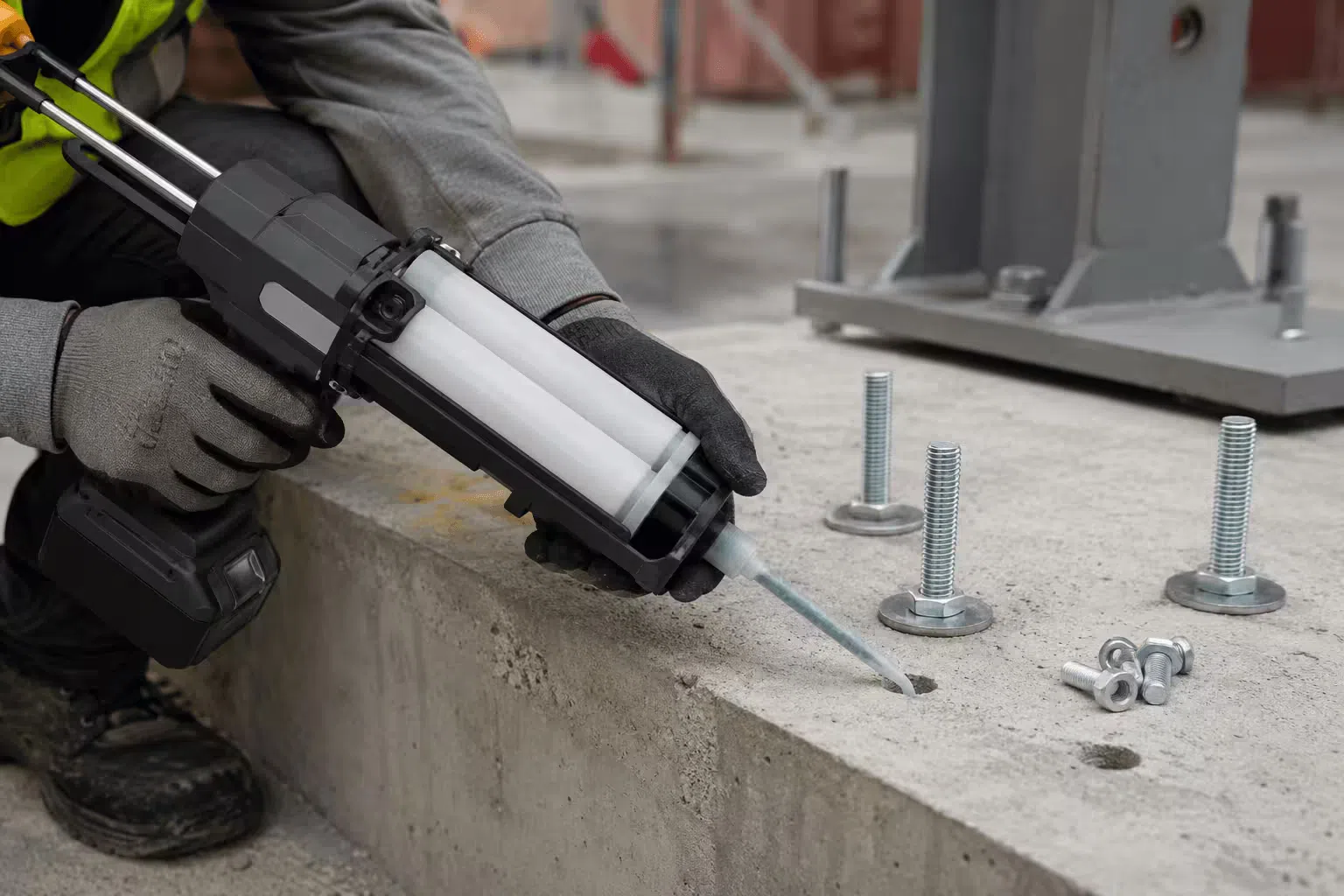
An electric epoxy gun is a battery-powered dispensing tool designed to push two-part adhesives from dual cartridges through a static mixing nozzle. For procurement teams, distributors, and adhesive brands, understanding when cordless power justifies the higher cost over manual guns helps avoid both under-specifying for heavy jobs and overspending on light applications.
When Cordless Power Matters for Epoxy Dispensing
The main reason buyers switch from manual to electric epoxy guns is workload volume. When a contractor or maintenance team needs to dispense more than a few cartridges per day, hand-squeezing a manual dual cartridge gun causes forearm fatigue that slows work and increases the risk of uneven output. A cordless dual cartridge gun with a motor-driven push rod eliminates this problem by providing consistent thrust without physical effort.
Jobsite mobility is the second key factor. Unlike pneumatic guns that require an air compressor and hose, a battery powered epoxy gun works anywhere without a power cord or air line. For field repairs, elevated work, or multi-site projects, this independence from fixed power sources reduces setup time and equipment costs.
Key Specifications to Check Before Ordering
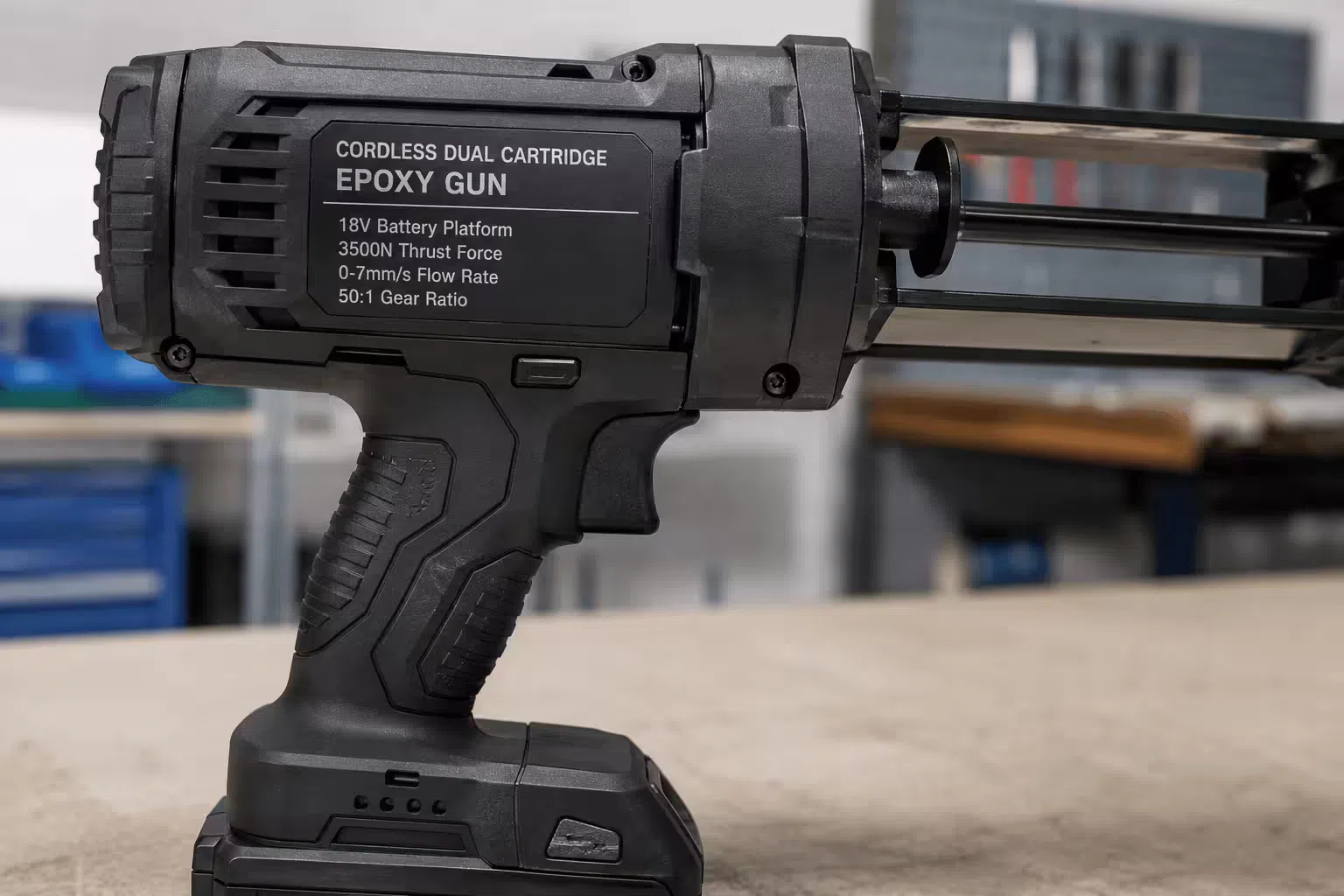
When evaluating an electric epoxy gun for your product line or project, focus on these specifications:
Battery voltage and capacity. Most cordless dispensing tools run on 12V or 18V battery platforms. Higher voltage delivers more thrust force, which matters for thick structural epoxies. Battery capacity (measured in amp-hours) determines how many cartridges a single charge can push before recharging.
Thrust force. Two-component adhesives have higher viscosity than single-component sealants. A gun rated below 2,000N may struggle with structural epoxy at low temperatures. For professional adhesive applications, look for models rated at 3,000N or higher.
Mixing ratio support. Dual cartridge guns must match the cartridge's built-in ratio. Common ratios include 1:1, 2:1, 4:1, and 10:1. Some models use interchangeable plunger plates to switch between ratios; others are fixed to one ratio. Confirm which ratio your target market requires before ordering.
Cartridge capacity. The gun housing must fit the cartridge size your customers use. Common dual cartridge sizes are 50ml, 200ml, 400ml, and 600ml. A 400ml housing will not accept a 600ml cartridge without an adapter, so mismatch is a frequent sourcing error.
Electric vs Manual: A Workload-Based Decision
For occasional repairs or small-volume work, a manual dual cartridge gun costs less and requires no battery maintenance. It works well for contractors who dispense one or two cartridges per week and prefer a lightweight tool.
For high-volume bonding, concrete anchoring, or industrial assembly lines, an electric epoxy gun delivers consistent bead quality across dozens of cartridges without operator fatigue. The auto-retract piston feature on most cordless models also prevents post-trigger oozing, which reduces material waste and cleanup time.
The crossover point where electric becomes cost-effective depends on labor rates and project size. If hand fatigue slows your crew by even 15 minutes per cartridge over a 20-cartridge job, the labor savings from a cordless gun often justify the higher tool cost within the first project.
Common Applications for Cordless Epoxy Guns
Structural bonding and anchoring. Construction teams use electric epoxy guns to dispense anchoring adhesives into drilled holes for rebar and threaded rod. These applications require high thrust to push thick epoxy through narrow mixing nozzles.
Concrete crack injection. Repair contractors inject two-component epoxy into concrete cracks using dual cartridge systems. Cordless guns allow work in basements, parking structures, and elevated areas without dragging an air hose.
Industrial assembly. Manufacturing lines that bond metal, composite, or plastic components often use two-part adhesives supplied in dual cartridges. A cordless gun with variable speed control lets operators match dispensing rate to production pace.
Sourcing Considerations for Distributors and Adhesive Brands
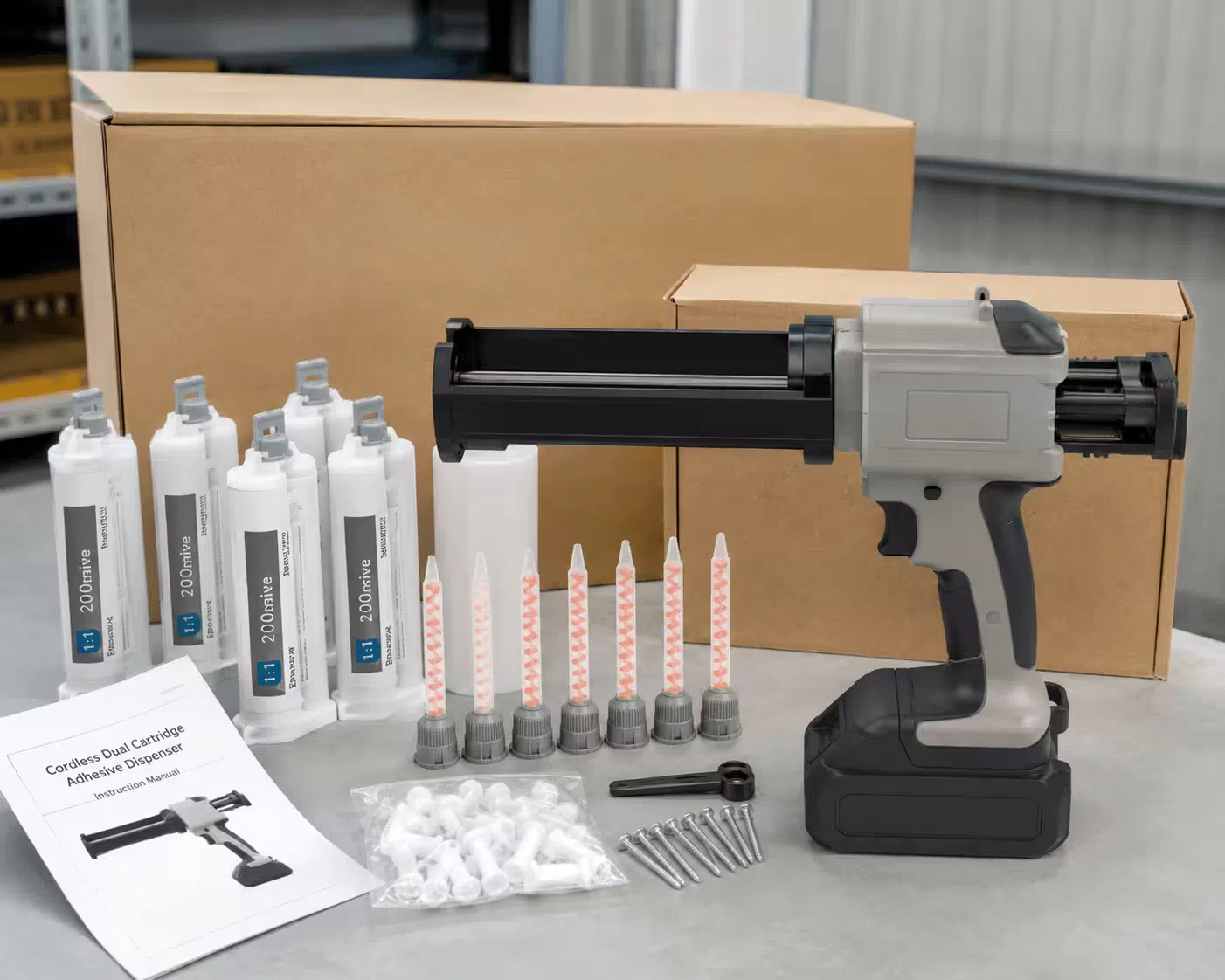
If you supply dual cartridge adhesives, offering a compatible electric epoxy gun alongside your adhesive products increases customer retention. Key sourcing factors include:
- Cartridge compatibility with your adhesive packaging
- Mixing ratio support matching your product specifications
- Battery platform availability in your target market
- OEM branding options for private-label distribution
- Spare parts availability (plunger plates, push rods, battery packs)
For B2B procurement, request samples with your cartridge size and ratio before committing to bulk orders. Test the gun with your highest-viscosity adhesive at room temperature and at the lowest temperature your customers will encounter.
FAQ
What is an electric epoxy gun?
An electric epoxy gun is a battery-powered dispensing tool that pushes two-part adhesive from dual cartridges through a static mixing nozzle. Unlike manual guns that rely on hand-squeeze triggers, electric models use a motor-driven push rod to provide consistent dispensing force. They are designed for two-component materials packed in dual cartridges with specific mixing ratios like 1:1 or 2:1.
Can you use a cordless gun for epoxy adhesives?
Yes. Cordless guns are specifically designed for two-component epoxy adhesives supplied in dual cartridges. The motor provides enough thrust to push high-viscosity epoxy through static mixing nozzles. For best results, confirm that the gun's rated thrust force matches your adhesive viscosity, and ensure the cartridge size and mixing ratio are compatible with the gun housing.
What battery do I need for epoxy dispensing?
Most professional electric epoxy guns run on 12V or 18V lithium-ion batteries. For structural epoxies and high-volume work, an 18V battery with at least 2.0Ah capacity is recommended. Lower-voltage batteries may work for thin adhesives or occasional use but can stall under high backpressure. Always check the manufacturer's recommended battery specification for your specific adhesive type.
How do I prevent oozing after releasing the trigger?
Post-trigger oozing is the most common user complaint with electric dispensing tools. Models with an auto-retract piston pull the push rod back slightly when you release the trigger, which relieves pressure on the cartridge and stops material flow. If your gun does not have this feature, manually retracting the push rod immediately after dispensing reduces dripping.
What cartridge sizes work with electric epoxy guns?
Electric epoxy guns are designed for specific dual cartridge sizes. Common formats include 50ml, 200ml, 400ml, and 600ml. Some models accept multiple sizes with interchangeable plunger plates or housing adapters. Before ordering, confirm the exact cartridge dimensions your adhesive products use and verify compatibility with the gun model.
Should I warm adhesive cartridges before dispensing in cold weather?
Yes. Two-component adhesives become thicker at low temperatures, which increases backpressure and makes dispensing harder. Warming cartridges to room temperature (around 20°C) before use improves flow and reduces strain on the gun's motor. Some users place cartridges in warm water or a heated room for 15 to 30 minutes before dispensing.