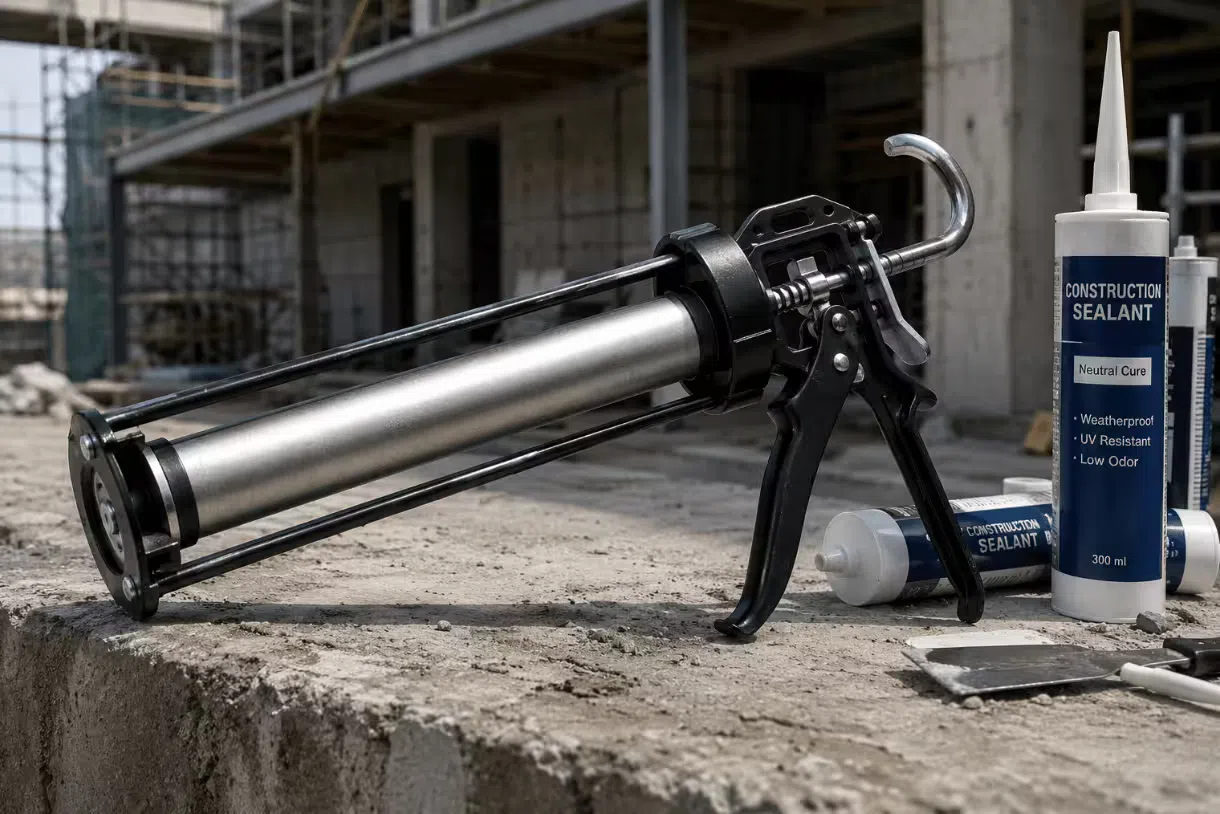
When a distributor or procurement manager sees "heavy duty" written on a caulking gun package, the specification behind that label matters for stocking decisions and end-user satisfaction. A heavy duty caulking gun is not simply a larger version of a standard model. The difference comes down to measurable specifications — thrust ratio, frame material, and mechanical features that determine whether the gun handles thick sealants, cold-weather dispensing, and continuous jobsite use without failing.
This article explains what defines heavy duty for manual caulking guns, which applications require higher thrust, and how B2B buyers can specify the right models for their customers.
What Heavy Duty Means for Manual Caulking Guns
Three specifications separate a heavy duty manual caulking gun from a standard model: thrust ratio, frame construction, and the pressure-release mechanism.
Thrust ratio is the mechanical advantage the trigger mechanism applies to the plunger rod. A 12:1 ratio means one pound of trigger pull produces twelve pounds of force at the plunger. Standard manual guns typically offer 7:1 to 12:1 ratios, which work well for low-viscosity acrylics and silicones. Heavy duty guns start at 18:1 and go up to 26:1. Each step in the ratio increases dispensing force while reducing hand effort per trigger squeeze. The term high thrust caulk gun is sometimes used to describe models at 18:1 and above, though "high thrust" and "heavy duty" overlap in meaning for manual dispensing.
Frame material determines how much force the gun body transmits without flexing. All-metal frames — steel or aluminum alloy — resist bending under high thrust, keep the plunger aligned with the cartridge, and last longer than composite or thin-gauge frames. Aluminum alloy frames add a weight advantage: they resist corrosion and reduce arm fatigue during extended use. For the hand caulking guns used by contractors who carry a gun through a full shift, the frame weight difference matters.
Pressure-release mechanisms are common on heavy duty guns. When the trigger is released, a thumb latch or internal spring retracts the plunger rod slightly, relieving pressure inside the cartridge. This reduces dripping between beads and keeps the nozzle clean — a detail that saves material and improves jobsite appearance.
The combination of these features means a heavy duty gun can extrude thick sealant without the frame flexing or the operator struggling. For end users who have tried to push cold polyurethane through a 12:1 gun, the difference is immediate.
Thrust Ratio Tiers and What Each One Handles
The table below shows how thrust ratio ranges map to typical sealant types and applications. These are practical guidelines, not universal ratings — actual performance depends on sealant viscosity, temperature, nozzle opening, and cartridge condition.
| Thrust Ratio | Typical Sealant Types | Common Applications | B2B Buying Note |
|---|---|---|---|
| 7:1 – 12:1 | Acrylic latex, standard silicone, general caulk | Window sealing, decorative trim, basic repairs | Suitable for general stock lines; low margin but steady demand |
| 18:1 | Polyurethane, hybrid polymer sealants, medium-viscosity construction adhesives | Glazing, door and window installation, waterproofing, commercial sealing | Core heavy duty tier; fits most construction and trade applications |
| 24:1 | High-viscosity construction adhesives, cold-weather sealants, thick polyurethane | Roofing, below-grade waterproofing, outdoor sealing in cold climates | Useful for cold-region distributors and specialty sealant buyers |
| 26:1 | Extremely thick adhesives, epoxy mortars, heavy construction sealants | Continuous production sealing, high-volume jobsites, industrial maintenance | Niche stock item; check local demand before bulk ordering |
For a general-stocking warehouse serving construction and remodeling customers, the 18:1 tier covers the widest range of jobs. The 24:1 and 26:1 tiers are useful when customers report hand fatigue with standard guns or when the local climate includes extended cold seasons.
When a Heavy Duty Gun Makes the Practical Difference
Polyurethane and MS polymer sealants. These materials are noticeably thicker than acrylic or standard silicone at room temperature. At 12:1, a manual gun requires significant hand force to extrude polyurethane at a steady bead width. An 18:1 or 24:1 gun reduces that effort by roughly 40 to 60 percent, estimated by trigger pull force. For a glazier or window installer who runs 30 to 50 cartridges per week, the difference translates to less hand fatigue and more consistent bead application.
Cold-weather dispensing. Sealant viscosity increases as temperature drops. Below 10°C, even standard silicone becomes harder to extrude. Users on contractor forums report that a 12:1 gun becomes difficult to squeeze when dispensing silicone in cold conditions, while switching to a higher-thrust gun solves the problem directly. For distributors supplying northern-region contractors or jobsites without climate-controlled storage, a heavy duty gun with 18:1 or higher thrust ratio is a practical stocking recommendation.
High-volume or continuous jobsites. On large commercial sealing projects — curtain wall glazing, roofing, deck waterproofing — a worker may go through multiple cartridges per hour. The trigger mechanism in a heavy duty gun is built for repeated cycling without binding or wearing out. Standard guns with thin-frame construction can develop frame flex or rod misalignment after extended use, which accelerates dripping and uneven extrusion. A heavy duty frame keeps the plunger aligned through the full cartridge stroke.
| Application | Recommended Thrust Ratio | Key Frame Feature | End-User Benefit |
|---|---|---|---|
| General silicone and acrylic sealing | 7:1 – 12:1 | Lightweight frame | Low unit cost, easy handling for light work |
| Polyurethane and MS sealant dispensing | 18:1 | Aluminum alloy or steel | Significantly less hand strain and consistent bead |
| Cold-weather construction sealing below 10°C | 18:1 – 24:1 | Steel or aluminum alloy | Reliable dispensing when sealant is thick |
| High-viscosity construction adhesives | 24:1 – 26:1 | Full steel frame | Maximum force without frame flex |
| Continuous production or high-volume jobsites | 18:1 – 26:1 | Reinforced steel or aluminum with dripless mechanism | Slower trigger wear, less material waste |
Frame Material: Aluminum Alloy vs. Steel
The frame material affects how the gun handles repeated high-thrust dispensing.
Aluminum alloy frames are lighter than steel and resist rust. They are suitable for steady worksite use where the gun is carried through the day and exposed to weather. The available manual component gun models combine an alloy barrel with metal internal parts, balancing weight savings with structural strength. For hand caulking guns that contractors carry up ladders and across roofs, aluminum alloy reduces the per-shift load without sacrificing thrust capacity.
Full steel frames provide maximum rigidity. Under sustained high-thrust dispensing at 24:1 or 26:1, a steel frame transmits force to the cartridge with minimal energy lost to frame flex. The tradeoff is weight. Steel guns are noticeably heavier, which can contribute to arm fatigue on long jobs. For distributors, offering both aluminum alloy and steel frame options lets end users choose based on their priority: lighter carry or maximum rigidity.
Dripless Mechanism and Material Waste
A pressure-release mechanism retracts the plunger rod by a few millimeters when the trigger is released. This action relieves internal cartridge pressure and stops sealant from oozing out between beads. Professional users consistently identify this feature as worth the price difference over a standard gun. For a jobsite running multiple cartridges per day, the material saved by reduced dripping adds up quickly.
When specifying heavy duty guns for OEM or private-label orders, the dripless mechanism is a feature that supports a higher price point and reduces after-sales complaints about material waste and messy nozzle cleanup.
FAQ
What thrust ratio defines a heavy duty caulking gun? 18:1 is the typical starting point for heavy duty manual caulking guns. Guns at this ratio or higher — up to 26:1 — provide enough mechanical advantage to extrude thick sealants without excessive hand force. Models below 18:1 are generally classified as standard or light duty.
What is the best heavy duty caulking gun for construction work? The right match depends on sealant type and application temperature. For general construction sealing with polyurethane or MS polymer sealants, an 18:1 gun with a metal frame covers most jobs. For cold-weather work or high-viscosity adhesives, 24:1 or 26:1 is a better fit. Distributors should stock at least two thrust ratio tiers to meet different customer requirements.
Can a heavy duty caulking gun be used for silicone sealant? Yes, but it is usually excessive. Standard silicone sealant extrudes easily at 7:1 to 12:1 thrust ratios. A heavy duty 18:1 gun will work, but the extra mechanical advantage is unnecessary and the heavier frame may be less comfortable for light bead work.
What is the difference between 12:1 and 18:1 thrust ratio? At 12:1, one pound of trigger pull produces twelve pounds of plunger force. At 18:1, the same trigger pull produces eighteen pounds. The higher ratio requires more trigger strokes to move the plunger the same distance, but each stroke delivers more force — making it easier to extrude thick material. For thin sealants the lower ratio is faster; for thick materials the higher ratio saves hand effort. This is what a thrust ratio caulk gun buyer needs to understand when comparing models.
How do I choose a heavy duty caulking gun for wholesale or OEM orders? Start by identifying the sealant types your customers use most frequently. Polyurethane and construction adhesive users need 18:1 or higher. Silicone and acrylic users can use standard ratios, though a heavy duty gun is still an option if they want a single model for varied jobs. Frame material is the next decision: aluminum alloy for lighter carry and corrosion resistance, steel for maximum rigidity and maximum thrust. Confirm that the dripless mechanism is included if your customers work on jobsites where material waste and nozzle mess are concerns. CAULKMFG offers OEM color, branding, and packaging options for bulk orders.
Sourcing Heavy Duty Caulking Guns for Distribution and OEM
When selecting heavy duty manual caulking guns for wholesale stock or private-label programs, assess these specifications before ordering:
- Thrust ratio range — does the supplier offer multiple ratios (12:1, 18:1, 24:1, 26:1) so you can tier your inventory by customer need?
- Frame material — aluminum alloy, steel, or a combination — which matches your market's preference for weight versus rigidity?
- Dripless mechanism — is a thumb-release or internal pressure-relief system included?
- Color and branding — are custom colors, logo printing, and branded packaging available for OEM orders?
- MOQ and sample testing — can you order test samples to check trigger feel, frame rigidity, and rod alignment before committing to bulk quantities?
Send your typical sealant type, target market region, expected order volume, and any OEM or private-label requirements to the CAULKMFG team. Matching the right thrust ratio and frame construction to your customers' applications reduces returns, improves end-user satisfaction, and builds repeat orders for the models your contractors trust.
Request a Quote for heavy duty manual caulking guns with your choice of thrust ratio, frame material, color, and packaging.