Finding the best caulking gun for your business means looking beyond the price tag. Whether you supply construction crews, run a hardware distribution company, or manage procurement for a retail tool brand, the caulking guns you stock directly affect customer satisfaction, repeat orders, and your reputation in the market. This guide explains what to compare when evaluating manual caulking guns for professional use and wholesale purchasing.
What Makes a Caulking Gun Suitable for Professional Use
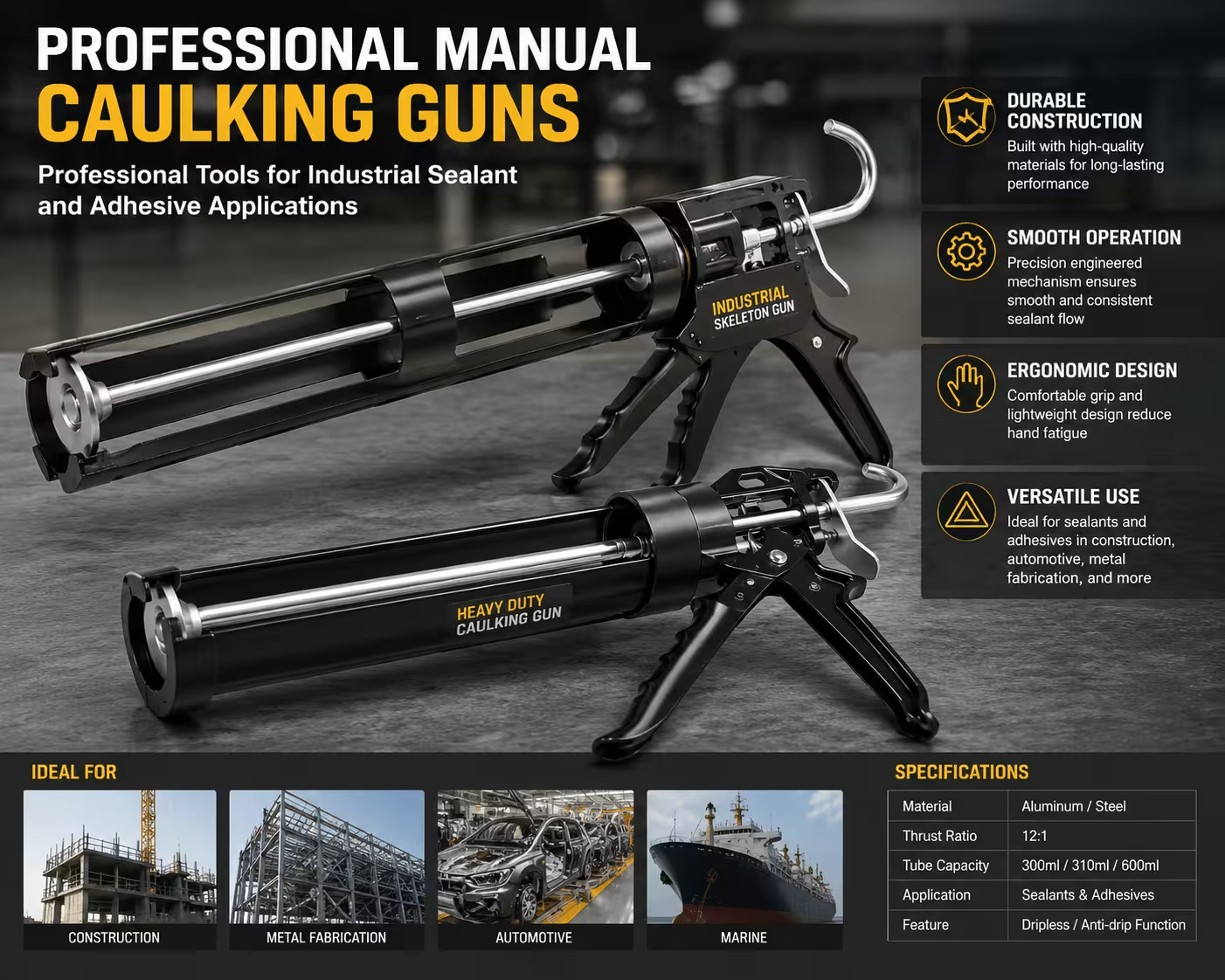
A professional caulking gun needs to handle daily use on job sites without breaking down or causing hand fatigue. The frame material is the first thing to check. Metal frames — typically steel or aluminum — resist bending and corrosion better than plastic. For B2B buyers, a reinforced metal frame means fewer returns and longer tool life for end users.
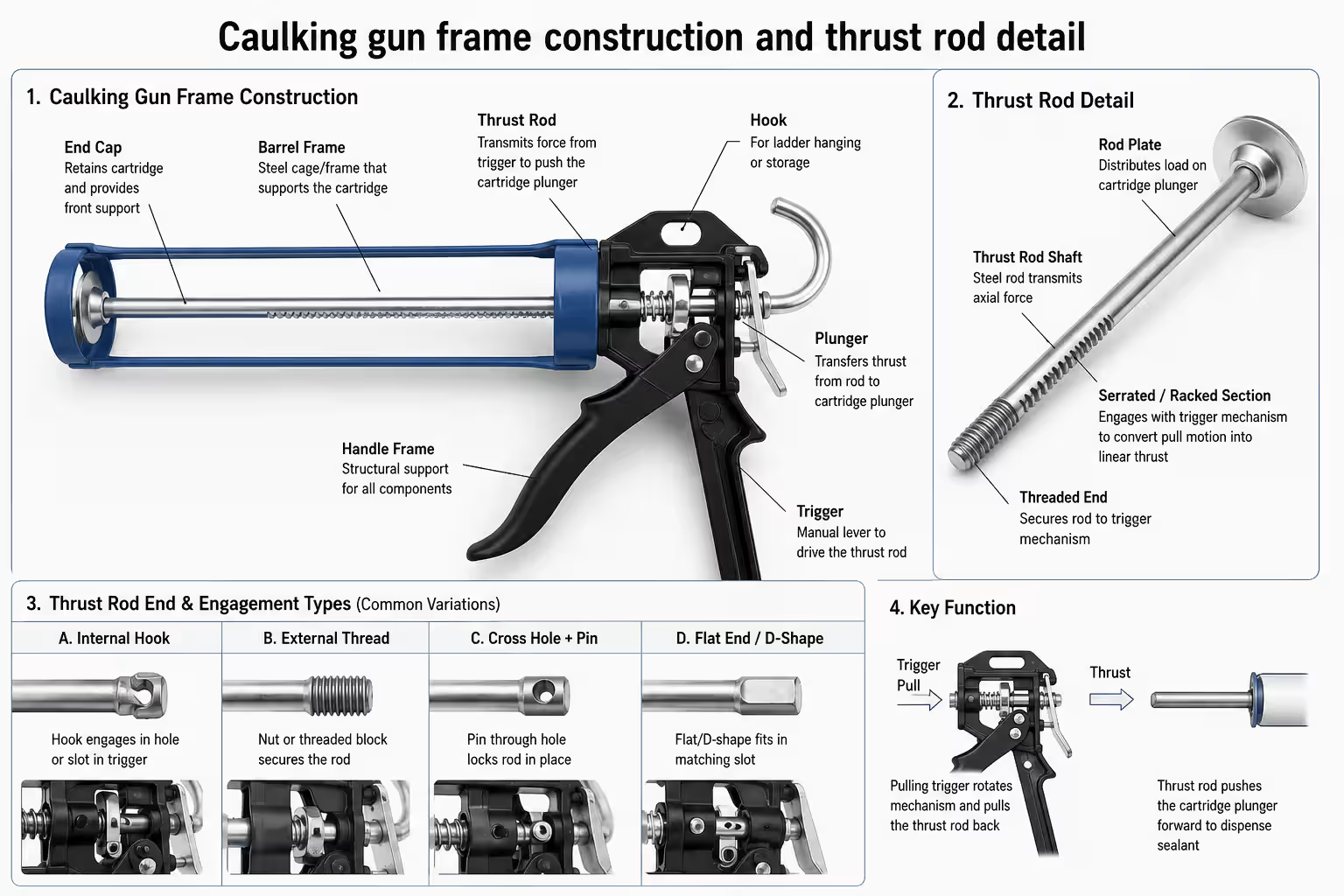
The rod type also matters. Smooth-rod guns provide more consistent pressure than ratchet-rod designs. With a smooth rod, the trigger squeeze delivers steady force to the cartridge, which helps create even sealant beads. Ratchet rods can cause jerky dispensing, which leads to uneven application and wasted material.
Ergonomic design is another factor that separates cheap guns from professional-grade options. A comfortable handle with a thumb pressure release reduces hand strain during extended use. Contractors who spend hours sealing joints need guns that don't cause forearm fatigue by mid-day. For wholesale buyers, stocking guns with ergonomic features means fewer customer complaints about discomfort. Professional users consistently report that spending slightly more on a quality hand caulking gun pays off in comfort and durability over time.
Manual Caulking Gun Types: Which Fits Your Market
Manual caulking guns come in several configurations, each suited to different applications and buyer profiles.
Single-component cartridge guns are the most common type. They accept standard 300ml cartridges filled with silicone, acrylic, polyurethane, or hybrid sealants. These guns work well for window installation, bathroom sealing, waterproofing, and general construction repair. For distributors serving the broadest market, single-component guns are the highest-volume product. A small caulk gun with a 300ml cartridge is the standard choice for everyday sealing work. You can explore CaulkMFG's single-component gun range for models designed for wholesale supply.
Sausage caulking guns accept foil-pack sealants (typically 400ml or 600ml). They reduce packaging waste and allow faster reloading on large projects. Contractors working on commercial glazing or masonry prefer sausage guns for their higher capacity. A big caulk gun in the sausage format handles high-volume jobs where frequent cartridge changes would slow down the crew.
Bulk dispensing guns are designed for large-volume jobs where cartridges and sausage packs are impractical. These are more specialized and serve a smaller segment of the market.
For most wholesale buyers, single-component cartridge guns offer the best balance of market demand, ease of sourcing, and customer familiarity.
Key Specs to Compare: Thrust Ratio, Size, and Build
When evaluating manual caulking guns from different suppliers, focus on these specifications:
Thrust ratio determines how much force the gun applies to the cartridge per trigger squeeze. A 1:18 ratio works well for medium-viscosity sealants like silicone and acrylic. A 1:26 ratio handles thicker materials such as construction adhesives and polyurethane sealants more easily. Offering both ratios gives your customers flexibility. If you only stock one, the 1:18 ratio covers the widest range of common sealants.
Cartridge size affects compatibility. The 300ml cartridge is the international standard for most sealant and adhesive products. Some markets also use 10oz (roughly 280ml) or 29oz (roughly 860ml) cartridges. Confirm which cartridge size your target market prefers before ordering.
Frame weight influences user comfort. Lightweight guns are easier to carry and maneuver, especially on ladders or in tight spaces. However, very lightweight frames may sacrifice durability. Metal frames in the 400-600 gram range for a 300ml gun typically offer a good balance.
Hook design is a small detail that professionals notice. A 360-degree rotating hook allows easy hanging on ladders, tool belts, or scaffolding. Fixed hooks limit positioning options.
What Drives Caulking Gun Prices
Caulking gun prices vary based on several factors that B2B buyers should understand:
Material quality is the biggest price driver. Full-metal construction costs more than mixed metal-plastic designs, but it also lasts longer and earns better reviews from end users.
Thrust ratio affects price because higher-ratio guns need stronger internal mechanisms. A 1:26 ratio gun typically costs slightly more than a 1:18 ratio model from the same manufacturer.
OEM customization — including custom colors, logo printing, and branded packaging — adds to the unit cost but creates a distinct product for your brand. Many manufacturers offer OEM services with minimum order quantities starting from 500-1,000 units.
Order volume directly impacts per-unit pricing. Wholesale orders of 5,000+ units typically unlock significantly lower prices compared to small batch orders. When comparing caulking gun suppliers, ask for tiered pricing at different volume levels. Looking for caulking guns for sale from a manufacturer that supports OEM branding can give your business a competitive edge in local markets.
What to Look for When Buying Caulking Guns in Bulk
If you're sourcing caulking guns for wholesale distribution, these factors matter beyond the gun itself:
Supplier reliability — Can the manufacturer consistently deliver on time? Ask for production capacity details and lead times before committing to large orders.
Quality control — Does the supplier test each batch for smooth rod operation, frame integrity, and trigger response? Request samples and test them yourself before placing bulk orders.
Customization options — OEM branding, custom colors, and packaging design help your product stand out in competitive markets. Confirm what customization the supplier offers and whether there are additional costs.
After-sales support — Replacement parts availability, warranty terms, and responsive communication all matter when issues arise. A supplier who responds quickly to quality concerns saves you time and protects your customer relationships.
How to Load and Use a Caulking Gun Properly
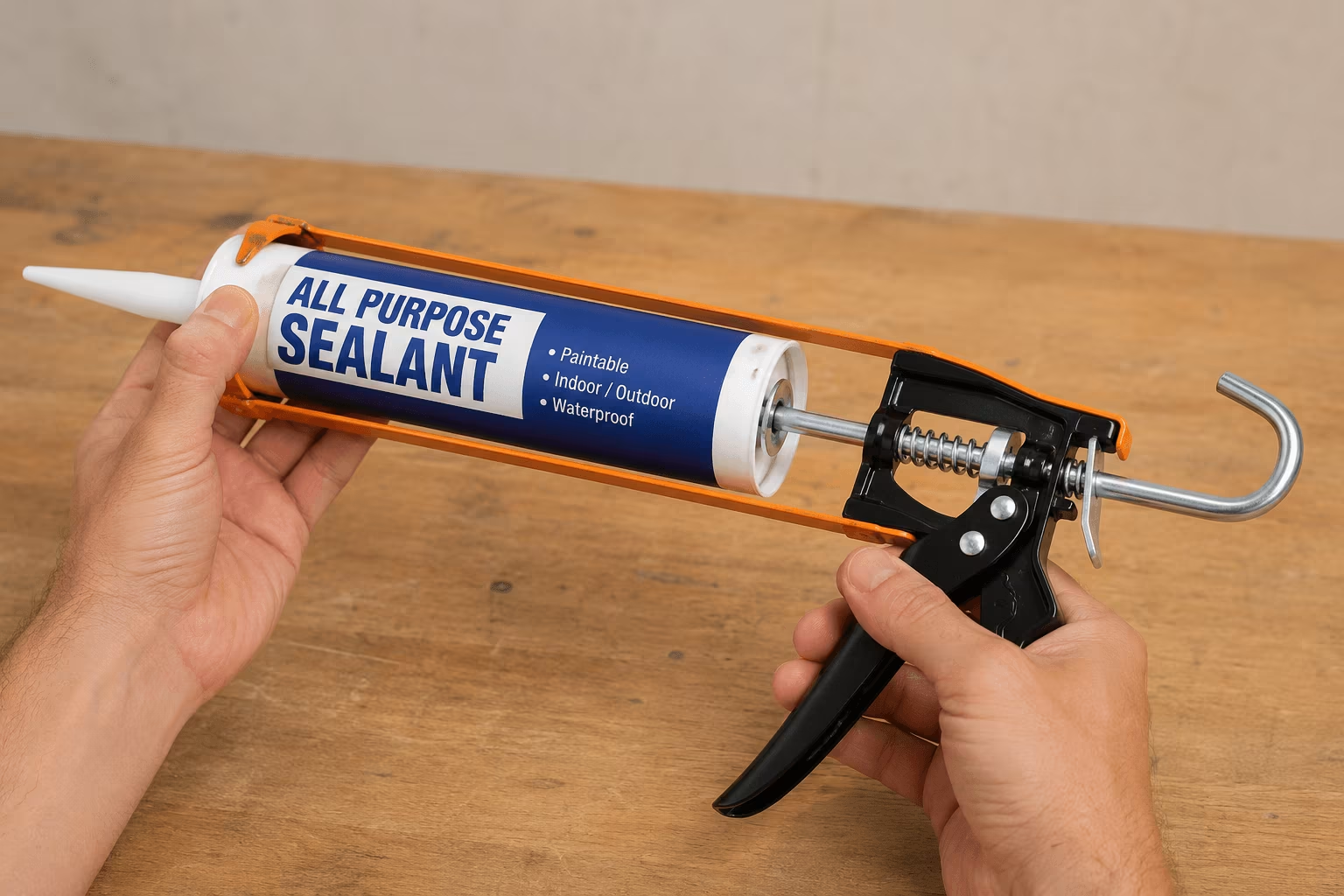
Loading a caulking gun takes a few simple steps. Pull back the plunger rod, place the cartridge into the frame with the nozzle pointing forward, cut the nozzle tip to the desired bead size at a 45-degree angle, pierce the inner seal with a long nail or the built-in seal punch, then push the rod forward until it contacts the cartridge base. Squeeze the trigger to begin dispensing.
For best results, start with a small nozzle opening. You can always cut it larger if you need a wider bead. Keep the gun at a consistent angle and apply steady pressure for an even seal. When you stop, release the trigger and, if your gun has a thumb pressure release, press it to prevent dripping.
FAQ
How do I load a caulk gun? Pull back the plunger rod, insert the cartridge nozzle-first into the frame, cut the nozzle at a 45-degree angle to your desired bead width, pierce the inner seal, then push the rod forward until it touches the cartridge. Squeeze the trigger to start dispensing.
What thrust ratio should I choose for a caulking gun? For silicone, acrylic, and other medium-viscosity sealants, a 1:18 thrust ratio is sufficient. For thicker adhesives, polyurethane, or cold-weather applications, choose a 1:26 or higher ratio. If you serve diverse markets, stocking both ratios covers the widest range of customer needs.
What is the difference between a heavy-duty and standard caulking gun? Heavy-duty caulking guns typically have higher thrust ratios (1:26 or above), reinforced metal frames, and thicker rods designed for thick adhesives and industrial sealants. Standard guns with 1:18 ratios work well for common sealants like silicone and acrylic.
Can I use a manual caulking gun for all sealant types? Manual caulking guns work with silicone, acrylic, polyurethane, hybrid sealants, and most construction adhesives in cartridge form. For very thick materials or high-volume continuous dispensing, powered caulking guns may be more efficient.
How do I choose a caulking gun supplier for wholesale orders? Evaluate suppliers based on frame material quality, thrust ratio options, OEM customization capabilities, minimum order quantities, lead times, and quality control processes. Request samples before placing large orders.
Why does my caulking gun keep dripping after I release the trigger? Dripping happens when residual pressure remains inside the cartridge after the trigger is released. Guns without a pressure-release mechanism are more prone to this. Look for models with thumb pressure release or dripless design to reduce sealant waste.