A power caulking gun uses a motor, air pressure, or an electric cord to push sealant or adhesive out of a cartridge, sausage pack, or bulk container. For B2B buyers — distributors, wholesalers, construction suppliers, and OEM procurement managers — understanding the different powered dispensing types helps match the right tool to each customer's jobsite, material needs, and daily work volume. This guide explains how battery-powered, pneumatic, and corded electric caulking guns compare, and what to check before stocking or ordering.
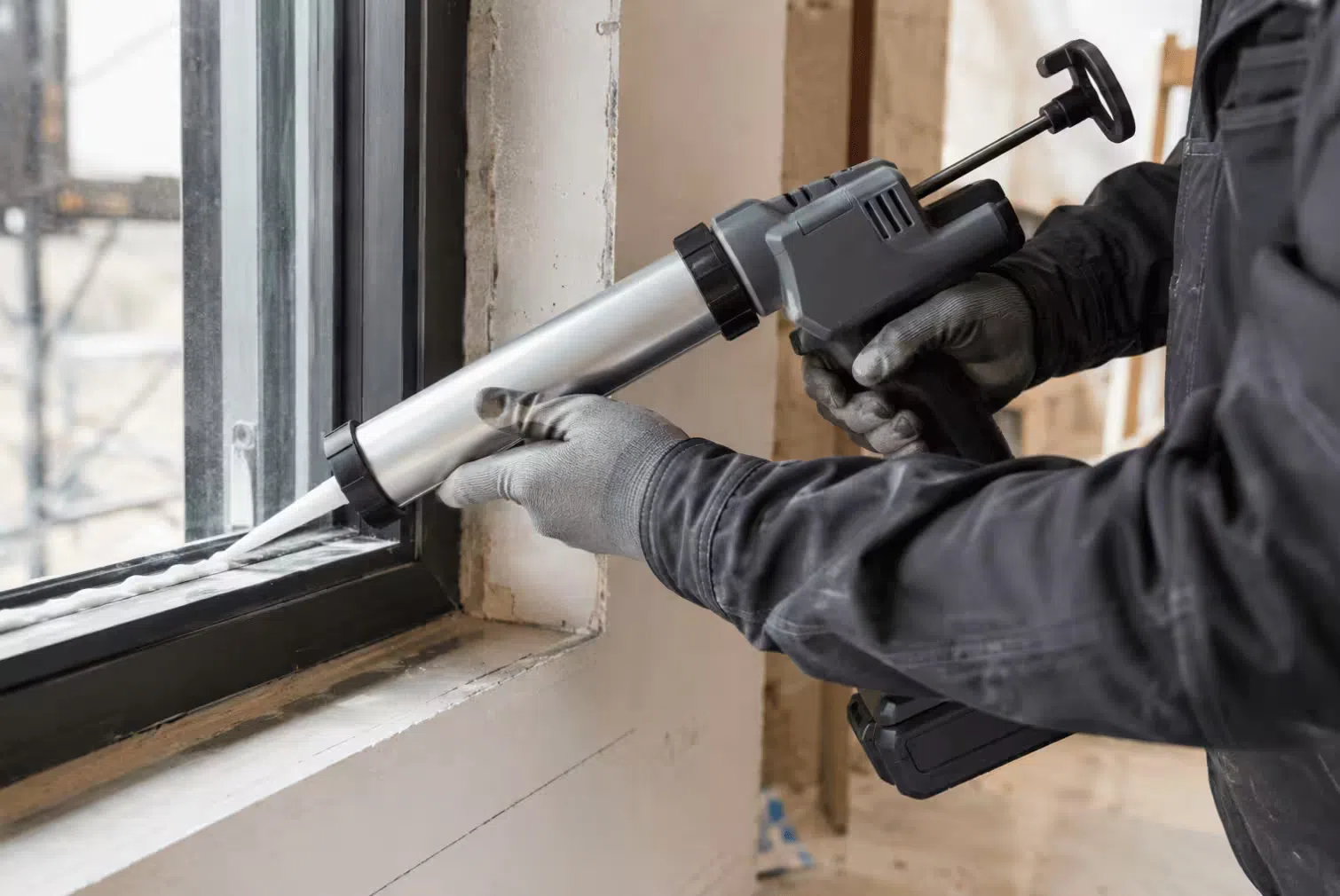
Battery-Powered Caulking Guns
A battery-powered caulking gun is the most mobile option. It runs on a rechargeable lithium-ion battery and does not need a compressor, power cord, or air hose. This makes it the standard choice for construction sites, renovation projects, window installation, and field maintenance work where power access is limited or inconsistent.
Contractors who dispense sealant for hours at a time report that battery caulk guns reduce hand fatigue significantly compared with manual tools. A battery operated caulking gun can handle sustained high-volume work — including millions of linear feet of sealant over its service life — that would cause serious hand strain with a manual gun. For jobs like firestop caulking in multi-unit apartment buildings, a battery-powered sausage caulking gun can maintain steady output across an entire shift without the user needing to manually pump each bead.
For wholesale buyers, the main battery platform decisions are voltage (commonly 12V, 18V, or 20V), battery capacity, and whether the platform is shared with other cordless tools in the same brand line. Higher voltage generally means more dispensing force, which matters for thicker adhesives. A rechargeable caulk gun with a well-supported battery platform lets end users buy bare tools and share batteries across their kit.
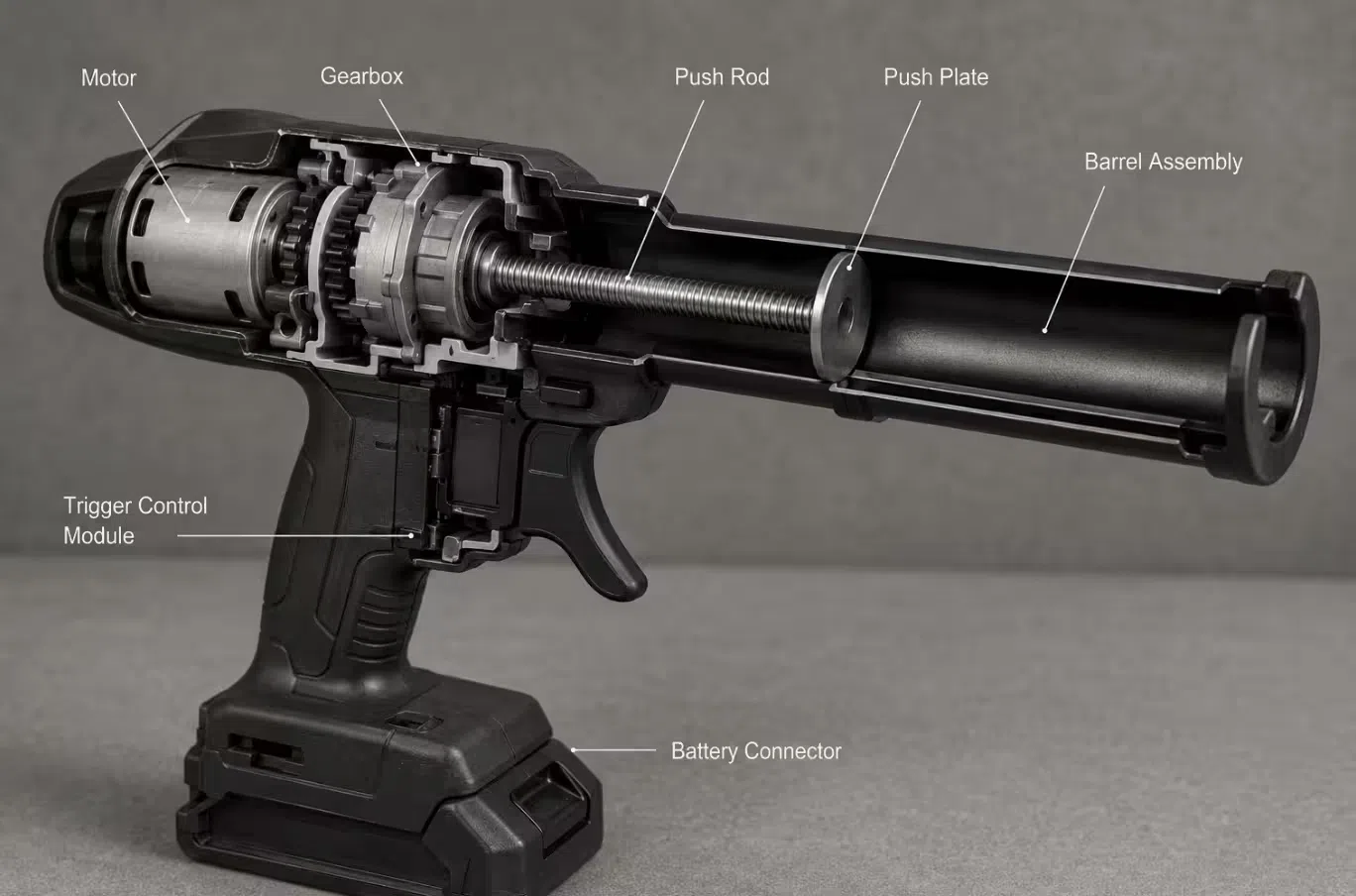
Build quality is a practical concern for B2B sourcing. Budget battery caulk guns may have weaker motors or fragile internal components that fail under repeated professional use. Before placing an order, check motor specifications, battery compatibility with common tool platforms, and whether replacement parts — nozzles, barrels, push plates, batteries, and chargers — are available for after-sales support.
Pneumatic Caulking Guns
A pneumatic caulking gun, also called an air powered caulking gun, uses compressed air to push sealant through the cartridge or sausage pack. It requires a connected air compressor and hose, which limits mobility but provides consistent, high-volume dispensing power.
Pneumatic models are a practical choice for fixed workstations, factory environments, production lines, and shop-based assembly work where a compressor is already running. They are typically cheaper and lighter than battery models because the motor and battery are replaced by an air cylinder. For high-volume dispensing — such as panel sealing in manufacturing, HVAC ductwork assembly, or production-line adhesive application — a pneumatic caulking gun can run continuously without battery changes or recharges.
The trade-off is setup dependency. A pneumatic gun is not practical for mobile construction crews who move between floors, rooms, or job sites. The compressor adds cost, noise, and a physical tether. For buyers serving mobile contractor markets, a cordless caulking gun is usually a better fit. For buyers serving factory or shop-based customers, pneumatic guns offer a lower per-unit cost and reliable sustained output.
Corded Electric Caulking Guns
A corded electric caulking gun plugs into a standard power outlet and delivers consistent dispensing force without battery limitations or compressor requirements. It fills a middle ground between battery and pneumatic — useful for indoor renovation, shop work, and sustained dispensing near a power source.
A corded electric caulk gun offers steady power output that does not decline as a battery discharges. This can matter for extended dispensing sessions with thicker materials like construction adhesive or polyurethane sealant. However, the power cord limits range and can create tripping hazards or snagging issues on busy job sites. Corded models are also typically cheaper than comparable battery versions since they do not include a battery pack.
How Material Viscosity Affects Power Choice
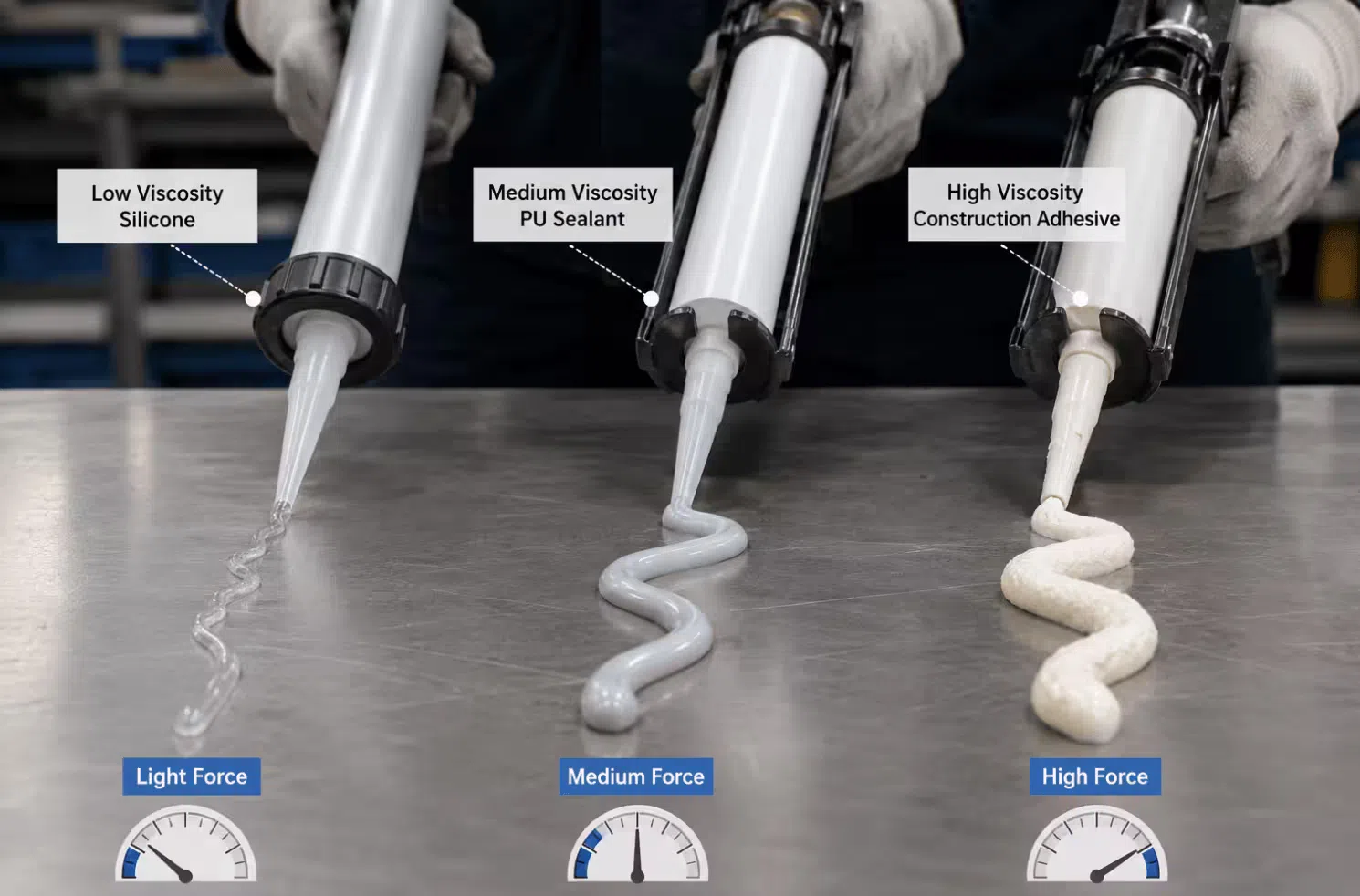
The type of sealant or adhesive being dispensed is one of the most important factors when selecting a power source.
Low-viscosity materials — silicone sealant, acrylic caulk, and latex sealant — flow easily and do not require high dispensing force. Any powered caulking gun, including lower-voltage battery models, handles these materials. These are common in window sealing, bathroom caulking, and general construction finishing.
Medium-viscosity materials — polyurethane sealant, MS sealant, and some hybrid adhesives — need more motor output to maintain a consistent bead. A battery power caulking gun with 18V or higher and a quality motor can dispense these reliably. An automatic caulking gun with a variable speed trigger helps control flow rate for cleaner application.
High-viscosity materials — construction adhesive, epoxy, and firestop sealant — demand the most dispensing force. Cheaper battery caulk guns may stall or lose consistency when pushing these materials. For high-viscosity work, a pneumatic caulking gun or a high-force cordless model is the more reliable option. Distributors serving construction adhesive users should verify the dispensing force rating before ordering.
Matching Power Type to Work Pattern
| Factor | Battery-Powered | Pneumatic | Corded Electric |
|---|---|---|---|
| Mobility | High — no cords or compressor | Low — requires air hose and compressor | Medium — limited by cord length |
| Best for | Construction sites, renovation, field work | Factories, production lines, shop work | Indoor work near power outlets |
| Material range | Low to medium viscosity; some high-force models handle thick adhesives | Low to high viscosity | Low to medium viscosity |
| Setup cost | Battery and charger | Compressor, hose, and gun | Gun only (needs outlet) |
| Volume capacity | Moderate — limited by battery runtime | High — runs continuously on compressor | Moderate — runs continuously on power |
For distributors and wholesalers, most professional demand falls into two categories: mobile construction and installation work that favors battery-powered models, and fixed-site production or shop work that favors pneumatic. Stocking both types covers the majority of professional buyer needs.
What B2B Buyers Should Check Before Ordering
Dispensing force ratings. The dispensing force, usually measured in pounds or newtons, determines how well the gun pushes thick materials. Higher force means better performance with construction adhesive and polyurethane sealant. Always compare dispensing force when evaluating powered caulking gun models for wholesale.
Speed control and anti-drip. A variable-speed trigger lets users adjust flow rate for different sealant types and bead widths. An anti-drip mechanism releases pressure when the trigger is released, reducing material waste during stop-and-start work. Professional users who switch between silicone and polyurethane sealant during the same job benefit most from these features.
Battery platform compatibility. For cordless models, check which battery platform the gun uses. Guns compatible with common 18V or 20V tool battery systems are easier for end users to adopt because they can share batteries with their existing tools.
Replacement parts availability. Nozzles, barrels, push plates, batteries, and chargers wear out over time. Before placing a bulk order, confirm that spare parts are available and can be shipped separately. This matters for wholesalers selling to contractors who use their guns daily.
OEM and packaging requirements. For private label or bulk distribution, confirm color, label, manual language, plug type, and market compliance requirements before finalizing the order. These details prevent delays when the product arrives at your warehouse.
FAQ
Is a power caulking gun worth it for professional use?
Yes. A power caulking gun is worth the investment when users need repeated dispensing, consistent bead quality, and reduced hand fatigue. For contractors, installers, and maintenance teams working with sealant or adhesive every day, a powered dispensing tool saves time and reduces physical strain compared with manual caulking. The main differences between powered types — battery, pneumatic, and corded — are mobility, material compatibility, and setup requirements.
What is the best electric caulking gun for contractors?
The best electric caulking gun for a contractor depends on the job site and material type. For mobile construction and installation work, a cordless battery model with 18V or 20V power and variable speed control is the most practical option. For shop or factory work with a compressor already in place, a pneumatic model provides reliable sustained output. Contractors who work near power outlets and need consistent force for extended sessions may prefer a corded electric caulk gun.
Can a battery powered caulking gun handle construction adhesive?
Some battery powered caulking guns can handle construction adhesive, but not all models are suitable. Construction adhesive has high viscosity and requires significant dispensing force. A battery operated caulking gun with a high-voltage motor (18V or above) and a quality drive mechanism can push construction adhesive reliably. Lower-voltage or budget models may stall or produce inconsistent beads with thick adhesives. Always check the dispensing force rating before selecting a cordless model for construction adhesive applications.
What is the difference between a power caulking gun and a manual caulking gun?
A power caulking gun uses a motor, battery, air pressure, or electric cord to push sealant out of the cartridge. A manual caulking gun uses a hand-trigger and ratchet or smooth-rod mechanism that the user squeezes to advance the plunger. The best manual caulking guns work well for occasional light-duty use, small repair jobs, or situations where powered tools are not practical. Powered caulking guns reduce hand effort, produce more consistent dispensing, and handle thicker materials more effectively.
How do I choose between battery and pneumatic caulking guns for my product line?
Battery caulking guns suit mobile contractor markets — construction, renovation, window installation, and field maintenance. Pneumatic caulking guns suit fixed-site markets — factories, production lines, and shop-based assembly. If your customer base includes both mobile and fixed-site users, stocking both types gives you the widest market coverage. Consider the battery platform compatibility for cordless models and the compressor requirements for pneumatic models when planning inventory.
Looking for cordless caulking gun models for your market? Browse our cordless caulking gun options for wholesale, OEM, and bulk supply.