When a contractor or distributor chooses between a sausage caulking gun and a standard cartridge gun, the decision affects how much sealant they load per cycle, how often they reload, and how much material they waste. A sausage caulking gun dispenses sealant from a foil pack rather than a rigid cartridge, which changes the loading process, capacity, and cost per job. This article compares both formats so procurement staff, distributors, and construction professionals can pick the right tool for their work.
What Is a Sausage Caulking Gun?
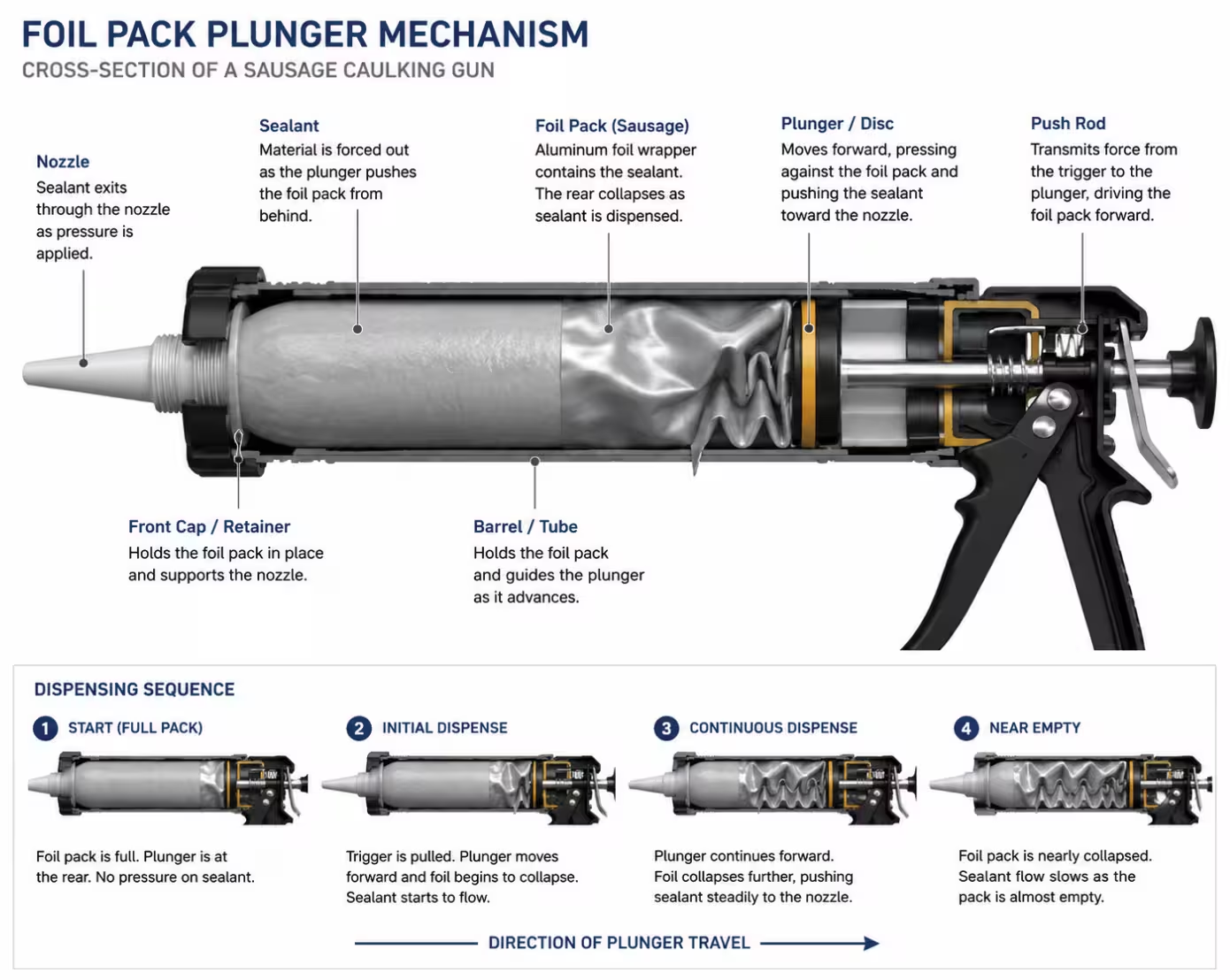
A sausage caulking gun uses a flexible foil pack — sometimes called a sausage tube — instead of a rigid plastic or cardboard cartridge. The foil pack holds 400 ml or 600 ml of sealant, which is roughly two to three times the volume of a standard 300 ml (10 oz) cartridge or a 20 oz sausage caulk gun variant. The gun's plunger pushes against the back of the foil pack, forcing sealant out through a nozzle at the front.
The main advantage is capacity. A single sausage pack replaces two or three cartridge reloads, which saves time on jobs that require continuous sealing. Commercial curtain wall installers, weatherproofing crews, and large-scale construction teams often prefer sausage packs because they reduce interruptions. The foil pack also collapses as it empties, which means less air contact with the remaining sealant and less waste compared to a partially used cartridge.
However, sausage packs are not universal. Not every sealant brand or type comes in foil pack format. Buyers should confirm that their preferred sealant — whether silicone, polyurethane, or acrylic — is available from their supplier in sausage packs before investing in a sausage caulking gun.
Cartridge Caulking Guns: The Standard Format
A cartridge caulking gun loads a standard rigid tube — typically 300 ml (10 oz) in the US market — and dispenses sealant through a cut nozzle. This is the format most construction workers, plumbers, and maintenance teams already know. The cartridge slides into the gun frame, the plunger rod pushes against the cartridge's back seal, and pulling the trigger advances the plunger to force sealant out.
The cartridge format has two practical strengths. First, cartridges are available from nearly every sealant manufacturer in every formulation — silicone, acrylic, polyurethane, hybrid, and specialty types. Second, a partially used cartridge can be capped and stored for weeks or months without drying out, which makes it the better choice for intermittent jobs. A contractor who seals a few windows per week does not need a sausage caulking gun; a capped cartridge on a shelf works fine.
For distributors and wholesalers, cartridge-based manual caulking guns are easier to stock because they serve the broadest range of end users. The 300 ml cartridge is the default format for residential, light commercial, and maintenance work.
Sausage Pack vs Cartridge: Key Differences
The table below summarizes the main differences between the two formats:
| Factor | Sausage Caulking Gun | Cartridge Caulking Gun |
|---|---|---|
| Pack capacity | 400 ml or 600 ml | 300 ml (10 oz) |
| Reload frequency | Lower — 2-3x capacity | Higher — reloads per job |
| Sealant availability | Limited to brands offering foil packs | Nearly universal |
| Partial use storage | Poor — foil packs dry out quickly | Good — capped cartridges last weeks |
| Loading process | Requires foil pack insertion and nozzle fitting | Simple cartridge drop-in |
| Gun price | Higher — typically 3-4x a basic cartridge gun | Lower — wide price range |
| Best for | High-volume commercial sealing | General construction, maintenance, intermittent use |
The capacity difference is the most important factor for job planning. A crew sealing 50 linear meters of expansion joints in a single session benefits from a sausage caulking gun because each reload adds only seconds instead of minutes. A maintenance technician doing a few touch-ups per visit gains nothing from the extra capacity and loses convenience on storage.
When to Choose a Sausage Caulking Gun
A sausage caulking gun makes sense when three conditions are met. First, the user dispenses enough sealant per session to consume an entire foil pack — at least 400 ml. Second, the sealant they need is available in sausage pack format from their supplier. Third, the job allows continuous or near-continuous sealing without long breaks.
Commercial construction crews, curtain wall installers, waterproofing teams, and industrial maintenance departments fit this profile. For these users, the sausage format reduces reload time, lowers per-unit sealant cost when buying bulk packs, and keeps the crew moving. Distributors serving these markets should stock sausage caulking guns alongside standard cartridge models to cover both demand types.
When to Stick with Cartridge Format
For most construction and maintenance work, the standard cartridge format is the practical choice. A single component caulking gun that loads 300 ml cartridges handles silicone, acrylic, polyurethane, and hybrid sealants from virtually any brand. The loading process is straightforward — drop in the cartridge, cut the nozzle, pierce the inner seal, and start sealing.
Cartridge guns also win on storage. If a user finishes a session with sealant left in the tube, they can cap the nozzle and put the gun aside. The cartridge stays usable for weeks. Sausage packs do not offer this flexibility — once the foil is open, the remaining sealant dries out within hours. For contractors and maintenance workers who seal intermittently, this difference alone makes the cartridge format more practical.
The cost of entry is also lower. A quality manual caulking gun for cartridges costs a fraction of a sausage gun, which matters for smaller operations, retail tool brands, and distributors serving price-sensitive markets.
How to Load a Sausage Caulking Gun
Loading a sausage caulking gun is different from loading a cartridge, and the process matters for clean operation.
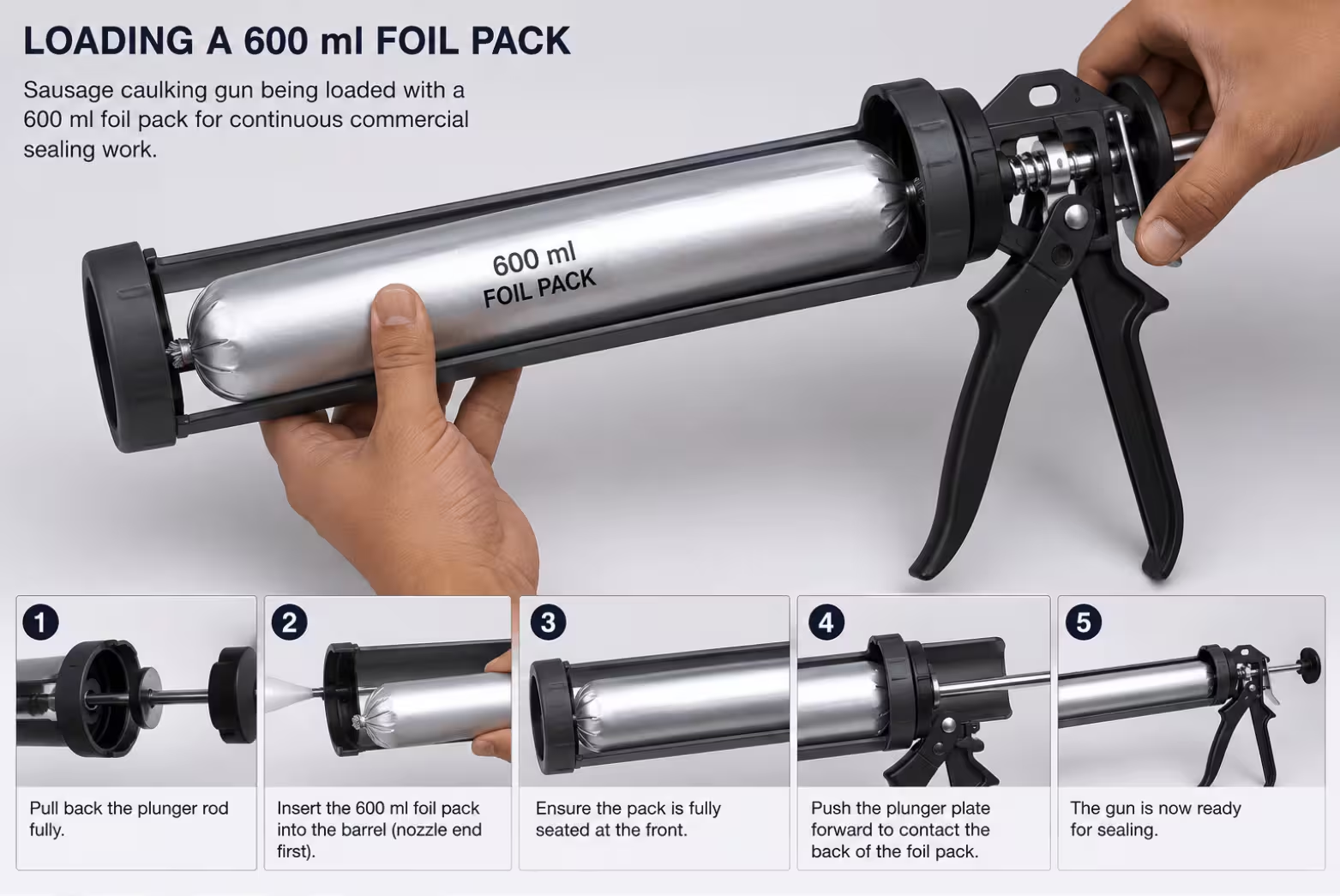
First, remove the front cap and nozzle from the gun. Then insert the foil pack into the barrel with the nozzle end pointing forward. Cut the tip of the foil pack — not the nozzle — to open the flow path. Reattach the nozzle and front cap. Pull the trigger to advance the plunger against the back of the foil pack until sealant reaches the nozzle tip.
The most common mistake is cutting the foil pack too large. A small opening gives better control over bead width. If the cut is too wide, sealant flows too fast and the user loses precision on narrow joints. Users should also make sure the foil pack sits straight in the barrel — a crooked pack causes uneven pressure and inconsistent flow.
Sausage Caulking Gun Tips for Better Results
Operators who switch from cartridges to sausage packs often run into a few predictable issues. Air pockets inside the foil pack can cause sputtering when the trigger is pulled. To fix this, hold the gun nozzle-up and squeeze the trigger gently until sealant reaches the tip before starting the bead. This "burps" the air out.
Plunger pressure also matters. Sausage guns typically have higher thrust ratios — often 18:1 or 26:1 — which means they push sealant harder than a standard cartridge gun. Users should match the thrust ratio to the sealant viscosity. Thick polyurethane sealants need higher ratios; standard silicone flows easily at lower ratios. A caulking gun with the right thrust ratio for the sealant type gives smoother flow and less hand fatigue.
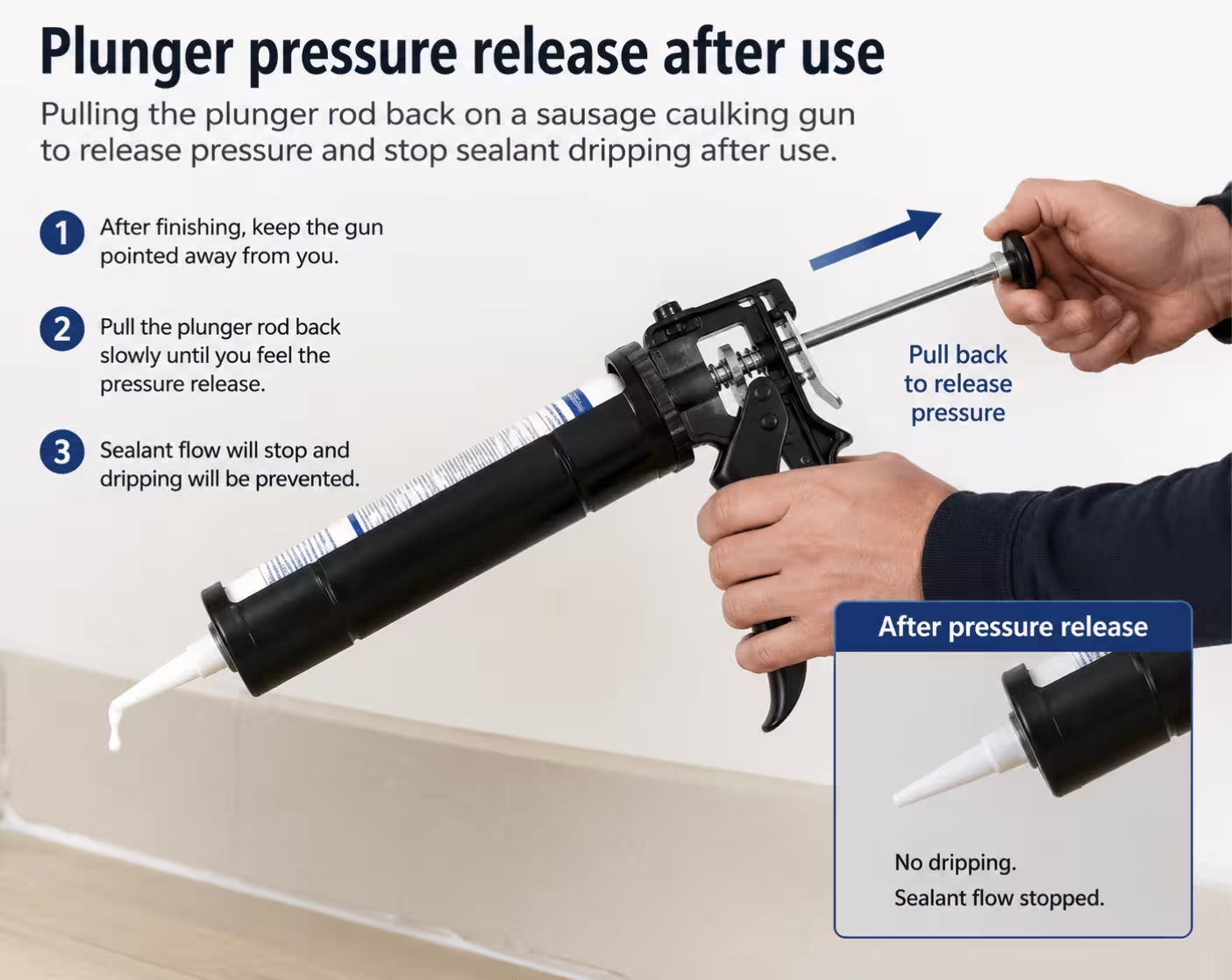
After finishing a session, pull the plunger rod back to release pressure on the foil pack. This prevents sealant from continuing to drip from the nozzle.
Choosing the Right Format for Your Market
For distributors and procurement staff, the decision is not just about personal preference — it is about what their customers need. A hardware wholesaler serving residential contractors should stock cartridge-based guns because that is what most buyers use. A construction material supplier serving commercial curtain wall crews should carry both formats.
OEM and private-label buyers should also consider regional sealant availability. In some markets, sausage packs are common for polyurethane and silicone sealants; in others, cartridge format dominates. Confirming sealant supply chain availability before committing to a sausage caulking gun product line prevents inventory that sits unsold.
For wholesale orders, cartridge-based manual caulking guns offer a safer starting point because they serve the widest customer base. Adding sausage guns to the catalog gives distributors a way to serve high-volume commercial accounts without replacing their core product range.
FAQ
What sizes do sausage caulking gun packs come in?
Sausage packs are most commonly available in 400 ml and 600 ml sizes. Some specialty sealants also come in 300 ml or 1,000 ml packs, but 400 ml and 600 ml are the standard for construction and industrial use. The pack size determines how much sealant the gun can hold before reloading.
Can I use a sausage caulking gun with any sealant?
No. Sausage caulking guns only work with sealants that are packaged in foil packs. Standard cartridges do not fit in a sausage gun barrel. Before buying a sausage gun, verify that the sealants your work requires — silicone, polyurethane, acrylic, or hybrid — are available in sausage pack format from your supplier.
How do I load a sausage caulking gun properly?
Remove the front cap and nozzle, insert the foil pack with the nozzle end forward, cut the tip of the foil pack to open it, reattach the nozzle and cap, then pull the trigger until sealant reaches the nozzle. Cut the foil pack opening small for better bead control. Make sure the pack sits straight in the barrel to avoid uneven pressure.
What is the difference between a sausage gun and a bulk load caulk gun?
A sausage gun dispenses sealant from a pre-filled foil pack, while a bulk load caulk gun loads sealant directly from a pail or bucket into the gun barrel. Sausage guns are cleaner and faster to load because the pack is sealed and disposable. Bulk load guns are used for very high-volume jobs where buying sealant in pails is more economical than buying individual packs or cartridges.
Can I convert a sausage caulking gun to use cartridges?
Some sausage guns can use a cartridge adapter that allows standard 300 ml cartridges to fit in the barrel. However, this is not universal — not all sausage guns support adapters, and the fit may not be as secure as a purpose-built cartridge gun. If you need to use both formats regularly, consider buying one of each rather than relying on an adapter.
What thrust ratio should a sausage caulking gun have?
Sausage caulking guns typically have thrust ratios between 18:1 and 26:1. A 18:1 ratio works well for standard silicone and acrylic sealants. A 26:1 ratio is better for thicker materials like polyurethane or construction adhesive. Higher ratios reduce the force needed on the trigger but push sealant faster, so the user needs to control bead width more carefully.
What nozzle type works best with a sausage caulking gun?
Sausage caulking guns use a nozzle that threads onto the front cap over the foil pack opening. The nozzle tip is cut at an angle — usually 45 degrees — to control bead width. A smaller cut produces a narrower bead for precision work; a larger cut fills wide joints faster. Nozzle extensions can be added for deep joints or hard-to-reach areas.