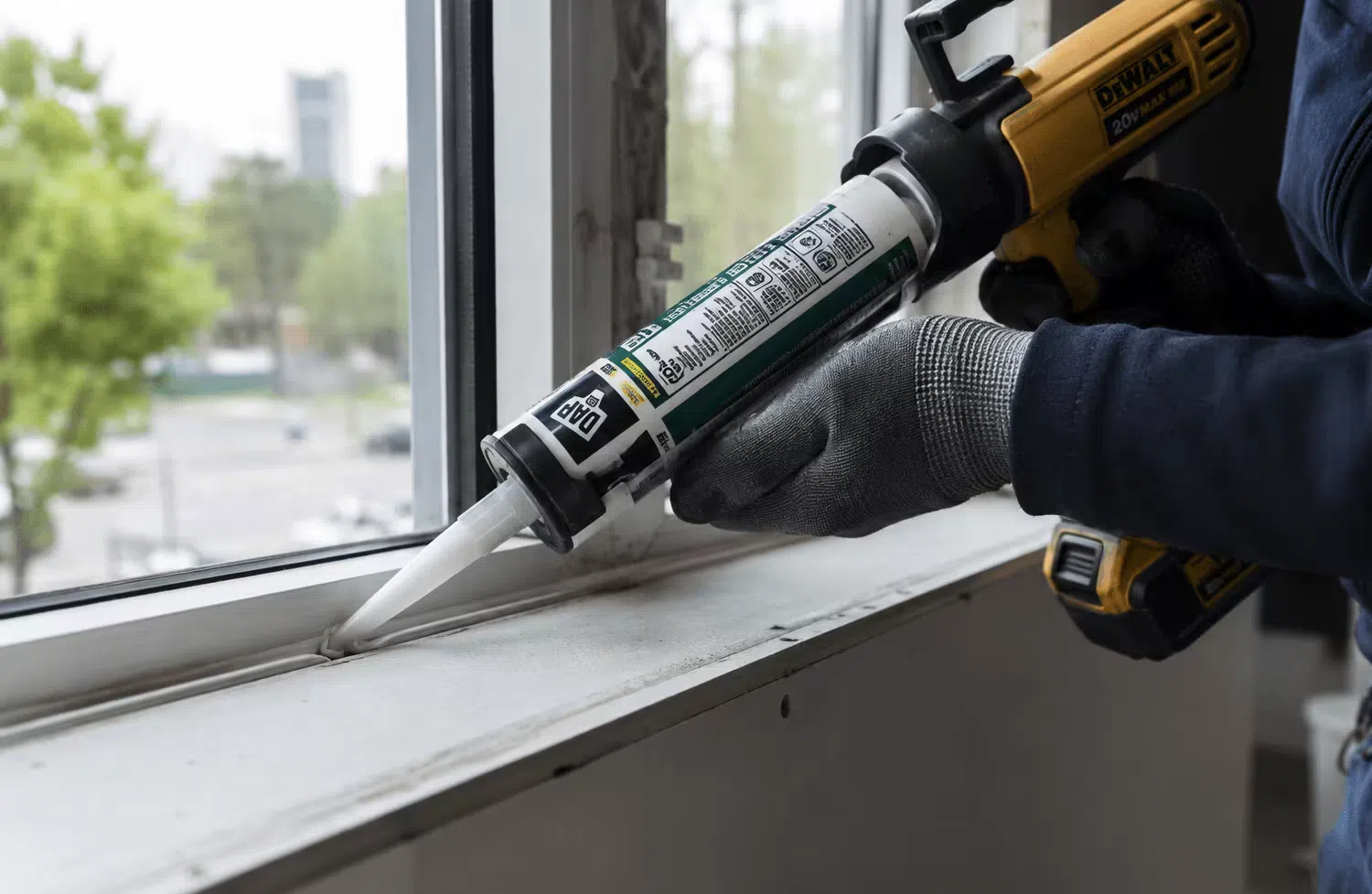
If you are a distributor, wholesaler, or construction supplier looking at cordless caulking guns for your product range, the main challenge is not finding a model — it is knowing which specifications actually matter for your customers. Most online content reviews individual brand tools for homeowners. This article takes a different approach: it explains the spec-based criteria that help B2B buyers compare cordless electric caulking gun models before placing a wholesale order.
A cordless caulking gun uses a rechargeable battery and motor to push sealant or adhesive out of a cartridge or sausage pack. Compared with manual dispensing, it reduces hand fatigue during repeated use and provides a more consistent flow rate. For wholesale buyers, the key question is which cordless models match the cartridge formats, sealant types, and workload demands of the customers you serve.
Cartridge and Pack Format Compatibility
The first spec to check is cartridge format. Most cordless caulking guns are designed around standard cartridge sizes: 10 oz (300 ml), 29 oz (roughly 400 ml), or 30 oz. Some models also accept sausage packs, which are common in European and industrial markets. If your customer base uses both cartridges and sausage packs, a cordless sausage caulking gun that supports both formats can reduce the number of SKUs you need to stock.
Cartridge mismatch is one of the most common sources of product returns in this category. A gun built for 10 oz cartridges will not physically accept a 29 oz tube, and the user cannot force-fit it without damaging the tool or the sealant tube. Before ordering for wholesale, confirm which cartridge sizes your target market uses most often. If your main customers are residential contractors, 10 oz cartridges are common. For commercial construction and renovation, a 29 oz cordless caulk gun or 30 oz model is more typical. You can read more about 10 oz cartridge compatibility in our sizing guide.
Battery Voltage and Working Time
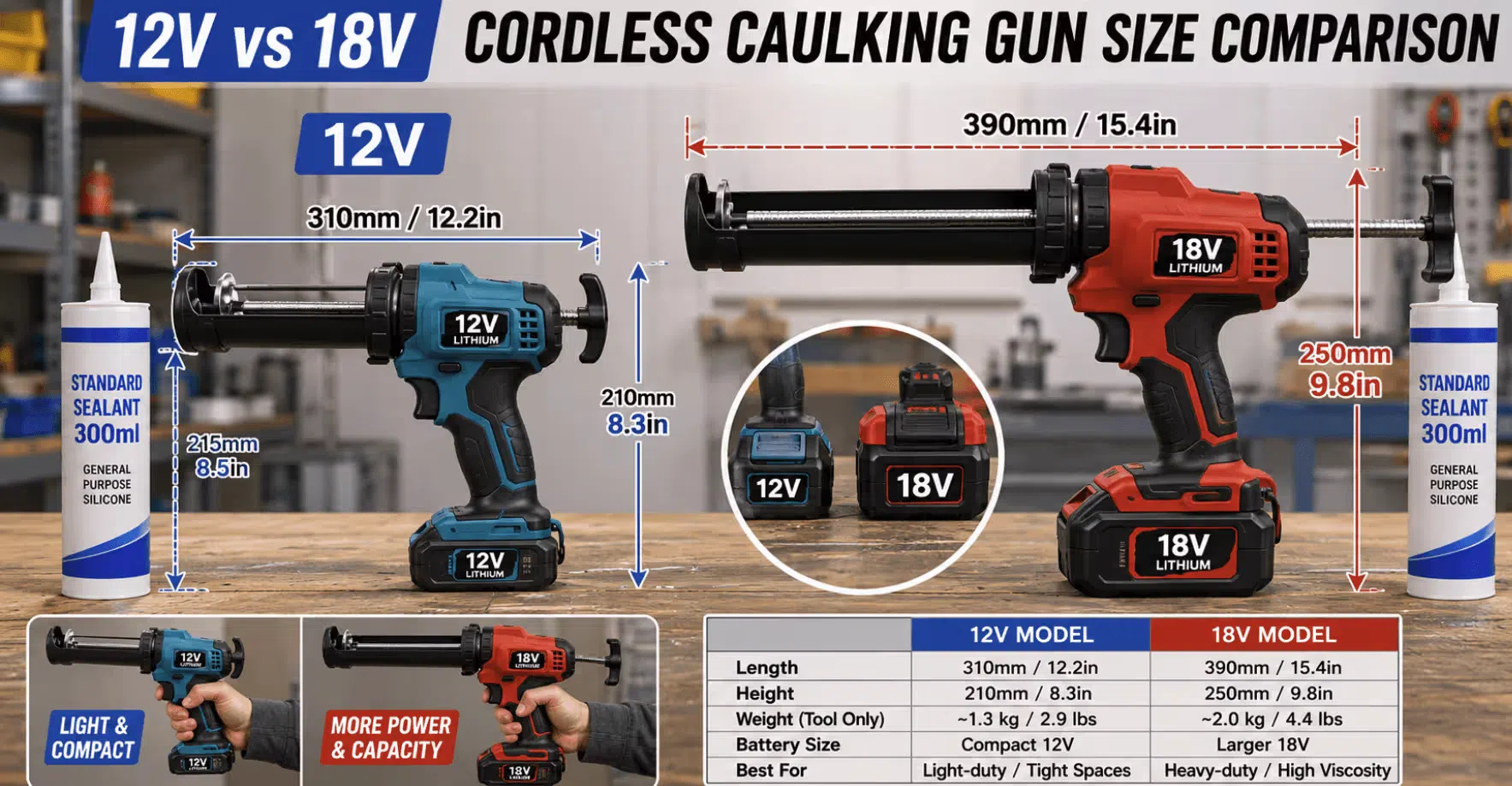
Cordless caulking guns typically run on 12V or 18V/20V battery platforms. The voltage affects both dispensing force and how long the tool can run before the battery needs recharging.
A 12V cordless caulking gun is lighter and works well for occasional use, light sealants, and short sessions. However, trade professionals who use the tool throughout the day often find 12V models underpowered for thicker materials or longer continuous beads. Users on trade forums have reported that 12V models feel "too light duty" for heavy construction work, leading them to upgrade to 18V or 20V systems.
For wholesale buyers, this is a practical stocking decision: if your customers include professional contractors, renovation teams, or maintenance crews, 18V/20V models are a safer inventory bet. If you also serve lighter-duty or DIY-adjacent buyers, a 12V option in the range gives you a lower price point entry.
Battery interchangeability is another factor worth asking about. Many cordless caulking gun platforms share batteries with other power tools in the same brand system. For buyers already invested in a specific battery platform, this can be a strong selling point. Ask your supplier whether the battery and charger are included or sold separately — this affects your landed cost and your customers' out-of-box experience.
Dispensing Speed and Flow Control
Variable speed control is one of the most important features to compare across cordless caulking gun models. A basic model may run at a single fixed speed, while more advanced models offer a variable speed trigger or multiple speed settings.
Why does this matter for wholesale buyers? Different sealant viscosities require different dispensing speeds. Silicone sealant flows easily and needs a slower, more controlled push. Construction adhesive and polyurethane sealant are thicker and need more motor force at a steady rate. If the gun only runs at full speed, the user either wastes sealant from over-dispensing or struggles to maintain a clean bead on delicate work like window sealing.
Some cordless caulking guns also include a continuous dispensing mode, which holds a steady flow without constant trigger pressure. This is useful for long sealing lines in commercial construction and cladding work. For deeper detail on how dispensing force relates to thrust specifications, see our thrust ratio guide.
One practical note from industrial users: trigger response time matters more than many buyers expect. A delay between trigger pull and dispensing start can cause messy bead starts and wasted material. When comparing models, ask the supplier about trigger response and minimum dispensing speed, especially if your customers work in precision applications like panel sealing or industrial maintenance.
Anti-Drip and Pressure Release Design
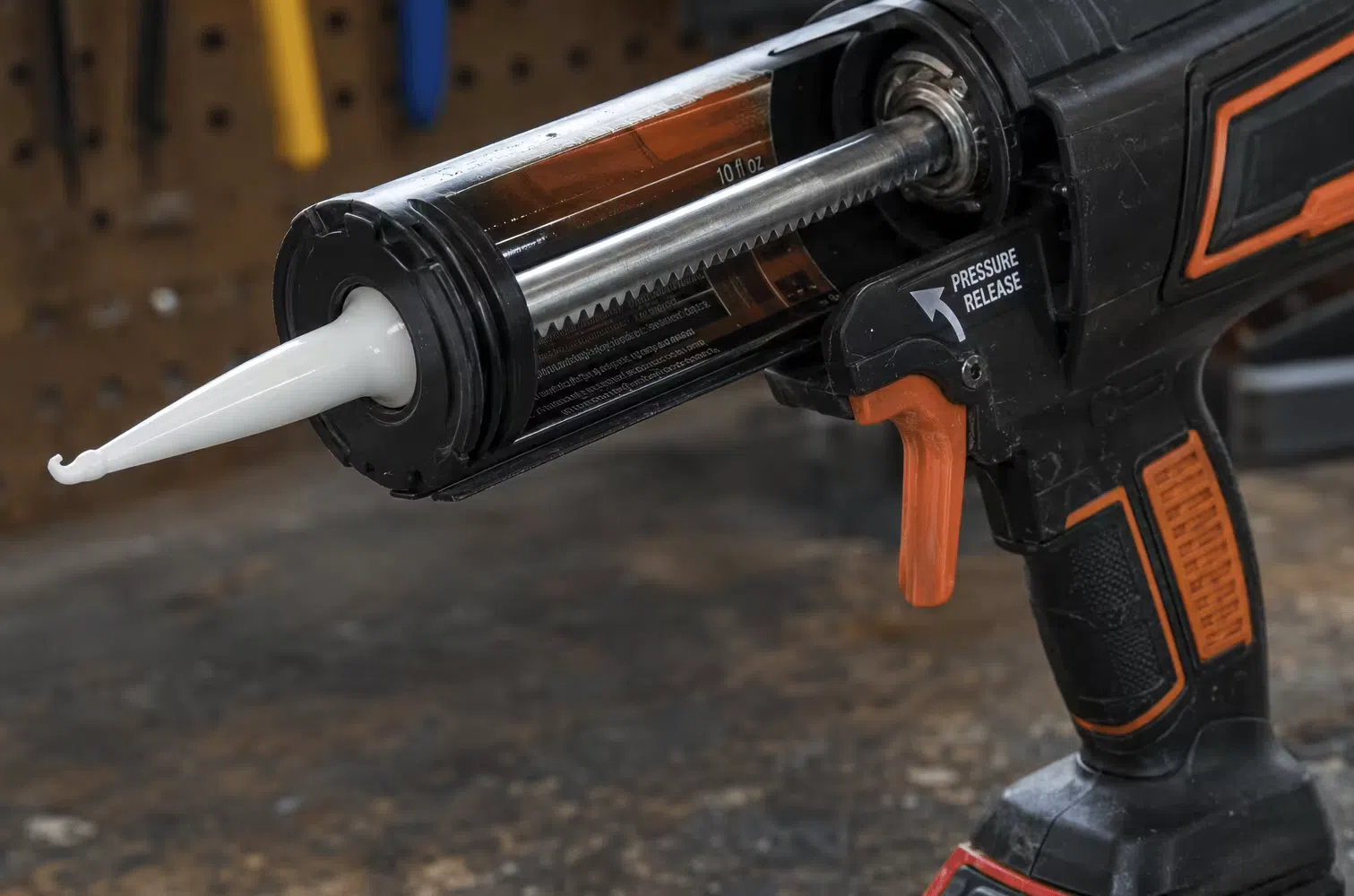
Anti-drip design is one of the cordless caulking gun features that generates the most positive feedback from professional users. When the trigger is released, the motor reverses slightly or a mechanical valve releases pressure inside the barrel. This prevents sealant from continuing to ooze out of the nozzle after the user stops squeezing.
Without anti-drip, the user has to wipe the nozzle after every pause, which wastes sealant and slows down the job. For installation teams doing window sealing, cladding, or trim work, drip control directly affects how clean the finished joint looks. Cordless caulking gun reviews from trade users consistently mention anti-drip as a feature that separates a good cordless gun from one that causes frustration.
For wholesale buyers, anti-drip is worth highlighting in your product listings because it is a real-world benefit that end users notice. A dripless caulking gun feature is not just a spec sheet line — it affects daily workflow and material waste.
Build Quality, Weight, and Daily Workload
For professional use, the motor and gearbox need to handle repeated dispensing cycles without overheating or losing power. A cordless caulking gun used by a maintenance team or a construction crew may go through 20 to 50 cartridges in a single workday. Models designed for light or occasional use may not hold up under this kind of workload.
Weight and balance also matter for extended use. A heavier gun with the battery at the back can cause wrist fatigue during overhead or vertical sealing work. Some models include an LED work light near the nozzle, which helps in low-light conditions like crawl spaces, ceiling joints, and interior renovation work.
When sourcing for wholesale, ask the supplier about the motor duty cycle and expected service life under professional conditions. A cordless electric caulking gun that holds up well over 6 to 12 months of daily use will generate far fewer after-sales complaints than a model that burns out after light use.
Replacement Parts and After-Sales Support
Replacement parts availability is an often-overlooked factor in cordless caulking gun sourcing. The parts that wear out first are typically the nozzle, the barrel or push rod, and the battery. If your supplier does not offer these as separate service parts, your customers will have to replace the entire tool when one component fails.
For distributors and wholesalers, easy access to replacement nozzles, barrels, push plates, batteries, and chargers turns a one-time sale into a repeatable product program. It also reduces the volume of warranty returns and customer complaints. Before placing a wholesale order, confirm which service parts the factory can supply and whether they are available in your target market's packaging and labeling requirements.
Cordless Caulking Gun Comparison Checklist
Use this checklist when comparing cordless caulking gun models for wholesale:
| Spec | What to Check | Why It Matters |
|---|---|---|
| Cartridge format | 10 oz, 29 oz, 30 oz, sausage pack | Prevents cartridge mismatch and returns |
| Battery voltage | 12V vs 18V/20V | Affects dispensing force and workload capacity |
| Speed control | Variable trigger, fixed speed, or multi-speed | Matches different sealant viscosities |
| Anti-drip | Pressure release on trigger release | Reduces sealant waste and cleanup time |
| Weight and balance | Total weight, battery position | Affects fatigue during extended or overhead use |
| Replacement parts | Nozzles, barrels, batteries, chargers | Supports after-sales and repeat ordering |
| OEM options | Color, label, packaging, plug type | Required for private label and bulk programs |
FAQ
What is the best cordless caulking gun for professional use? The best cordless caulking gun for professional use depends on the workload, cartridge format, and sealant type. For heavy construction and renovation work, an 18V or 20V model with variable speed control and anti-drip design is generally the most reliable choice. For lighter maintenance or occasional use, a 12V model can be a practical lower-cost option. Always confirm cartridge size compatibility with the sealant tubes your market uses most.
How is a cordless caulking gun different from a manual caulk gun? A cordless caulking gun uses a battery-powered motor to push sealant out of the cartridge, while a manual caulk gun requires the user to squeeze a trigger or push a plunger by hand. The motor-driven dispensing in a cordless model reduces hand fatigue, provides more consistent flow, and works better for thicker sealants or longer sealing lines. Manual guns are simpler, lighter, and less expensive, which makes them suitable for small jobs and touch-up work.
What cartridge sizes do cordless caulking guns support? Most cordless caulking guns support one or more of the following cartridge sizes: 10 oz (300 ml), 29 oz, or 30 oz. Some models also accept sausage packs, which are sealed film tubes used in European and industrial markets. Before ordering, confirm which cartridge format your customers use, because a gun built for one size will not physically accept another without a different barrel or holder.
Is a cordless caulking gun worth the higher cost compared to manual? For contractors, installers, and maintenance teams who use a caulking gun repeatedly throughout the day, the cordless version saves enough time and hand effort to justify the higher tool cost. The anti-drip feature also reduces sealant waste. For occasional or small-scope use, a manual caulking gun is usually sufficient and less expensive. The break-even point depends on how many cartridges per day the user typically dispenses.
What is the best cordless caulking gun available in the UK? The best cordless caulking gun for UK buyers depends on battery platform availability and cartridge format. UK markets commonly use 400 ml (roughly 29 oz) sausage packs and cartridges, so a model that supports these formats is important. Makita 18V and Milwaukee M12 platforms are widely available in the UK. Always check whether the charger plug type and voltage match local requirements before placing a wholesale order.