If you have ever tried to seal a joint behind a faucet, inside a deep expansion gap, or along a recessed window frame, you know that a standard caulking gun nozzle does not always reach where the sealant needs to go. A caulk extension nozzle solves this problem by adding length and sometimes flexibility to the front of your caulking gun, letting you apply sealant in spaces that would otherwise require removing fixtures or resorting to messy workarounds.
For contractors, maintenance crews, and wholesale buyers stocking single component caulking guns, understanding when and how to use a caulking extension nozzle helps avoid common project delays and wasted materials.
What Is a Caulk Extension Nozzle?
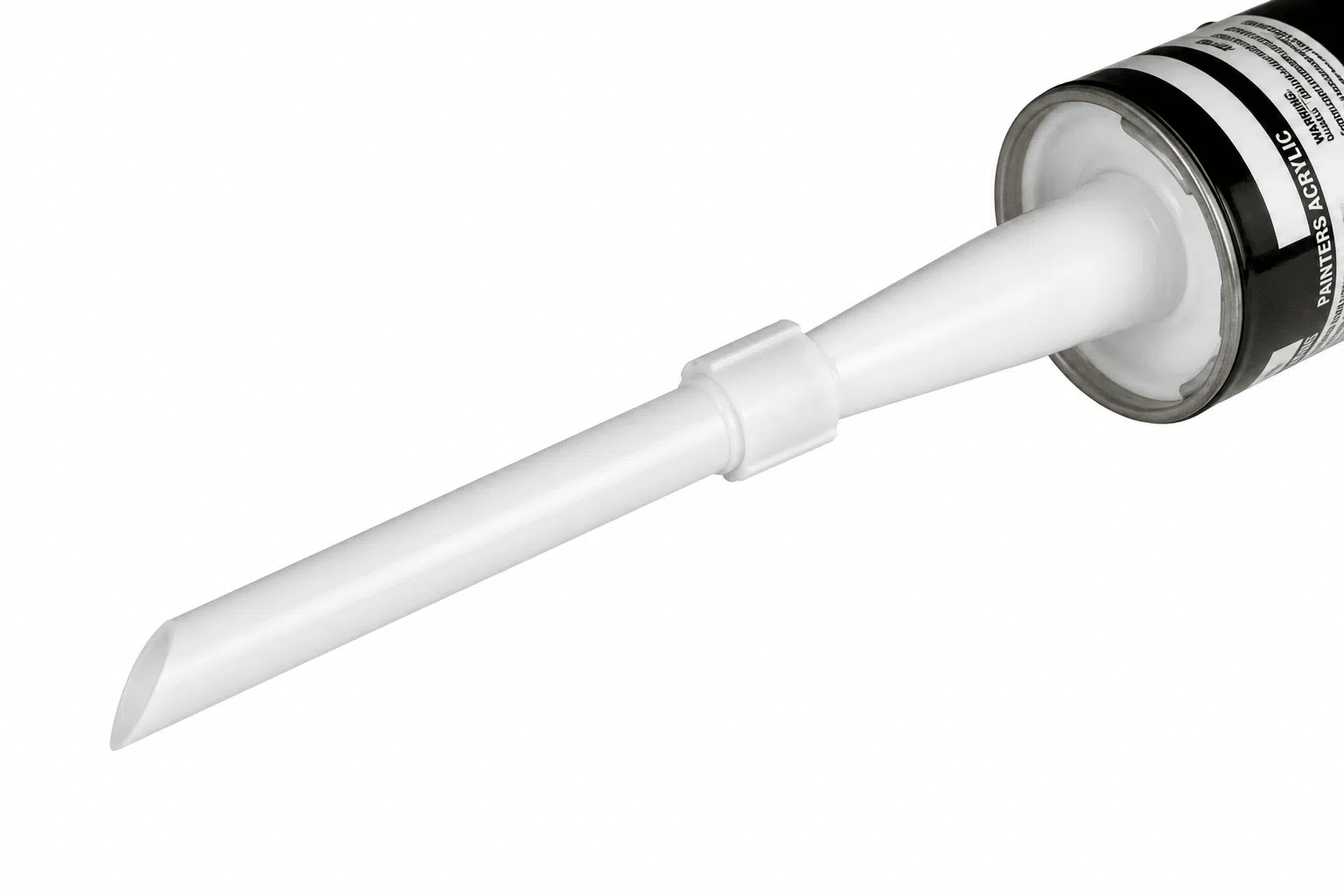
A caulk extension nozzle is a tube or adapter that attaches to the front of a standard caulk cartridge nozzle to increase its reach. Most extensions are made from rigid plastic or flexible rubber, and they come in lengths from a few inches to over a foot. The extension slides over or screws into the existing nozzle tip, and the user cuts the far end to control bead width.
An extension nozzle is different from a replacement nozzle tip. A replacement tip simply replaces a damaged or clogged nozzle on the cartridge itself. A caulking extension nozzle, on the other hand, adds reach beyond the original nozzle without removing it. Some extensions are designed as one-piece tubes that replace the nozzle entirely, while others are add-on adapters that fit over the existing tip.
When Do You Need an Extension Nozzle?
Not every sealing job requires an extension. But several common scenarios make a caulking extension nozzle the right tool.
Behind fixtures and equipment. Kitchen sinks, bathroom faucets, and built-in appliances often block direct access to the joint where the countertop or fixture meets the wall. A short caulk gun nozzle extension lets you reach behind the fixture body without removing it. This is one of the most common tight-space caulking problems reported by homeowners and maintenance workers. When no extension is available, users often fall back on squeeze tubes or finger application, which produce less consistent beads and take more time.
Deep expansion joints. Concrete expansion joints in floors, walls, and driveways can be several inches deep. A standard nozzle only reaches the surface. A caulking tip extension lets you deliver sealant to the full depth of the joint, which improves adhesion and prevents premature cracking.
Window and door frames. When installing or resealing windows, the gap between the frame and the rough opening is often recessed behind trim or siding. A rigid nozzle extension reaches into this gap from outside without disassembling trim pieces.
Roof flashing and gutters. Sealing along roof edges, gutter joints, and flashing often requires reaching into tight angles from an awkward position. A flexible caulk nozzle bends around obstructions and lets you apply a continuous bead without repositioning your ladder as often.
HVAC and plumbing penetrations. Pipes and ducts passing through walls create gaps that need sealing for air and moisture control. These gaps are often in tight corners or behind other equipment, making a nozzle extension necessary for a clean application.
How to Use a Caulk Extension Nozzle
Using a caulk extension nozzle follows the same basic workflow as using a standard caulking gun, with a few adjustments.
Step 1: Attach the extension. Slide or screw the extension nozzle onto the cartridge nozzle. Make sure the connection is firm. If the extension is loose, wrap the joint with tape to prevent separation during use. One common DIY problem is that an improperly secured extension detaches mid-application, wasting sealant and creating a cleanup job.
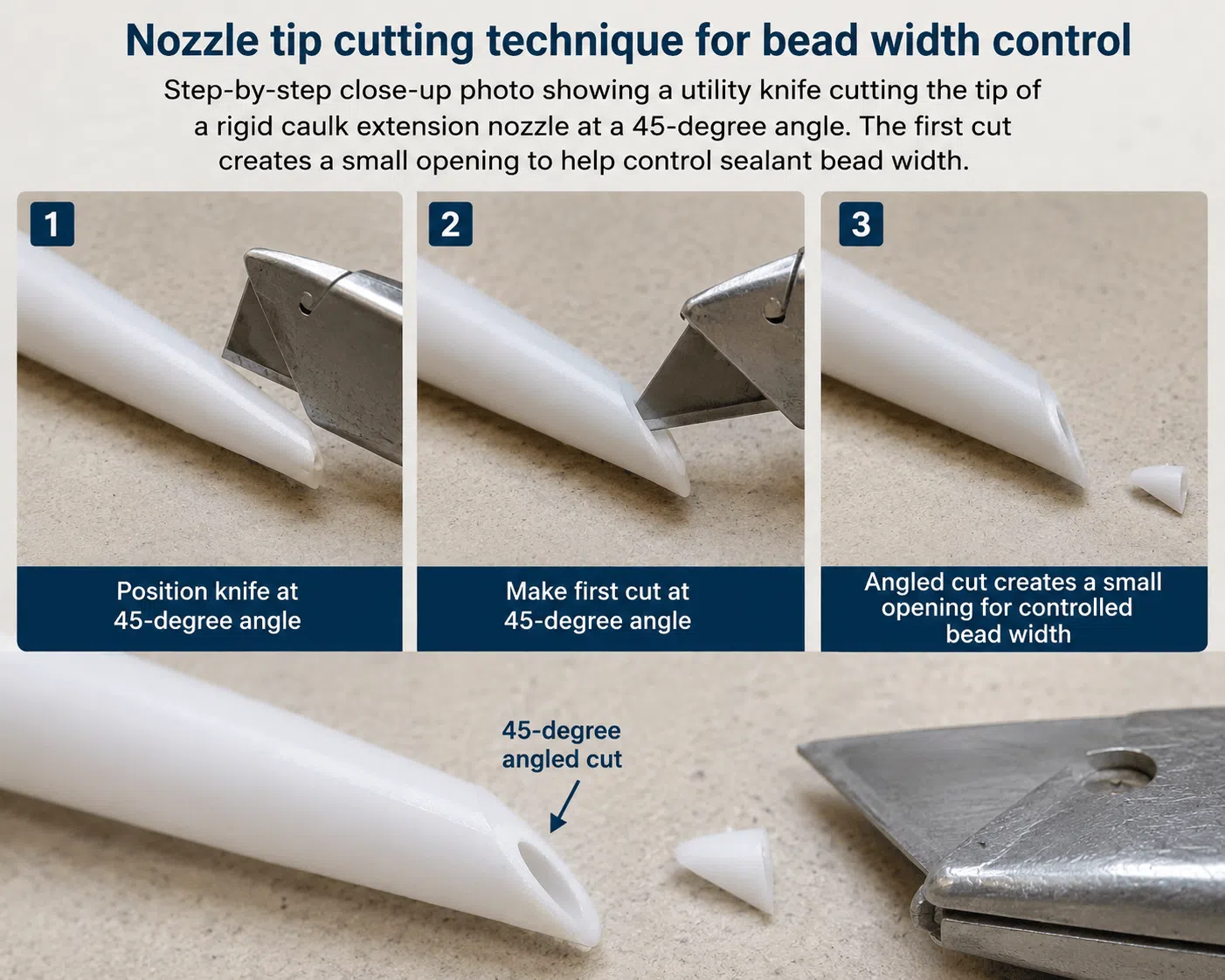
Step 2: Cut the extension tip. Use a utility knife to cut the far end of the extension at a 45-degree angle. The size of the opening controls the bead width. Start with a small cut — you can always make it larger, but you cannot undo a cut that is too wide.
Step 3: Load the cartridge. Pull back the plunger rod on your manual caulking gun, insert the cartridge with the extension already attached, and push the rod forward until it contacts the cartridge base. If you need a refresher on loading technique, see our guide on how to load a caulk gun.
Step 4: Apply steady pressure. Squeeze the trigger at a consistent rate while moving the extension along the joint. Keep the extension tip at a steady angle to the surface. Because the extension adds length, small hand movements at the gun end create larger movements at the tip — practice on a scrap piece before starting on the visible joint.
Step 5: Release pressure before pulling away. If your caulking gun has a thumb-release latch, press it before pulling the extension away from the joint. This releases pressure inside the cartridge and prevents the sealant from continuing to flow after you stop squeezing.
Rigid vs Flexible Extension Nozzles
The choice between a rigid and a flexible caulk nozzle depends on the path the sealant needs to follow.
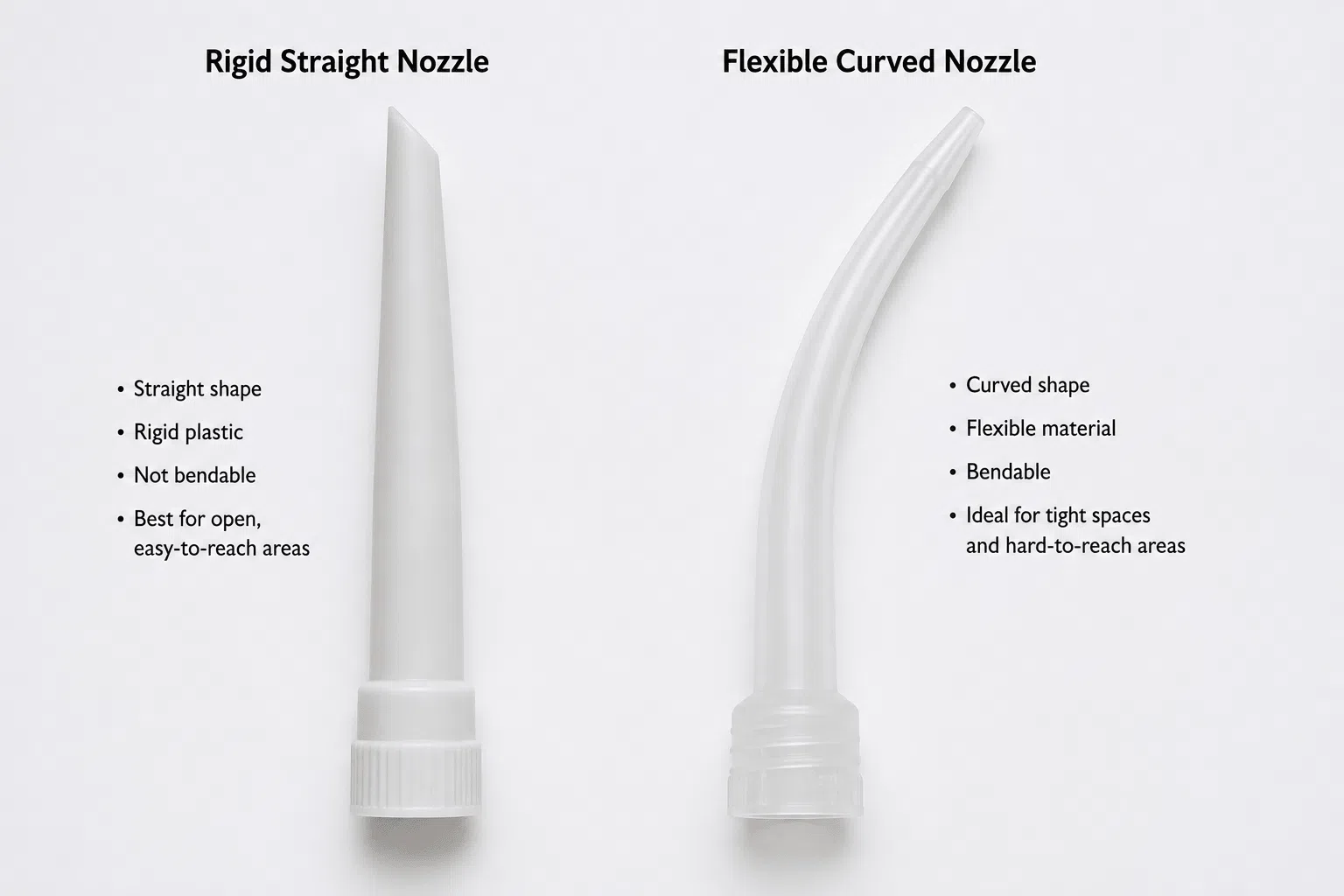
Rigid extensions are straight plastic tubes. They work best for joints that run in a straight line — expansion joints in concrete, gaps along straight window frames, and seams behind flat fixtures. Rigid extensions hold their shape under pressure, which helps maintain a consistent bead width.
Flexible extensions are made from rubber or flexible plastic. They bend around corners, behind pipes, and into offset gaps. A flexible caulk nozzle is the better choice when the joint is not in a straight line from where you can position the gun. The trade-off is that flexible extensions can be harder to control — the bend in the tube changes as you move, which can affect bead consistency.
For general-purpose use, a rigid extension in the 6-to-10-inch range covers most tight-space jobs. For plumbing and HVAC work where the path curves, a flexible extension in the same length range is more practical. Some caulking gun nozzle tips come in multi-packs with both rigid and flexible options, which is a useful stocking choice for distributors.
Choosing the Right Extension for Your Job
When selecting a caulk extension nozzle, consider three factors: length, diameter, and compatibility.
Length. Measure the distance from where you can hold the caulking gun to where the sealant needs to land. Add a few inches of margin. Extensions that are too short force you into awkward positions. Extensions that are too long become unwieldy and hard to control.
Diameter. The extension must fit snugly over or inside the cartridge nozzle opening. Most standard single component cartridges use a nozzle opening between 1/4 inch and 3/8 inch. If the extension is too loose, sealant leaks at the connection. If it is too tight, it may crack or not attach at all.
Compatibility with cartridge size. Standard 10 oz caulking cartridges and larger 29 oz cartridges both use similar nozzle diameters, so most extensions fit either size. The key is the nozzle tip opening, not the cartridge body size. If you stock multiple cartridge sizes, one extension type usually works across all of them.
For wholesale buyers and distributors, including a selection of rigid and flexible extension nozzles alongside your single component caulking gun orders covers the most common customer needs. A practical starting mix is 70% rigid extensions (6-to-10-inch) and 30% flexible extensions of similar length.
FAQ
Can I make a DIY caulk tube extension?
Some users build DIY extensions by attaching a length of tubing to the cartridge nozzle with tape or a bracket. This can work for one-time or emergency use, but DIY extensions are more likely to detach under caulking gun pressure, leaking sealant at the connection point. Purpose-built extensions cost very little and have proper-fit connections, which makes them more reliable for regular use.
Do extension nozzles fit all caulking guns?
Most extension nozzles fit standard single component cartridge nozzles, which are the most common type used with manual caulking guns. The fit depends on the nozzle tip diameter, not the gun model. Extensions generally do not fit dual component cartridge systems, sausage pack guns, or bulk loading guns without a separate adapter. If you are ordering extensions for a mixed inventory, confirm the nozzle tip diameter of the cartridges you stock.
How do I prevent sealant from drying inside a long extension?
Sealant begins to cure when exposed to air. Inside a long extension nozzle, the sealant at the open tip can dry and clog within 15 to 30 minutes depending on temperature and humidity. Keep the extension tip sealed with a small piece of tape or a cap when you pause work. Work in manageable sections so you do not leave sealant sitting in the extension for long periods. If the extension does clog, push a wire or long nail through from the tip end — squeezing harder from the gun can separate the extension from the cartridge.
What is the difference between a caulking tip extension and a nozzle replacement?
A nozzle replacement is a new nozzle tip that screws or presses onto the cartridge in place of the original one. It does not add reach — it just replaces a damaged or clogged nozzle. A caulking tip extension adds length beyond the existing nozzle. You can use both together: a replacement nozzle on the cartridge, with an extension attached to it for extra reach. If your nozzle tips are worn or damaged, see our caulking gun maintenance guide for cleaning and replacement instructions.
CaulkMFG supplies manual caulking guns for wholesale, OEM, and bulk orders. If you need extension nozzles or other accessories included with your caulking gun order, contact us for a quote.