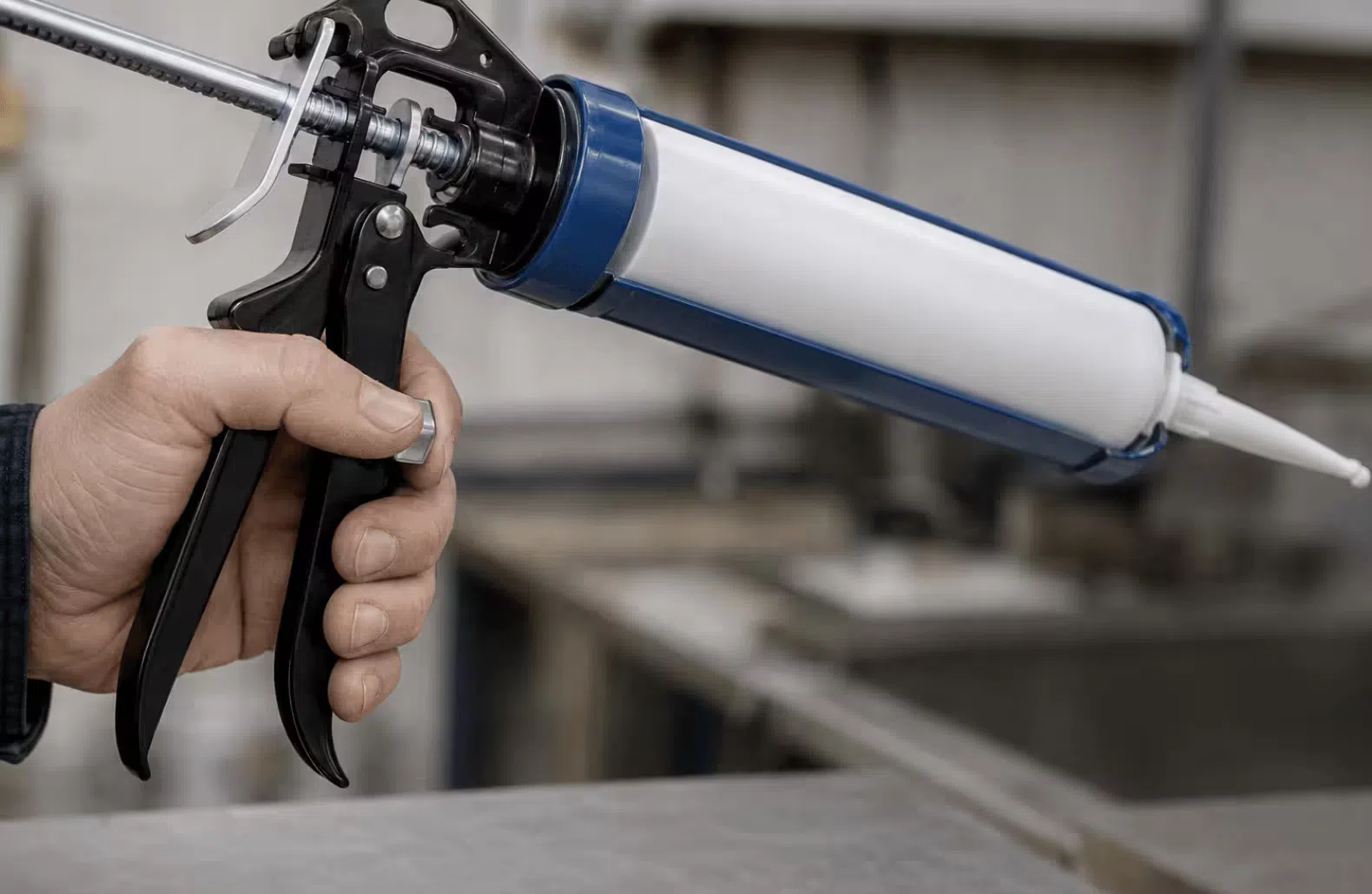
Every operator who has used a manual caulking gun for sealant work has seen it happen. You finish a bead, release the trigger, and sealant keeps oozing out. The nozzle drips onto the work surface, the bead tails off unevenly, and sealant is wasted. For B2B buyers who order manual caulking guns in quantity, this drip problem affects material costs, job-site cleanup time, and the quality of finished work. Understanding why a drip free caulk gun can still drip — and how to fix it — helps you choose the right models for your customers and reduce their frustration on the job.
Why Manual Caulking Guns Drip
The dripping problem in a manual caulking gun has root causes that fall into three categories: operator technique, gun condition, and material mismatch.
Operator Technique
When the user finishes a bead and releases the trigger, the plunger rod stays under tension. The pressure inside the cartridge does not release immediately, so sealant continues to flow. Every manual caulking gun has a thumb release lever that retracts the rod a short distance when pressed, relieving internal cartridge pressure. If the operator does not press this lever immediately after releasing the trigger, residual pressure keeps pushing sealant out.
Gun Condition
A manual caulking gun that has been used for many jobs may develop problems that make dripping worse. The plunger rod can become sticky or rough if sealant residue builds up on it. The release lever mechanism can wear or jam. The pressure plate may not sit flat against the cartridge base. These mechanical issues prevent the rod from retracting fully when the release lever is pressed, leaving pressure in the cartridge. Regular inspection of the rod surface, release lever action, and pressure plate condition helps catch these problems before they cause material waste.
Material Mismatch
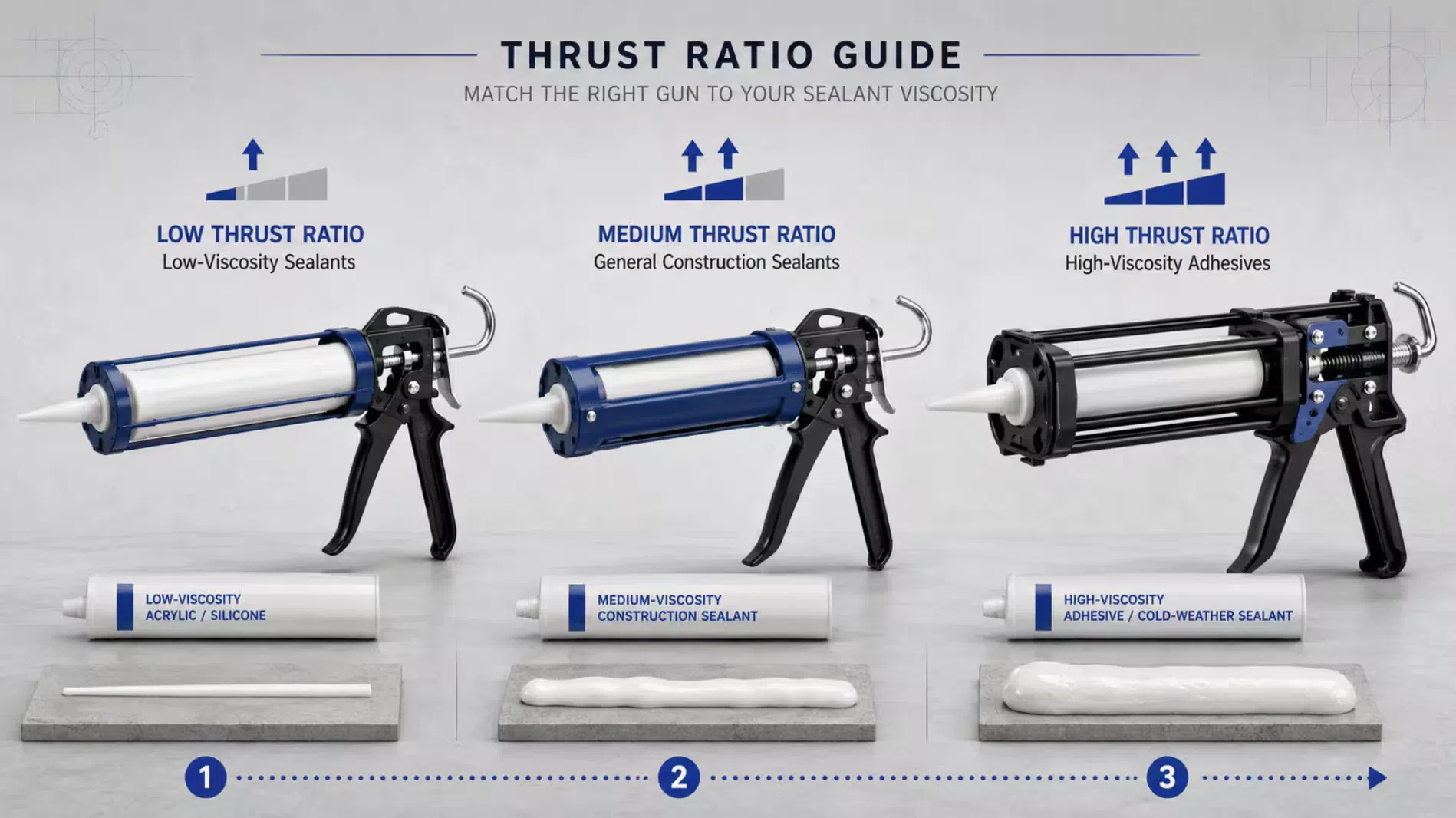
The thrust ratio of a manual caulking gun determines how much force is applied per squeeze of the trigger. An 18:1 ratio means 18 units of force reach the plunger for each unit of force on the trigger. A higher ratio like 26:1 generates more force per squeeze but also stores more energy in the rod assembly. When the trigger is released, this stored energy translates to continued sealant flow unless the release lever is used quickly and correctly.
Thinner materials like silicone and acrylic flow easily at low thrust ratios. Thicker materials like polyurethane need higher thrust ratios to dispense steadily. When a gun with a high thrust ratio is used with a thin sealant, the material flows faster than the operator can control, and dripping increases.
| Thrust Ratio | Mechanical Advantage | Best Used With | Drip Risk |
|---|---|---|---|
| 7:1 to 12:1 | Low | Silicone, acrylic, low-viscosity sealants | Low when release lever is used promptly |
| 18:1 | Medium | Acrylic, general construction sealants | Moderate — requires consistent release lever use |
| 24:1 to 26:1 | High | Polyurethane, high-viscosity adhesives | Higher — stored rod energy increases continued flow |
How the Release Lever Controls Dripping
The thumb release lever on a manual caulking gun works as a simple mechanical pressure relief. When the operator squeezes the trigger, the plunger rod advances and pushes the cartridge piston forward. When the operator presses the release lever, the rod ratchet disengages and the rod retracts a few millimeters. This retraction pulls the pressure plate back, reducing pressure inside the cartridge and stopping sealant flow.
For B2B buyers, the quality of this release mechanism matters when selecting guns for distribution. Guns with a positive-action release lever that disengages the rod cleanly will drip less than guns where the release lever feels loose or requires multiple presses. The guide on caulking gun trigger mechanism types explains the different release designs in more detail.
How to Stop a Manual Caulk Gun from Dripping
These are the practical fixes that operators can apply on the job site and that B2B buyers can include in product documentation or training materials for their customers.
Press the Release Lever Immediately After Every Bead
This is the single most effective fix. The operator should press the thumb release lever as soon as the bead is complete — not after wiping the nozzle or repositioning. A delay of even one second allows enough residual pressure to push sealant out. On guns where the release lever is hard to reach or requires significant thumb force, consider whether a different model is more suitable for the operator's application.
Check and Lubricate the Plunger Rod
Wipe the plunger rod clean after each use. Sealant residue creates friction that prevents the rod from retracting smoothly. Apply a light lubricating oil such as WD-40 or 3-in-1 oil to the rod surface periodically to keep it moving freely. This reduces the force needed to work the release lever and improves rod retraction.
Match the Thrust Ratio to the Sealant Type
Choosing the right thrust ratio for the material is a purchasing decision that prevents dripping at the source. The table below shows common sealant types and the recommended thrust ratio range for reliable dispensing with minimal drip.
| Sealant Type | Typical Viscosity | Recommended Thrust Ratio | Why It Matches |
|---|---|---|---|
| Silicone | Low | 7:1 to 12:1 | Low force needed; lower thrust reduces energy stored in rod |
| Acrylic latex | Low to medium | 12:1 to 18:1 | Moderate force for steady bead without over-pressurizing cartridge |
| Polyurethane | High | 18:1 to 26:1 | Higher force needed to dispense; must pair with attentive release lever use |
| Construction adhesive | Very high | 24:1 to 26:1 | Maximum mechanical advantage; expect more residual drip if release is slow |
Cut the Nozzle to the Right Opening Size
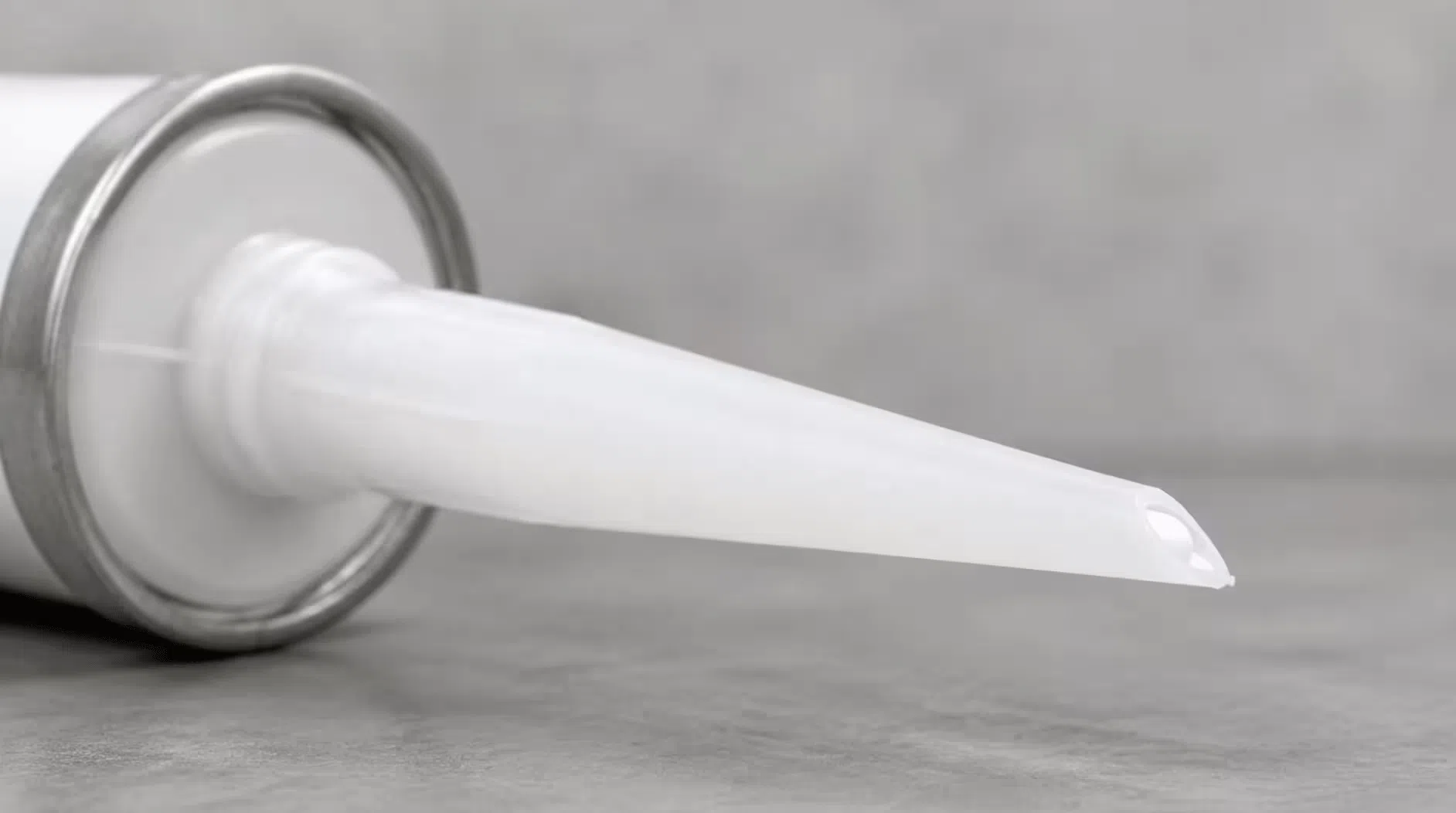
A nozzle cut too large allows sealant to flow faster than the operator can control, which increases dripping when the trigger is released. Cut the nozzle at a 45-degree angle at a point where the opening matches the bead size needed. A smaller opening means slower flow and less residual pressure when the trigger is released. The caulk gun nozzle guide provides detailed guidance on cutting and selecting nozzle sizes for different applications.
Inspect the Pressure Plate and Rod for Wear
On guns that have been in service for months, the pressure plate can develop wear marks or a slight tilt that prevents even contact with the cartridge base. The rod itself can develop surface rust or burrs. Check these components before assigning a gun to a new job. For distributors and wholesalers stocking spare parts, pressure plates and replacement rods are available for most standard manual caulking gun models.
Drip Prevention During Use
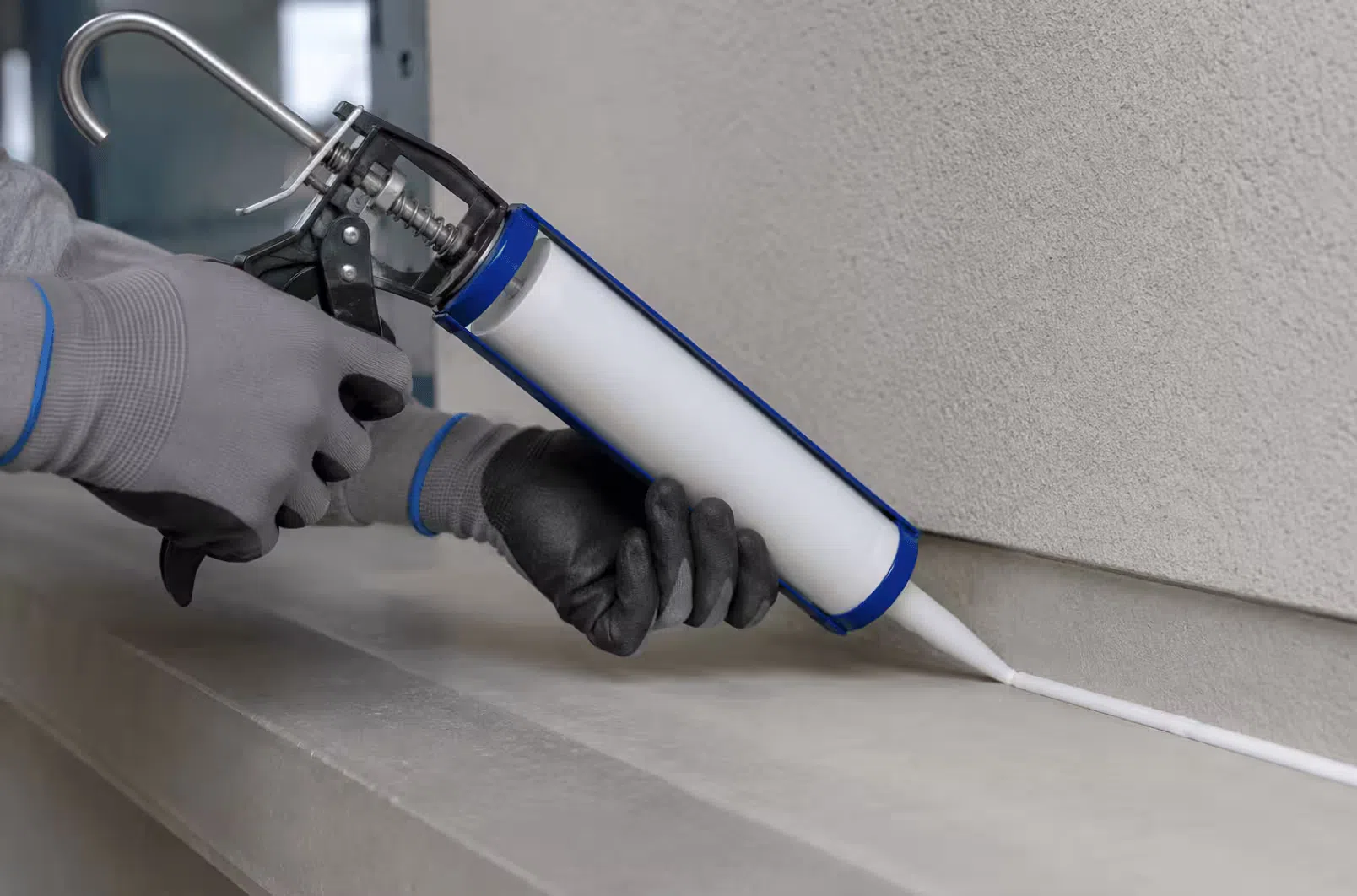
Operators can reduce dripping with two technique adjustments. Release trigger pressure gradually at the end of a bead rather than snapping the trigger release open suddenly. Lift the nozzle away from the surface while pressing the release lever so that any residual sealant strings off cleanly rather than pooling on the work surface. The bead control techniques guide covers operator methods for consistent dispensing and waste reduction.
For longer beads where stopping mid-joint is necessary, the operator should press the release lever, let the rod retract fully, and only then set the gun down. A gun set down with the rod still under tension will continue to drip until the pressure equalizes.
What B2B Buyers Should Know About Drip Free Caulk Guns
The term "drip free caulk gun" is commonly used in product listings, but it describes a mechanism rather than a guarantee. A dripless mechanism uses the release lever to retract the rod and relieve cartridge pressure. Whether this actually stops dripping depends on operator timing, rod condition, thrust ratio, sealant viscosity, and nozzle opening.
A well-made manual caulking gun with a smooth rod release mechanism and appropriate thrust ratio for the material will drip less than a poorly maintained gun with mismatched specs. But no mechanism eliminates dripping if the operator does not use the release lever correctly.
For B2B buyers evaluating manual caulking guns for wholesale or OEM supply, focus on these specification points:
- Release lever quality: Does the lever disengage the rod cleanly with one press?
- Rod surface finish: A smooth, plated rod resists residue buildup better than a bare metal rod.
- Thrust ratio range: A supplier that offers multiple thrust ratios allows you to match guns to your customers' most common sealant types.
- Frame rigidity: A frame that flexes under load can affect rod alignment and release lever function.
The selection of manual component guns from CaulkMFG includes models with thrust ratios from 7:1 to 26:1 in different frame materials, allowing buyers to match the gun to their typical application.
FAQ
Why does caulk keep coming out after I stop squeezing?
The plunger rod remains under tension after the trigger is released. If the operator does not press the thumb release lever immediately, residual pressure inside the cartridge continues to push sealant out. Press the release lever as soon as the bead is complete to retract the rod and relieve pressure.
How do I fix a caulk gun that won't stop dripping?
Check three things in order. First, confirm you are pressing the release lever fully after each bead. Second, clean and lubricate the plunger rod so it retracts smoothly. Third, check whether the thrust ratio is appropriate for the sealant type you are using — a high-thrust gun on thin silicone will drip more.
Is a drip free caulk gun worth the extra cost for wholesale buyers?
A gun with a well-designed dripless mechanism and smooth rod release can reduce sealant waste, which lowers per-job material cost for end users. The value for wholesalers and distributors is in reduced customer complaints and returns. Test the release lever action on a sample before placing a bulk order.
What thrust ratio should I recommend for customers who use multiple sealant types?
An 18:1 thrust ratio gun is a practical middle choice for general construction sealing with silicone, acrylic, and medium-viscosity sealants. For customers who work primarily with polyurethane or high-viscosity adhesives, a 24:1 or 26:1 gun is more appropriate, but they should be trained on prompt release lever use.
Can I get spare release lever components for restocking?
This depends on the manufacturer. Some manual caulking gun suppliers offer replacement release lever assemblies, plunger rods, and pressure plates as spare parts. When ordering for distribution, ask the supplier about spare part availability and compatibility across their model range.
Sourcing Guide
For B2B buyers evaluating manual caulking guns for wholesale, OEM, or distribution, the right product decision starts with understanding your customers' actual dispensing conditions. To get a model recommendation that matches your market, provide the following details when contacting a supplier:
- Sealant types your customers typically use — silicone, acrylic, polyurethane, or construction adhesives
- Common cartridge or tube sizes in your target market, such as 300 ml or 310 ml standard cartridges
- Target market region and any local fitting or packaging requirements
- Expected order quantity and whether you need sample units for testing before bulk commitment
- OEM or private-label requirements including custom colors, branding, and packaging format
Suppliers who manufacture their own guns in-house, like CaulkMFG with its manual component guns, can typically accommodate custom specifications when provided at the inquiry stage.