Professional Grade Manual Caulking Gun: What Features Matter for Trade Work
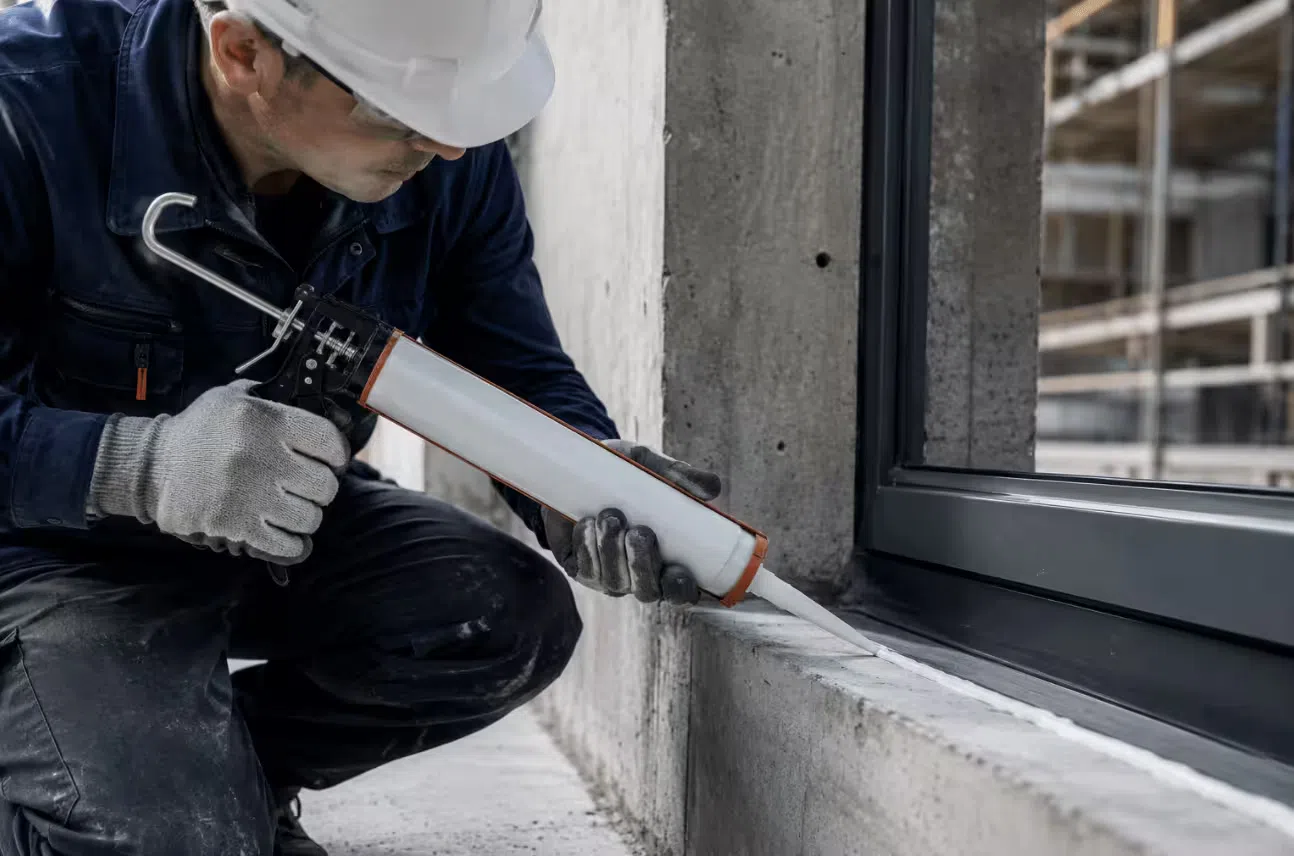
Trade professionals who apply sealant daily — contractors, glaziers, waterproofing crews, and factory maintenance teams — rely on a manual caulking gun as one of their most-used tools. A professional caulking gun is not the same as a general-purpose model. The features that distinguish a professional-grade gun affect how cleanly the bead goes down, how easily the trigger pulls, how long the tool lasts, and how much sealant gets wasted over a year of use. This article explains which specifications matter for trade work and what B2B buyers should check when sourcing manual caulking guns for professional crews or wholesale inventory.
What Defines a Professional Manual Caulking Gun
A professional caulking gun is defined by four structural specifications: thrust ratio, frame material, rod mechanism, and whether the gun includes a dripless pressure-release feature. Each directly affects how the gun performs on different sealant types, how comfortable it is to use for extended periods, and how often it needs replacement.
A general-purpose gun with a low thrust ratio and a heavy steel frame works for occasional use but causes hand fatigue and inconsistent bead quality on a job site where a worker goes through multiple cartridges per shift. The table below summarises the key specifications and how each affects buying decisions for trade use.
| Specification | Unit | What It Affects | B2B Buying Note |
|---|---|---|---|
| Thrust ratio | e.g. 12:1, 18:1, 26:1 | Dispensing force vs trigger pressure | Higher ratio reduces hand fatigue with thick sealants |
| Frame material | Steel or aluminum alloy | Tool weight, rust resistance, rigidity | Aluminum alloy is lighter and resists corrosion |
| Rod type | Smooth rod or hex rod | Dispensing consistency, ease of cleaning | Smooth rod provides more even flow and is easier to maintain |
| Dripless mechanism | Yes / No | Post-trigger dripping | Reduces material waste on multi-cartridge jobs |
| Cartridge capacity | Typically 300 ml / 310 ml | Fits standard sealant cartridges | Most common professional cartridge size |
Thrust Ratio and Why It Matters for Professional Use
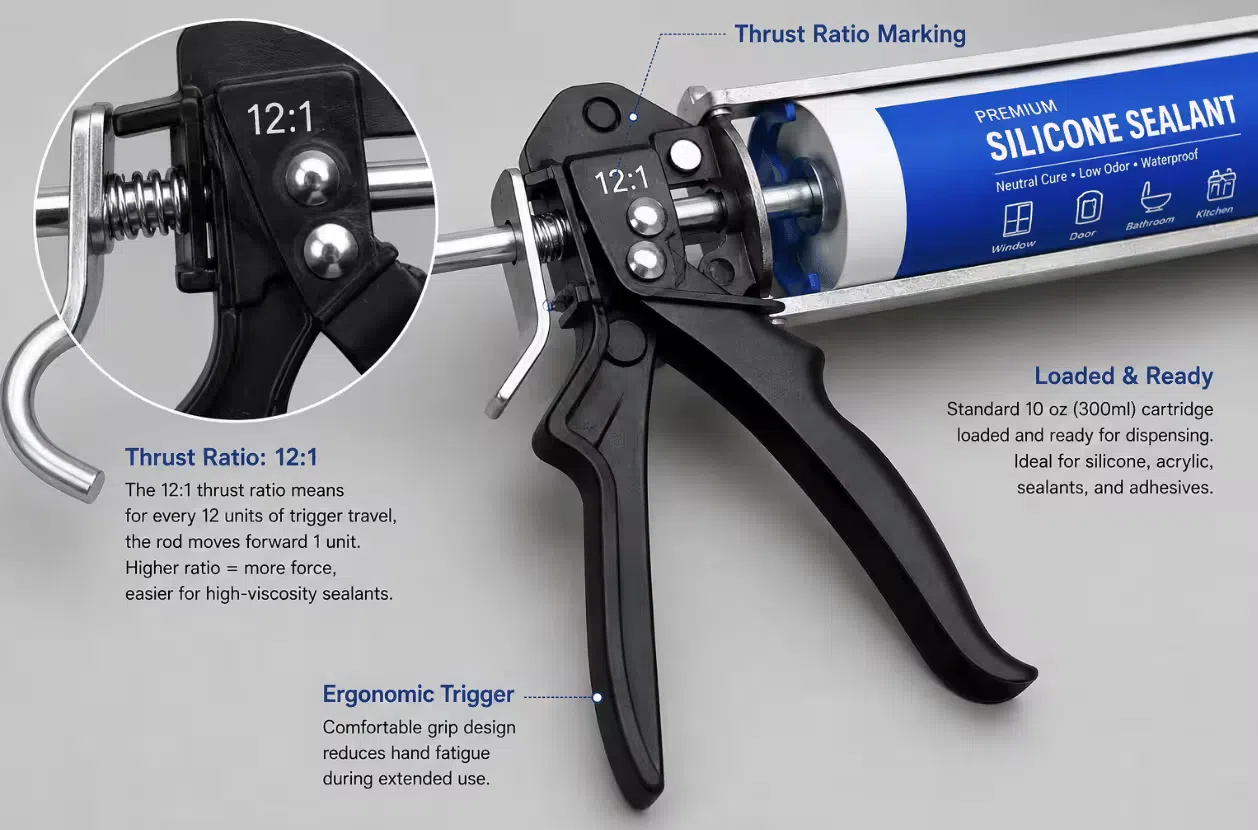
The thrust ratio tells you how many times the mechanical advantage multiplies the force you apply to the trigger. A 12:1 ratio means 12 units of force reach the plunger for each unit you squeeze. A 26:1 gun delivers more than twice the force with the same trigger pull — a meaningful difference when working with thick polyurethane adhesives or in cold weather.
For professionals applying silicone, acrylic, or hybrid sealants during standard building sealing work, a thrust ratio between 12:1 and 18:1 is usually sufficient. For thicker materials — polyurethane construction adhesives, high-viscosity sealants, or cold-weather applications — an 18:1 to 26:1 ratio makes the difference between smooth controlled dispensing and hand fatigue after a few cartridges.
One practical observation from trade experience is that high resistance while squeezing is often mistaken for a tool defect. The real issue is usually that the gun's thrust ratio does not match the sealant viscosity. Checking the sealant manufacturer's technical data sheet for recommended dispensing pressure and matching it to the gun's thrust ratio reduces operator complaints and improves work quality.
Application Guide
| Application | Recommended Gun Spec | Key Features to Check |
|---|---|---|
| Silicone sealing, windows, doors | 12:1 to 18:1, dripless | Smooth rod for even bead, aluminum frame for light weight |
| Acrylic and hybrid sealants, general construction | 12:1 to 18:1, dripless | Dripless mechanism, balanced handle |
| Polyurethane adhesives, thick construction sealants | 18:1 to 26:1 | High thrust ratio, reinforced frame |
| Cold-weather sealing (below 10°C) | 18:1 or higher | Ratio compensates for increased material viscosity |
| Daily multi-cartridge use on site | 18:1 with smooth rod | Ergonomic handle, dripless to reduce waste |
Frame Material: Aluminum Alloy vs Steel
The frame is the structural backbone of the professional caulking gun. Professional-grade guns typically use either steel or aluminum alloy. Each suits different working conditions.
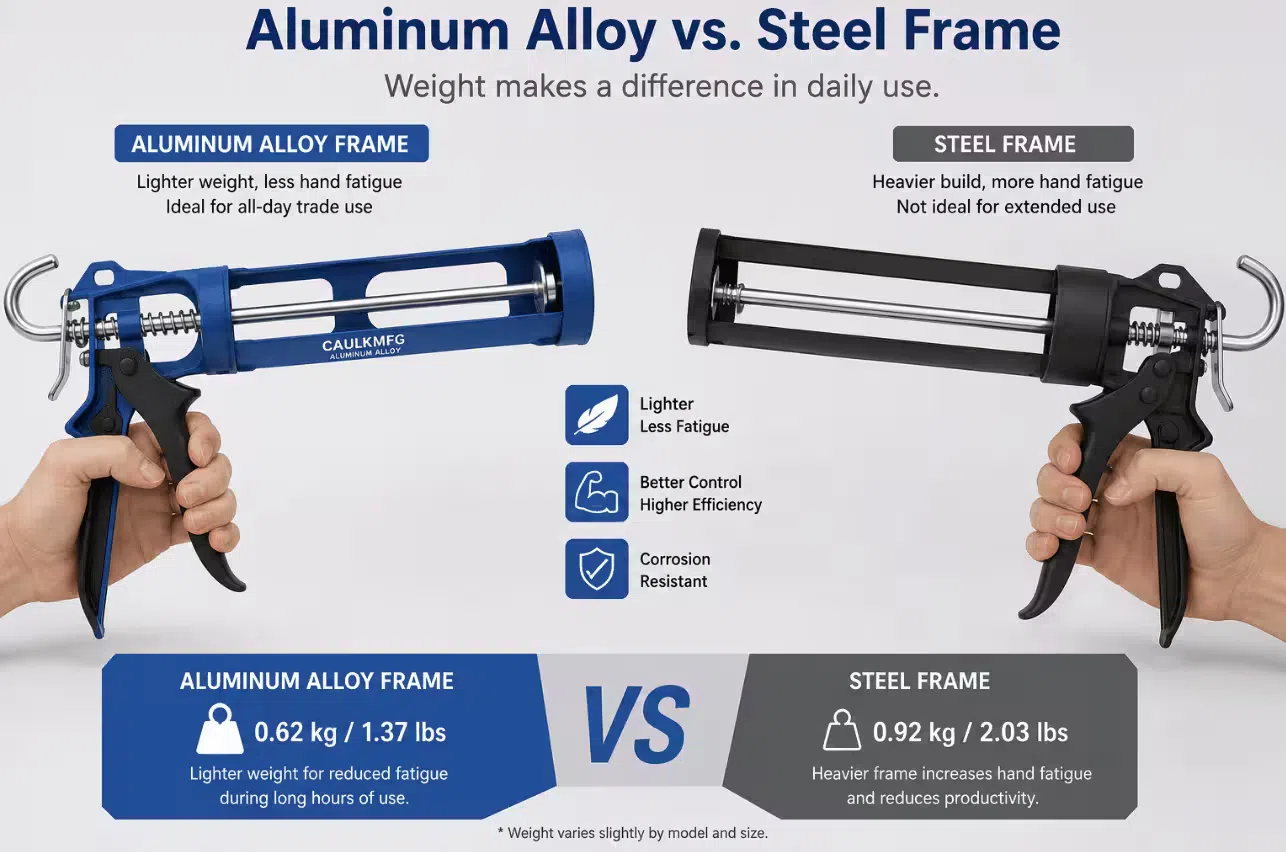
Aluminum alloy frames are lighter — typically about 30 to 40 percent lighter than comparable steel frames — and do not rust. For a contractor carrying a caulking gun up ladders or across a site all day, this weight difference reduces cumulative fatigue noticeably. CaulkMFG offers model 03 (aluminum alloy, 7:1 and 12:1 ratios) and model 04 (aluminum alloy, 12:1 and 24:1 ratios), both designed for professionals who need lighter tools.
Steel frames are heavier and more rigid. They suit high-volume factory lines or bulk dispensing applications where the tool takes repeated impact. Model 01 (18:1, metal frame) and model 02 (26:1, metal frame) serve this part of the market.
For OEM buyers and distributors, stocking both frame materials across different thrust ratios gives end users the option to choose by application, helping reduce product returns and improve end-user satisfaction.
Rod Mechanism: Smooth Rod vs Hex Rod
The rod pushes the plunger through the cartridge. In a professional caulking gun, the rod is either smooth or hexagonal, and the choice affects dispensing control and daily maintenance.
A smooth rod uses a friction-based drive plate that allows the rod to slide back freely when the release lever is pulled. This makes loading and unloading cartridges faster, and the smooth surface is easier to clean when sealant dries on it. Users who switch between sealant types benefit from quicker rod retraction and simpler cleaning.
A hex rod uses a positive-engagement mechanism that grips the rod's hexagonal edges. It provides positive drive but takes more effort to retract. Hex rods are common on heavy-duty guns where consistent engagement at high thrust ratios is important. However, the grooved surfaces are more prone to dried sealant buildup.
For most professional trade work using standard 300 ml cartridges, a smooth rod with a dripless mechanism offers the best balance of dispensing control, cleaning ease, and speed.
Dripless Mechanism and Waste Reduction
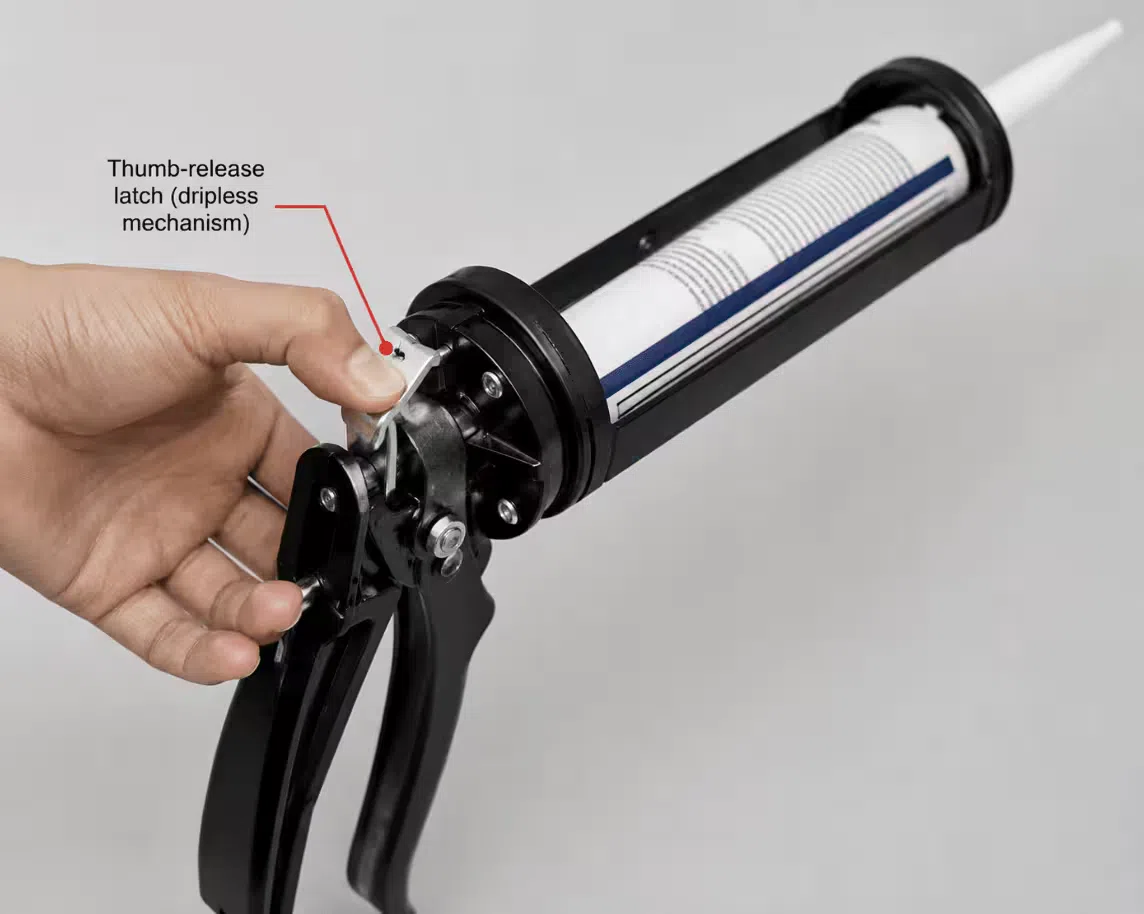
A dripless caulking gun includes a thumb-release mechanism that relieves trapped pressure inside the cartridge when the trigger is released. Without this feature, pressure stays in the tube and sealant continues to ooze out of the nozzle after each squeeze.
On a job site where a worker applies sealant to dozens of joints per shift, the accumulated waste adds up, and so does cleanup time. A dripless gun eliminates post-trigger dripping when used correctly — by releasing the thumb latch at the end of each bead rather than just letting go of the trigger.
Manufacturer experience shows that not all dripless mechanisms perform identically. The mechanism should release pressure smoothly without requiring excessive force. For wholesale buyers, checking the mechanism feel on a sample unit before a bulk order is a simple quality check.
Ergonomic Considerations for Long Work Days
Professional use means operating the tool for extended periods. Factors that affect end-user satisfaction include handle shape, trigger pull smoothness, overall weight, and whether the gun balances well with a loaded cartridge.
Aluminum frame models reduce the weight the operator supports. A smooth trigger mechanism with consistent engagement reduces hand fatigue. Handle grip texture improves comfort, though this varies by personal preference.
For B2B buyers, these ergonomic factors directly affect crew satisfaction. A gun that feels comfortable all day leads to fewer complaints and more consistent work quality. Offering a choice between aluminum and steel frame models at different price points gives distributors and OEM buyers flexibility in meeting crew preferences.
Sourcing Professional Manual Caulking Guns
When sourcing a professional caulking gun for wholesale, OEM branding, or distributor inventory, the checklist should cover:
- Thrust ratio options — single ratio or dual ratio for versatility across sealant types
- Frame material — aluminum alloy for lighter weight, steel for maximum rigidity
- Rod type — smooth rod for easier cleaning and faster cartridge changes
- Dripless mechanism — confirm the pressure release design works reliably
- Customisation options — frame colour, logo printing, packaging configuration, and MOQ
CaulkMFG supplies four manual caulking gun models designed for professional applications. The range covers thrust ratios from 7:1 to 26:1 with both aluminum alloy and steel frame options in multiple colour configurations for OEM branding. For buyers researching the best manual caulking gun for their crew, the key difference between models is the thrust ratio and frame material combination. For more detail on how thrust ratio affects performance in professional use, see the heavy duty caulking gun guide. For model comparison across the full range, the high quality caulk gun article covers frame material and rod differences. And the manual caulking gun price guide explains how features affect pricing for bulk ordering.
FAQ
What thrust ratio should I choose for silicone sealant in a manual caulking gun?
For silicone and other low-to-medium viscosity sealants, a 12:1 thrust ratio is usually adequate. For all-day silicone use across multiple cartridges, a 12:1 or 12:1/24:1 dual-ratio professional caulk gun with a smooth rod and dripless mechanism provides good control and reduces hand fatigue.
Is a dripless caulking gun worth the extra cost for a distributor's inventory?
Yes. Dripless models reduce material waste by a noticeable amount on multi-cartridge jobs. For distributors and OEM buyers, stocking dripless guns alongside standard models gives customers a practical upgrade option. The price difference is small relative to the improvement in user experience and waste reduction.
What is the typical MOQ for OEM manual caulking guns?
Minimum order quantities for OEM manual caulking guns depend on the model and customisation level — frame colour, logo printing, and packaging all affect the minimum run. For specific MOQ and pricing, contact CaulkMFG with the target model, approximate quantity, and customisation needs.
How much lighter is an aluminum frame compared to steel?
An aluminum alloy frame is typically 30 to 40 percent lighter than a comparable steel frame. For a tool held at arm's length through the work day, this difference reduces cumulative shoulder and hand fatigue. Distributors supplying crews that work at height or on extended shifts may find aluminum frame models reduce ergonomic complaints.
What causes a caulking gun to keep dripping after the trigger is released?
The most common cause is that the gun does not have a dripless pressure-release mechanism, or the mechanism is not being used correctly. Some guns require the user to release a thumb latch — not just stop squeezing — to relieve cartridge pressure. If the gun has a dripless mechanism and still drips, check whether dried sealant has blocked the mechanism.
Can I get sample units before placing a wholesale order?
Most manufacturers, including CaulkMFG, offer sample units for quality evaluation before bulk orders. Request samples of the specific model with the frame material and thrust ratio you intend to stock, and test the trigger feel, dripless mechanism, and rod retraction.